
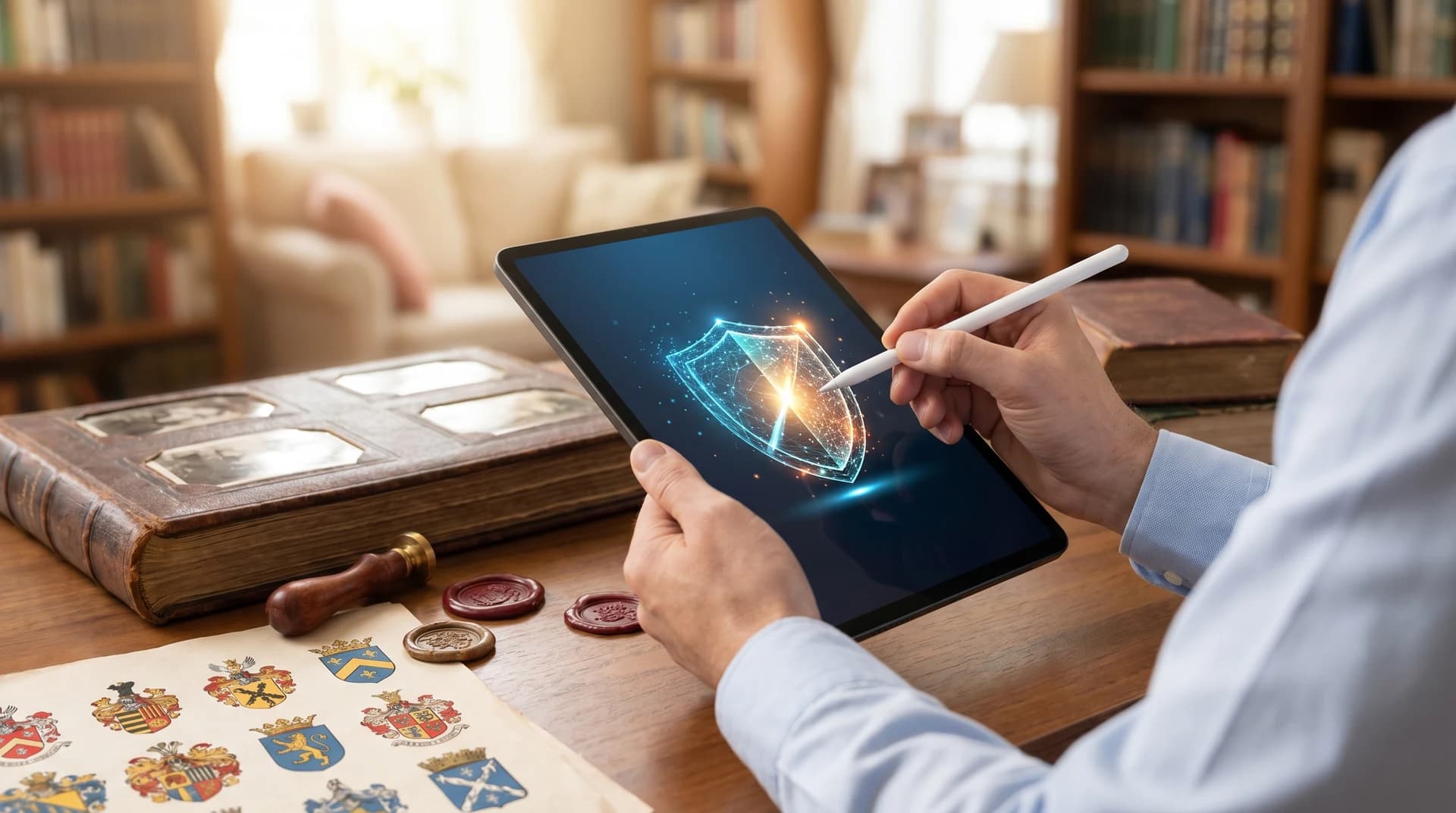
A family coat of arms generator is an AI-powered tool that allows anyone to quickly design a personalized family crest, combining historical symbolism with modern design principles.
How AI Transforms Traditional Heraldry Design
The creation of a family crest has long been bound to tradition, craftsmanship, and exclusivity. Yet in 2026, artificial intelligence is redefining this centuries-old practice—turning what once took weeks of manual work into a matter of seconds. By automating symbolic interpretation, color theory, layout composition, and design refinement, AI enables anyone to make a family crest that is both meaningful and visually coherent, without relying on costly specialists or design expertise.
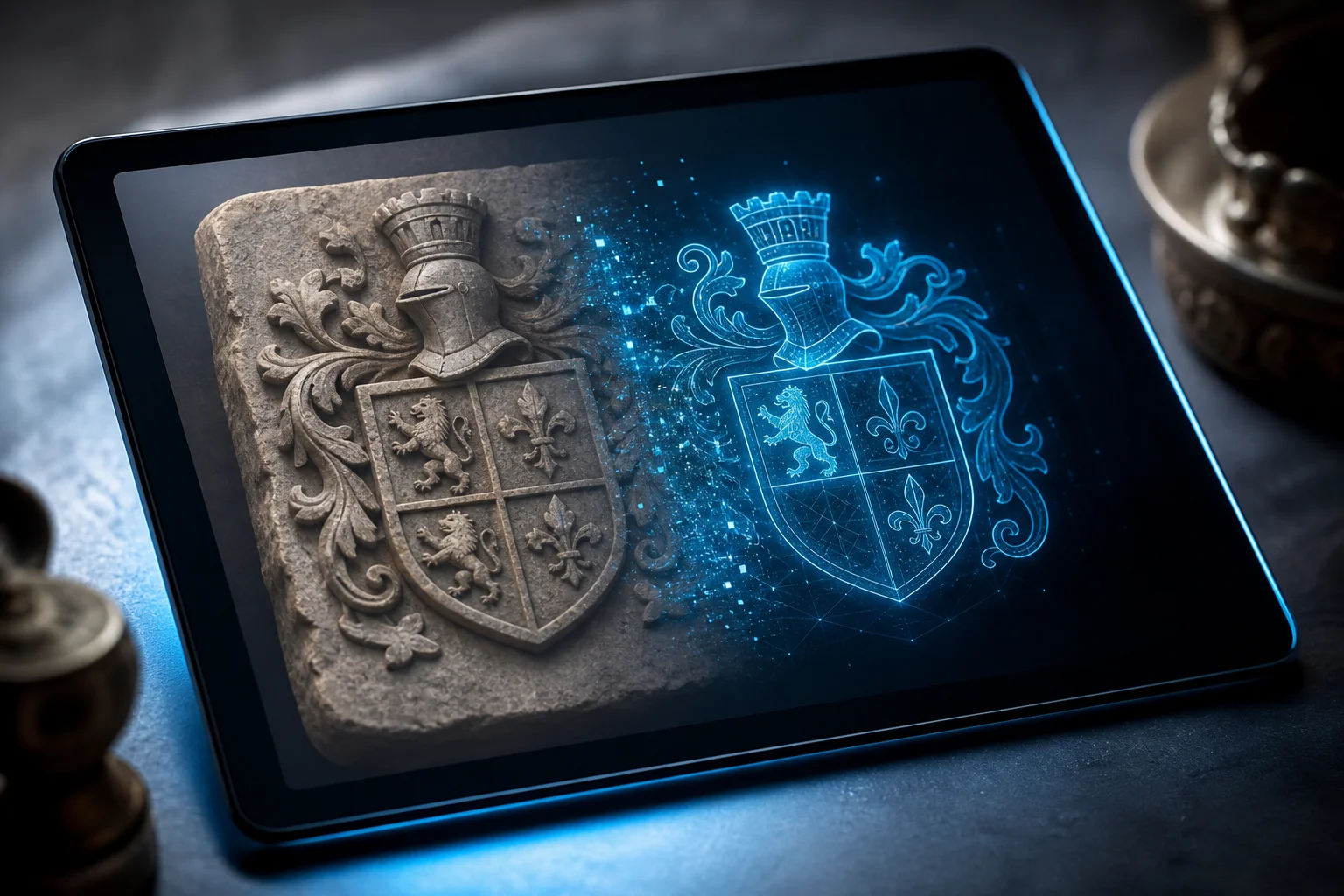
From hand-carved stone to AI-powered design: the evolution of heraldic identity
From Scrolls to Algorithms: The Evolution of Crest Design
Heraldry emerged in the mid-12th century as a practical solution on medieval battlefields, where armored knights needed instantly recognizable identities. Over time, coats of arms became hereditary symbols of lineage, governed by strict rules and crafted by skilled artisans. For centuries, this process remained largely unchanged—hand-drawn, meticulously detailed, and accessible only to the elite. Even modern digital tools have only digitized the manual workflow, not fundamentally transformed it. Now, AI closes the accessibility gap, allowing individuals to generate professional-quality crests instantly, regardless of budget or artistic skill. For a deeper dive into the origins and rules of heraldry, the Royal Heraldry Society of Canada offers an authoritative overview of the tradition’s historical development and symbolic language.
Why AI Outperforms Manual Design for Personalized Heraldry
AI surpasses traditional methods in speed, accuracy, and personalization. Where hiring a heraldic artist can cost anywhere from $150 to over $2,500—or up to $12,000 for an official grant from the College of Arms—AI delivers comparable visual quality at a fraction of the cost and time. Systems can analyze a family name, origin, and values to suggest historically appropriate symbols and color schemes, ensuring symbolic coherence. Unlike manual design, AI allows for instant iterations, consistent styling, and integration with genealogical data, producing crests that are not only personalized but also contextually grounded. This shift mirrors advancements in other AI-powered visual domains—just as we at Car Photo Booth use AI to transform amateur car photos into studio-quality images in seconds, heraldic AI now democratizes another form of visual identity, making family crest creation fast, affordable, and universally accessible.
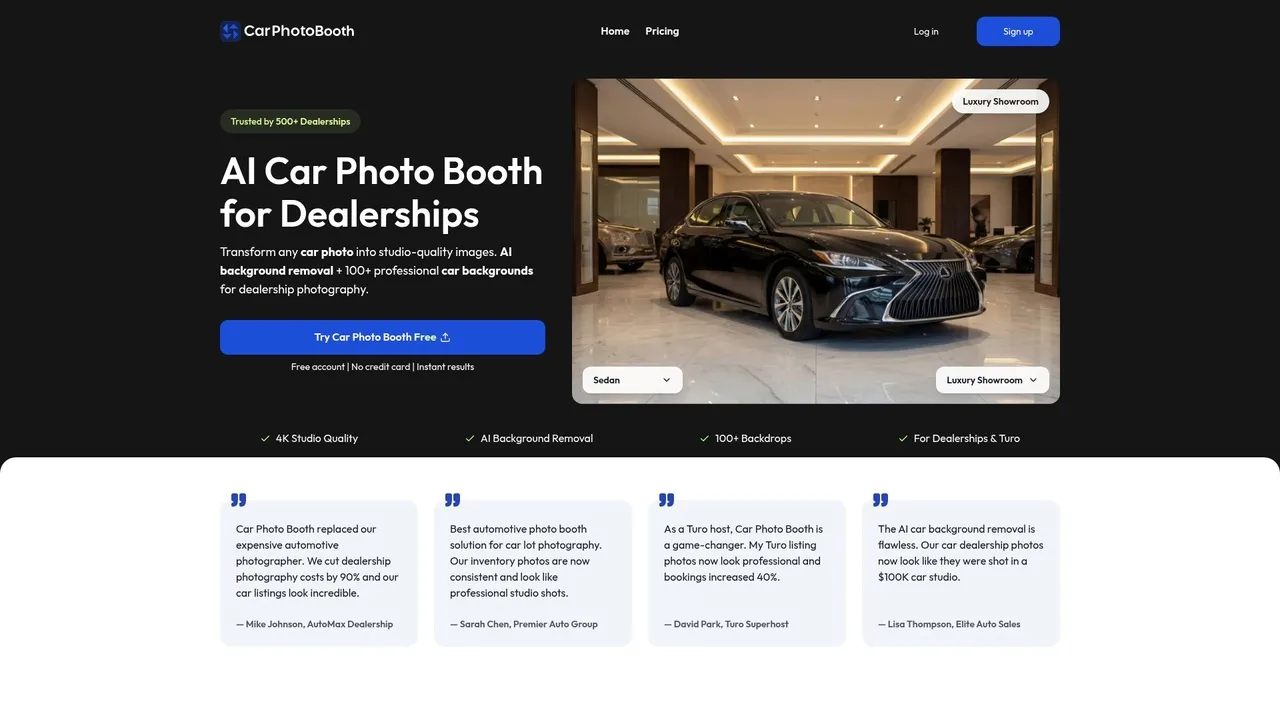
AI-powered visual refinement in action: transforming raw images into professional-grade assets
Top Features of a Modern Family Coat of Arms Generator in 2026
A cutting-edge AI-powered crest generator in 2026 combines historical authenticity with intuitive automation, enabling users to make a family crest that is both meaningful and visually polished—without design experience. These systems go beyond simple templates, offering intelligent tools that adapt to user input while preserving heraldic integrity. From symbolic accuracy to seamless export, the best platforms deliver studio-quality results in under 30 seconds, much like how we at Car Photo Booth transform raw car photos into professional catalog assets with AI precision.
Symbolism Engine: Matching Family Values to Heraldic Icons
Modern generators analyze user-submitted traits—such as courage, loyalty, or resilience—and map them to traditional heraldic symbols using trained models. For example, a family emphasizing strength may be suggested a lion rampant, while those valuing wisdom might receive owl or olive branch motifs. The AI cross-references centuries of emblematic usage to ensure relevance, avoiding anachronisms or culturally inappropriate elements. This contextual intelligence ensures that each crest tells a coherent story rooted in historical practice.
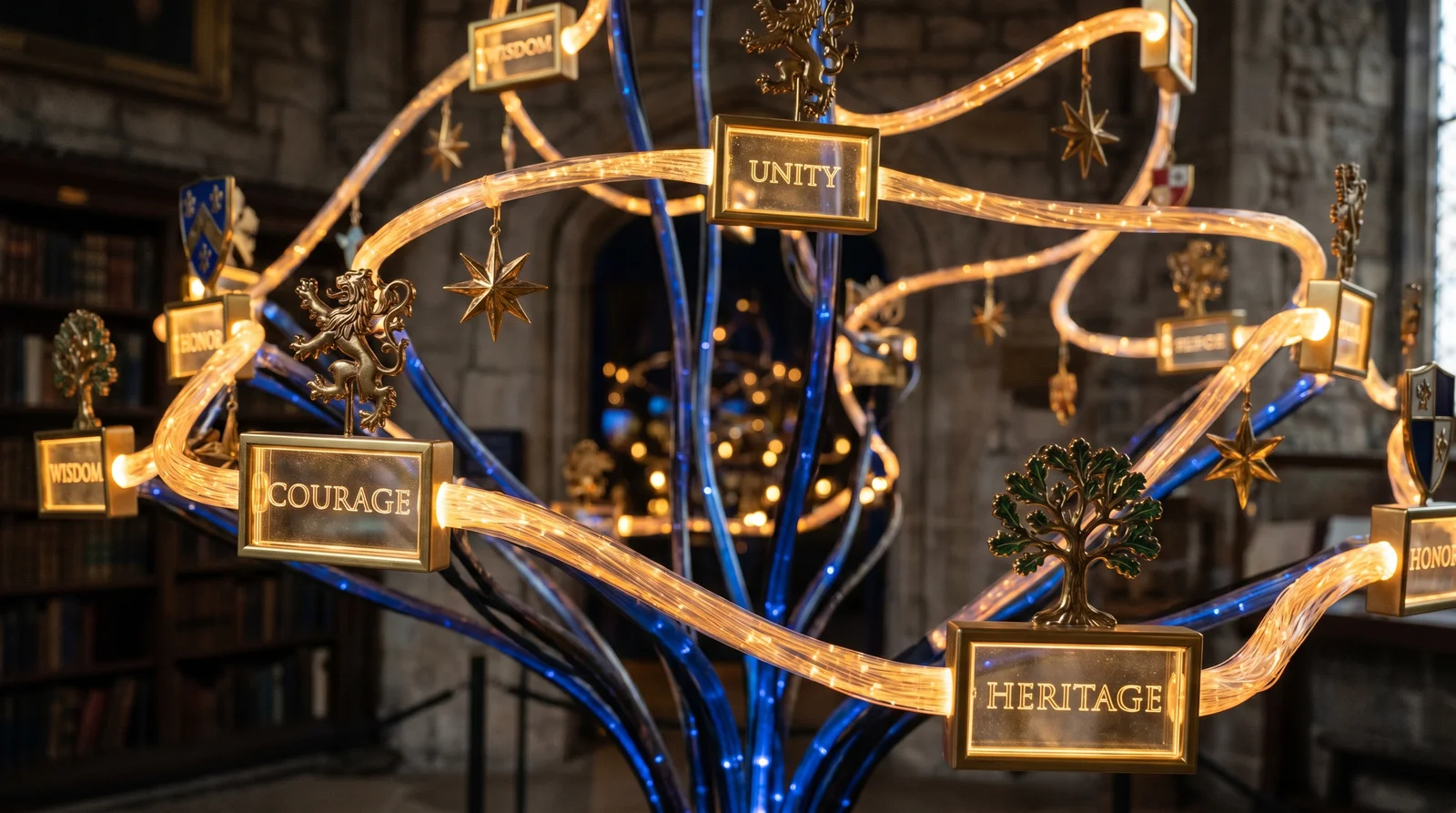
How AI interprets core values and translates them into meaningful heraldic symbols
Automated Layout and Proportional Design
AI enforces correct shield geometry, quartering, tincture rules, and charge placement automatically. Users don’t need to know the difference between per pale and per fess divisions—the system applies proper layout conventions based on the selected style (Gothic, Renaissance, Victorian, etc.). Visual balance and color contrast are optimized in real time, preventing design errors that would undermine authenticity or readability.
Custom Text and Motto Integration
Family names, founding years, or mottos in Latin or modern languages can be added with AI-guided typography. The system selects appropriate fonts, curves text for banners, and positions it within the crest’s structure for maximum legibility and aesthetic harmony. Whether inscribed on a scroll beneath the shield or woven into the crest crown, text becomes a seamless design element.
Key features include:
- Access to 100+ historically inspired templates
- Extensive library of region-specific symbols and charges
- Real-time color palette suggestions based on heraldic tincture rules
- High-resolution PNG, SVG, and print-ready PDF export options
Step-by-Step Guide to Creating Your AI-Generated Family Crest
Creating a meaningful and visually striking coat of arms in 2026 is no longer reserved for aristocrats or design experts. With AI-powered tools, you can make a family crest that reflects your heritage, values, and identity in minutes—not months.
Step 1: Define Your Family’s Core Identity and Values
Begin by reflecting on the traits that define your family. Identify 3–5 core values—such as resilience, unity, integrity, or exploration—and consider ancestral origins, cultural heritage, or a personal motto. This foundational input guides the AI to generate symbols and compositions that carry authentic meaning. For example, a family valuing innovation might lean toward modern geometric motifs, while one rooted in tradition may choose regional heraldic elements. The more intentional your input, the more personalized the output.
Step 2: Choose Shield Style, Colors, and Primary Symbol
Select a shield form—such as heater, escutcheon, or pavise—that aligns with your preferred historical or cultural aesthetic. The AI then suggests color combinations based on heraldic tincture rules, ensuring visual contrast and symbolic accuracy (e.g., blue for loyalty, red for bravery). You can also pick a central charge: animals, flora, or objects that represent your family’s story. Over 100 historically inspired templates streamline this process, allowing for both creative freedom and structural authenticity.
Step 3: Preview, Edit, and Export Your AI-Created Coat of Arms
Once generated, preview your coat of arms in real time. Adjust symbol placement, refine typography, or swap backgrounds with intuitive editing tools. The system optimizes layout composition and legibility automatically. When satisfied, export your design in high-resolution PNG, SVG, or print-ready PDF formats—ideal for framing, digital use, or integration into family documents.
This streamlined process reflects the broader shift in visual creation: just as AI transforms car photography by delivering studio-quality images instantly, it now empowers families to craft dignified, personalized heraldry without design expertise.
Creative Uses for AI-Generated Family Crests Beyond Decoration
While traditionally reserved for ancestral halls and wax seals, AI-generated family crests now serve dynamic modern purposes that extend far beyond wall decor. With tools making it easier than ever to make family crest designs rooted in symbolism yet tailored to contemporary life, families are embedding these emblems into personal, legal, and digital domains with renewed purpose.
Personal Branding and Legacy Projects
A digital coat of arms functions as a distinctive personal emblem across online identities, estate documents, and digital wills. When integrated into a personal website or social media profile, the crest adds a layer of authenticity and continuity—particularly valuable for public figures, authors, or family-run enterprises. In estate planning, the crest can be formally included in legal documents to symbolize lineage and intent, reinforcing the emotional weight of inheritance. We in Car Photo Booth see a parallel: just as AI elevates a simple car image into a consistent, professional asset, it transforms a personal symbol into a scalable brand element.
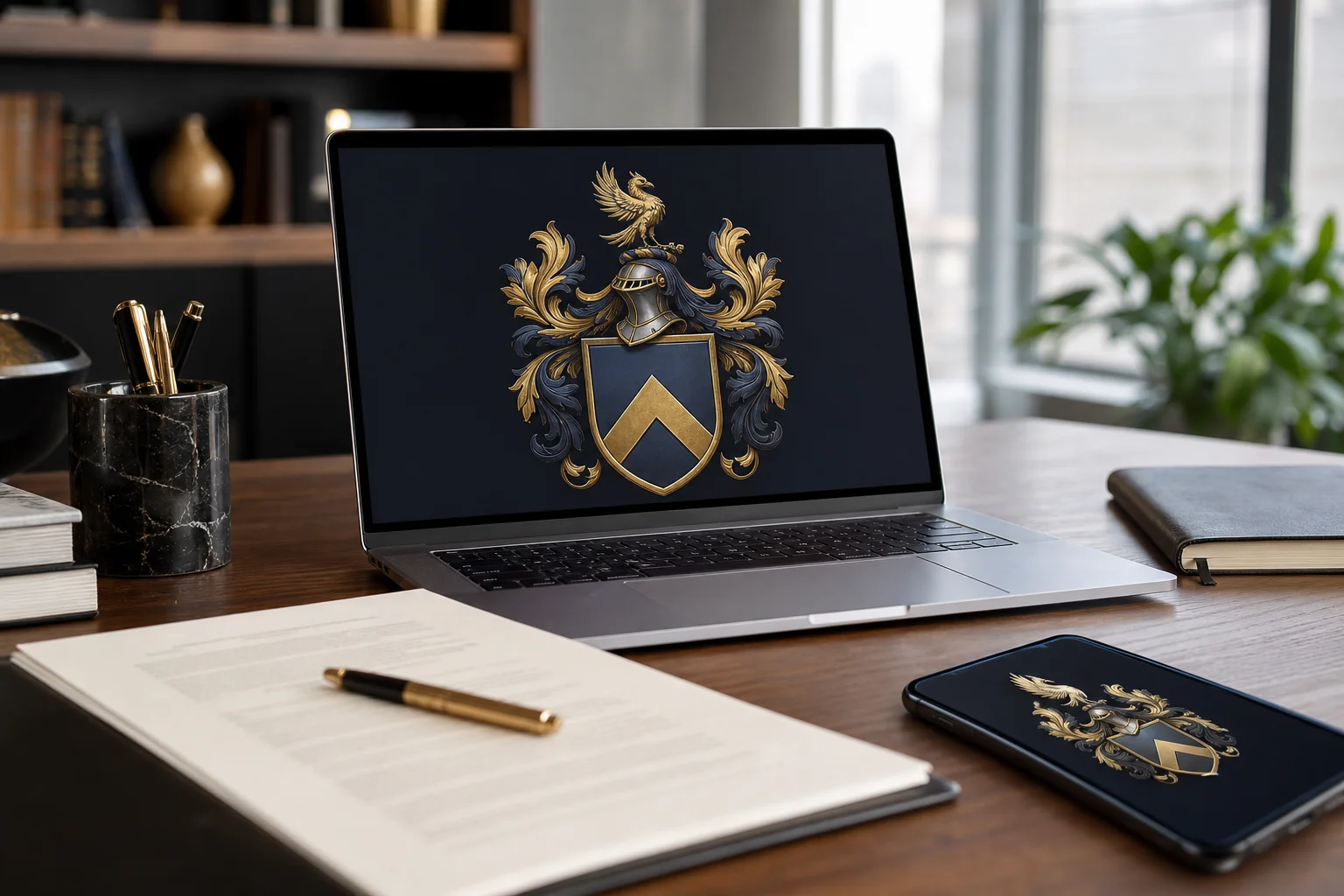
From legal documents to social profiles: modern applications of a digital family crest
Gifts and Keepsakes: From Mugs to Monograms
The AI-crafted crest lends itself to a range of personalized merchandise—engraved glassware, custom stationery, embroidered apparel, or framed wall art. These items make meaningful gifts for reunions, anniversaries, or memorials. Because the design is generated digitally and exportable in print-ready formats, it can be seamlessly adapted to products without design overhead. Like our platform’s ability to auto-format car images for any catalog, the crest generator ensures visual consistency across every application, physical or digital.
Why Car Photo Booth’s AI Technology Excels at Visual Design Tasks
The same core AI architecture that powers professional-grade automotive image enhancement—precision background removal, dynamic lighting correction, and context-aware composition—is inherently suited to complex heraldic design. At Car Photo Booth, we’ve engineered our models to detect symmetry, balance intricate visual layers, and preserve fine details, whether rendering a luxury sedan against a showroom backdrop or a lion rampant on a layered escutcheon. These capabilities stem from deep training in spatial coherence and high-fidelity output, ensuring that every generated image, from car listings to family crests, maintains studio-level consistency.
Shared AI Architecture: From Car Images to Heraldic Emblems
Our system leverages multimodal neural networks refined through millions of automotive transformations, enabling it to generalize across visual domains. Like the latest advancements seen in Midjourney V7 and GPT-4o’s native image generation, our AI interprets structural intent—recognizing shields, mantling, and crests not as isolated shapes but as elements within a balanced composition. This architectural sophistication allows for intelligent scaling, alignment, and stylistic harmony, mirroring how we auto-correct perspective distortions in car photos to achieve showroom-perfect symmetry.
Professional Output Ready for Print and Digital Platforms
Every design, whether a vehicle image or a digital coat of arms, is rendered in ultra-high resolution with support for PNG, JPEG, and vector-exportable formats. Just as our platform ensures car photos meet dealership catalog standards across marketplaces, it guarantees crests are optimized for both digital use and physical production—maintaining crisp edges and color accuracy on merchandise, documents, or web assets. With the cost-per-image from AI systems having dropped dramatically since 2022, our infrastructure delivers premium quality at scale, making professional design accessible without compromise.
Final Thoughts on Using AI to Design a Family Coat of Arms in 2026
Creating a family crest in 2026 is no longer a slow or exclusive process—AI makes it fast, affordable, and deeply personal. With intuitive tools, anyone can make a family crest that reflects heritage, values, or shared identity, all while achieving polished, professional results. At Car Photo Booth, we’ve engineered our AI to master visual precision across domains, from automotive imaging to symbolic design, ensuring every element aligns with aesthetic and structural integrity. This same technology powers our ability to transform ordinary car photos into dealership-ready visuals—proving that AI-driven design excels where consistency, quality, and speed matter most.