
In 2026, the ability to edit text in an image has become a critical advantage for car dealers and photographers aiming to maintain brand consistency and professionalism across digital listings. Outdated pricing, incorrect model names, or temporary promotional text on vehicle signage can confuse buyers and diminish credibility—especially when 95% of car buyers use digital sources to research vehicles before purchasing. Manually replacing text in car photos was once a time-consuming task requiring design expertise, but AI-powered tools now streamline this process with precision and speed.
Quick Answer: AI-powered tools allow users to edit text in an image by intelligently removing existing text and generating seamless replacements that match the background and lighting—no Photoshop skills required. This capability is transforming how dealerships and auto photographers update vehicle signage, pricing, and branding elements across digital inventories.
These advancements eliminate reliance on costly retakes or studio sessions, enabling real-time updates to vehicle visuals. In the following sections, we’ll compare the top AI tools capable of text removal and replacement in car photography, highlight their core features, and demonstrate how platforms like Car Photo Booth integrate these capabilities to solve real-world automotive marketing challenges—such as maintaining uniformity across online catalogs and accelerating listing turnaround. For a deeper dive into AI-driven visual transformation, explore our guide on AI design for automotive graphics.
Table of Contents
- Top 5 AI Platforms to Edit Text in an Image for Automotive Marketing (2026)
- How to Replace Text in Car Photos Using AI: A Step-by-Step Workflow
- Why Generic Image Editors Fail for Automotive Text Updates
- AI-Powered Text Editing: The Future of Scalable Car Photography
- Frequently Asked Questions About Editing Text in Car Images with AI
- Final Recommendations for Editing Text in Car Images in 2026
Top 5 AI Platforms to Edit Text in an Image for Automotive Marketing (2026)
The ability to edit text in a car image—whether removing outdated pricing, replacing promotional tags, or adding branded overlays—has become essential for dealerships and auto marketers aiming for consistency and professionalism. Manual editing is no longer viable at scale, but AI tools now deliver precise, automated solutions. These platforms combine advanced optical character recognition (OCR) with background segmentation and text inpainting to seamlessly remove and replace text while preserving visual integrity. Below, we evaluate the top five platforms based on accuracy, speed, automotive-specific features, and workflow integration.
Car Photo Booth: AI-Powered Text Editing for Professional Car Listings
At Car Photo Booth, we engineered our platform specifically for automotive professionals who need to update vehicle signage, pricing, and branding elements without retaking photos. Our system first removes the original background and any embedded text using AI-driven object and text detection. Once cleared, users can apply custom text overlays—such as “5% Off MSRP” or “Lease Ready”—using pre-designed dealership templates. With over 100 studio-quality backgrounds, including showroom, urban, and scenic environments, the final output matches professional photography standards. The entire process takes under 30 seconds per image and supports batch processing, making it ideal for high-volume inventory updates. For a deeper look at how AI transforms vehicle visuals, see our guide on AI design for automotive graphics.
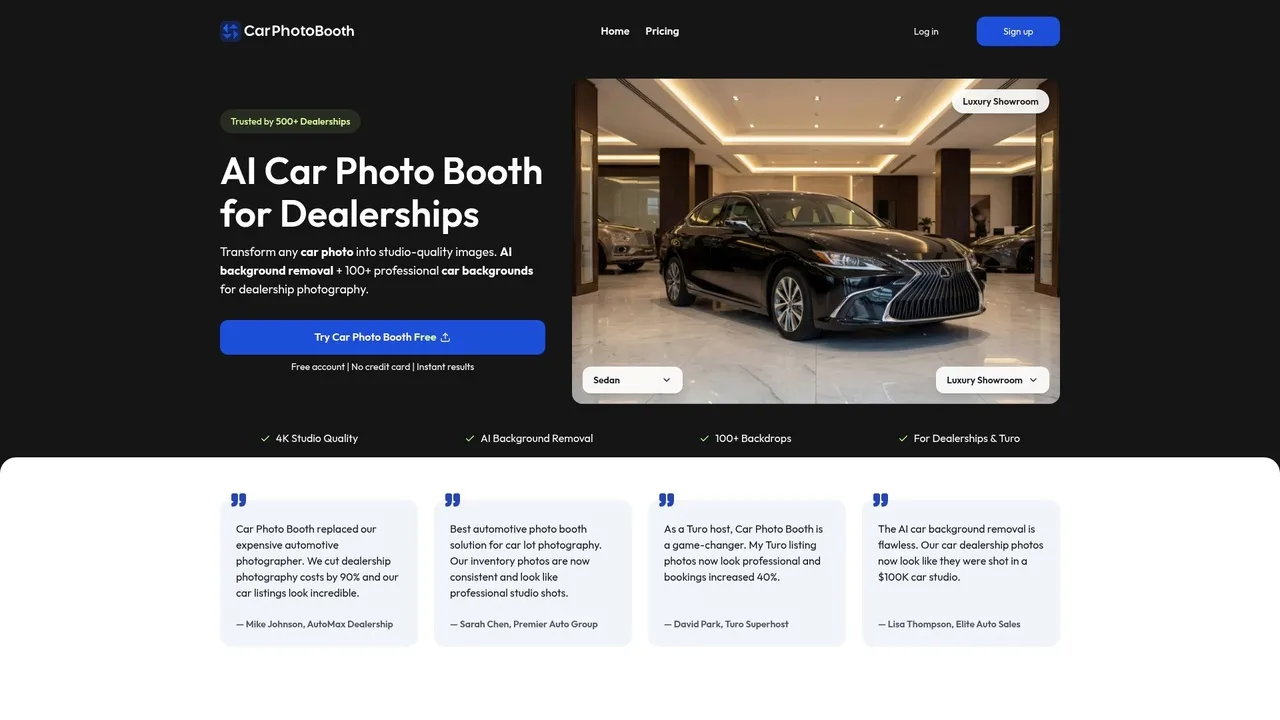
Car Photo Booth’s intuitive interface allows dealers to edit text in an image with brand-compliant templates and real-time preview
Comparison of Accuracy, Speed, and Output Quality Across Platforms
The table below evaluates each platform on critical performance metrics for automotive use:
| Platform | Text Removal Precision | Text Replacement Realism | Processing Speed | Cost Per Image | Mobile/Desktop Support |
|---|---|---|---|---|---|
| Car Photo Booth | High (OCR + context-aware masking) | High (font matching, lighting sync) | <30 sec/image (batch) | From $0.10 (volume-based) | Yes (web + mobile-responsive) |
| Photoroom | Medium-High | High | ~45 sec/image | $0.15–$0.25 | Yes |
| Adobe Firefly + Photoshop Express | High (with manual input) | Very High | 2–5 min (manual steps) | Subscription only | Yes |
| Pixelied | Medium | Medium | ~1 min/image | $0.20 | Web-only |
| Canva Pro (AI Text Edit) | Medium | Medium | ~1.5 min/image | $0.18 | Yes |
Car Photo Booth leads in automation and automotive-specific optimization, particularly in removing text from image backgrounds that blend with complex lighting conditions—common in outdoor lot photography. While tools like Adobe Firefly offer strong generative capabilities, they require more manual input, slowing down high-throughput workflows. Platforms such as Pixelied and Canva provide general-purpose editing but lack dedicated templates and background libraries tailored to car marketing.
Modern OCR systems, even on mobile devices, now achieve over 95% accuracy on printed text, enabling reliable detection and removal of labels, VIN tags, or window stickers. This precision ensures that no residual pixels or shadows remain after text removal—a critical factor when preparing images for high-resolution digital catalogs.
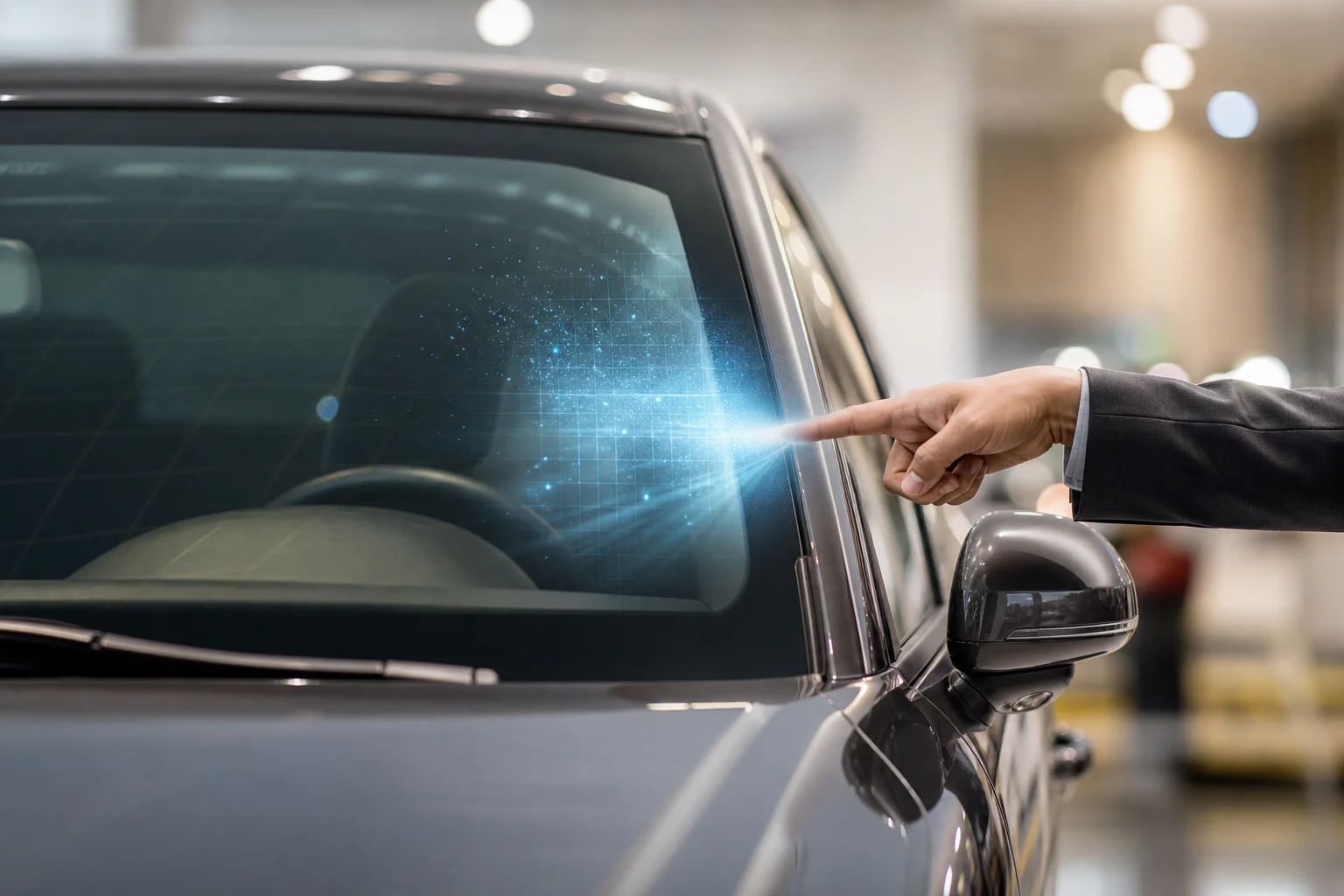
AI doesn’t just delete text—it intelligently rebuilds the scene for photorealistic results
How to Replace Text in Car Photos Using AI: A Step-by-Step Workflow
Creating polished, consistent vehicle listings no longer requires a professional photoshoot. With AI-powered editing, dealers and automotive sellers can seamlessly replace text in car images—such as outdated pricing, dealer tags, or VIN labels—while maintaining visual integrity.
Preparing Your Car Image for Text Editing
Start with a high-resolution photo captured in natural, diffused light to minimize harsh shadows and glare. Ensure the vehicle is clean and the camera is level to avoid distortion, particularly around windows where text often appears. Avoid flash in low-light conditions, as it can create reflections that obscure printed labels. The clearer the original image, the more accurately AI systems can detect and isolate text for removal. Images taken on cluttered lots benefit from wider framing to give the AI context when reconstructing backgrounds after text erasure.
Using AI to Remove Old Text and Insert New Messaging
Begin by uploading your image to an AI platform like Car Photo Booth. The system automatically detects and masks text elements—such as “For Sale” stickers or dealer branding—using advanced OCR and inpainting models. Once the old text is removed, use the built-in text editor to overlay new, context-aware messaging. You can add dynamic elements like current pricing, “Low Miles” badges, or “Certified Pre-Owned” labels with fonts and colors that match your brand. The AI intelligently blends shadows and perspective, ensuring the new text appears as if it was part of the original scene. Export the final image in high resolution for use across marketplaces, inventory feeds, or social media.
For a deeper dive into enhancing automotive visuals, see our guide on AI design for automotive graphics. This workflow reduces manual editing and cuts per-car photography costs significantly, enabling scalable, studio-quality output across large inventories.
Why Generic Image Editors Fail for Automotive Text Updates
Traditional image editors—whether desktop powerhouses like Photoshop or mobile quick-fix apps—are ill-suited for the high-volume, brand-sensitive demands of automotive photography. While they offer pixel-level control, they lack the automation, scalability, and contextual awareness needed to edit text in car images efficiently. Removing a “For Sale” sticker or updating pricing information requires multiple manual steps: precise selection, background reconstruction, text recreation, and lighting alignment. This process can take 10–15 minutes per image, creating bottlenecks for dealers managing hundreds of vehicles.
Beyond time consumption, generic tools fail to maintain visual consistency. Fonts, colors, and placement vary between edits, leading to a fragmented brand presence across listings. Inconsistent vehicle photography with mismatched lighting, angles, and backgrounds damages brand credibility and creates unprofessional impressions that hurt buyer trust. Humans can process visuals in as little as 13 milliseconds, meaning vehicle images make or break purchase decisions before shoppers read pricing or specifications.
These tools also lack integration with inventory management systems, forcing teams to manually match edits to vehicle data. For AI-driven workflows, they provide no support for automated text removal from image sequences or batch processing—critical capabilities for modern auto businesses.
At Car Photo Booth, we solve this by embedding intelligent text editing directly into the automotive imaging pipeline. Our system detects and removes outdated labels, then overlays new, brand-compliant text with accurate perspective and shadowing—fully automated, in seconds. For a deeper look at how AI reshapes automotive visuals, see our guide on AI design for automotive graphics.
The Cost of Inconsistent Branding Across Online Listings
In digital car marketplaces, visual consistency isn’t aesthetic preference—it’s a trust signal. When listings display mismatched fonts, uneven lighting, or conflicting background styles, buyers perceive the seller as disorganized or unprofessional. A “Certified Pre-Owned” badge rendered in Comic Sans on one listing and crisp Helvetica on another undermines credibility, regardless of the vehicle’s condition. These inconsistencies suggest a lack of attention to detail, which consumers extrapolate to the vehicle’s maintenance and pricing accuracy. In a space where first impressions are formed in milliseconds, even minor branding misalignments reduce click-through rates and prolong sales cycles.
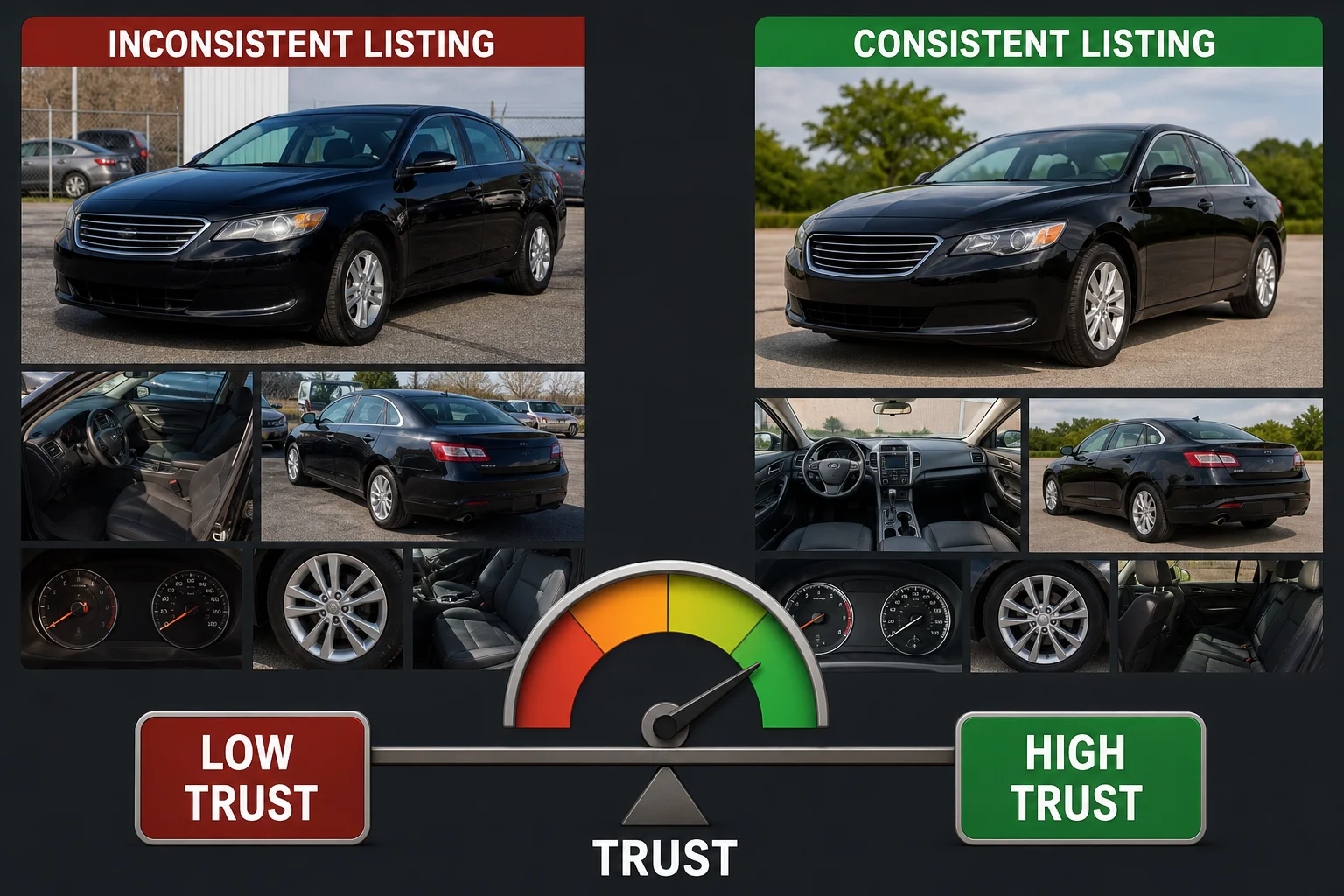
Inconsistent branding erodes trust—AI ensures every vehicle image reflects your brand’s professionalism
AI-Powered Text Editing: The Future of Scalable Car Photography
In 2026, AI-powered text editing has evolved beyond simple overlays—it’s now a core component of scalable, brand-compliant automotive marketing. Advanced optical character recognition (OCR) systems precisely detect existing text in car images, from price stickers to dealer badges, while generative inpainting models seamlessly erase them without artifacts. These systems are no longer limited to removal; they reconstruct background textures and lighting gradients, preserving image integrity. Simultaneously, font-matching algorithms analyze brand guidelines to replicate typography with accurate kerning, weight, and perspective—ensuring new text blends naturally into the scene. This convergence of technologies enables photorealistic updates at scale, transforming hundreds of vehicle listings in minutes while maintaining visual consistency across platforms.
Trends Shaping AI Image Text Editing in the Auto Industry
Automated price tag updates are now standard for dealers managing dynamic inventory, with AI syncing real-time pricing from CRM or inventory management systems directly into listing images. Multilingual listing generation allows global market expansion, automatically replacing text in regional languages while adapting to local formatting norms. One of the most impactful advancements is the AI-generated compliance badge—systems now embed verified labels like “Certified Pre-Owned” or “Lease-End Special” directly into images, with tamper-proof rendering that aligns with manufacturer branding standards. At Car Photo Booth, we integrate these capabilities into a single workflow: detect, erase, and replace text with brand-accurate overlays—automatically. For a deeper look at how AI reshapes visual consistency, see our guide on AI Design for Automotive Graphics. By 2026, researchers project that 80% of global companies will adopt some form of document automation with OCR at the centre of most implementations, reinforcing its strategic role in automotive digital transformation.
Frequently Asked Questions About Editing Text in Car Images with AI
Can AI accurately edit text in car photos without artifacts? Yes—modern tools use advanced optical character recognition and generative fill to detect and replace text seamlessly, preserving lighting and font alignment. Removing unwanted labels or outdated pricing is now reliable, especially with platforms designed specifically for automotive visuals. Is it legal to edit text in vehicle images? As long as changes reflect accurate, non-misleading information—such as updated pricing or correct model names—it’s fully compliant. Transparency matters, particularly for disclosures like “Certified Pre-Owned.” For guidance on compliant branding, see our detailed resource on AI Design for Automotive Graphics. Most systems support common formats like JPEG and PNG, with some offering TIFF and WebP compatibility. At Car Photo Booth, we ensure high-resolution output suitable for digital listings and print media, while our text remover from image technology maintains edge precision around logos and badges.
Final Recommendations for Editing Text in Car Images in 2026
AI-powered text editing has redefined efficiency and quality in automotive marketing. For dealers and Turo hosts, tools like Car Photo Booth deliver studio-grade consistency by seamlessly replacing outdated pricing, removing watermarks, or adding branded overlays—without the cost of professional shoots. These systems excel where traditional editors fail, handling lighting, font alignment, and background continuity with precision. As demonstrated in our guide to AI-Powered Car Photo Editing, the technology now supports end-to-end automation while maintaining compliance and visual integrity. Looking ahead, AI will continue to democratize high-end car visuals, making polished, brand-compliant imagery accessible to every seller, regardless of budget or scale.