
Traditional car photography remains a costly and time-intensive hurdle for dealerships, Turo hosts, and automotive marketers. Studio shoots demand significant investment, while on-site photos often suffer from cluttered backgrounds, inconsistent lighting, and unprofessional presentation—undermining buyer trust and online engagement. Now, AI design is reshaping this landscape, enabling instant transformation of basic snapshots into polished, studio-quality visuals. With advancements accelerating into 2026, the automotive AI photography market is expanding rapidly, projected to reach USD 302.50 million by 2031 from USD 160.71 million in 2023, growing at a steady CAGR of 9.46% according to Verified Market Research.
Quick Answer: AI design graphic tools like Car Photo Booth instantly convert everyday car photos into professional, studio-quality images by automatically removing backgrounds and replacing them with high-end settings—such as showrooms, cityscapes, or clean white space. These platforms leverage intelligent object detection and AI text effect integration to enhance realism and branding, delivering consistent, market-ready visuals in seconds. This article explores the top AI tools available in 2026, their key features, ideal use cases for automotive professionals, and how to select the best solution—highlighting how platforms like Car Photo Booth streamline visual content creation for dealerships and rental operators. For a deeper dive into automated editing workflows, see our guide on AI-powered car photo editing.
Table of Contents
- Top 5 AI Design Platforms for Automotive Imagery in 2026
- 1. Car Photo Booth – AI-Powered Studio Quality in Seconds
- 2. Pixlr AI – Advanced Editing Meets Automotive Design
- 3. Adobe Firefly – Professional-Grade AI for Custom Automotive Content
- 4. Canva AI – Simplified Design for Car Listings and Social Media
- 5. Fotor AI – Quick Background Swap and Enhancement for Budget Users
- How AI Design Graphic Tools Cut Costs and Boost Conversions
- Advanced Features: AI Posters, Text Effects, and Marketing Integration
- Choosing the Right AI Design Tool for Your Automotive Business
- Frequently Asked Questions About AI Design in Car Photography
- Final Recommendations for AI Design in Automotive Imaging (2026)
Top 5 AI Design Platforms for Automotive Imagery in 2026
As AI reshapes automotive visual content creation, professionals across dealerships, Turo rentals, and photography studios are turning to intelligent platforms that deliver studio-quality results without the overhead. The leading tools combine precise background removal, high-fidelity scene replacement, and seamless integration into listing workflows. Below is a comparison of the top five AI design platforms in 2026, evaluated for accuracy, speed, output resolution, and relevance to automotive use cases.
| Platform | Background Replacement | AI Text Effects | Batch Processing | Pricing (Monthly) | Best For |
|---|---|---|---|---|---|
| Car Photo Booth | 100+ professional scenes (showrooms, cityscapes, nature) | Yes – branded overlays | Yes | Free tier; paid from $19.99 | Dealerships & rental operators needing volume and consistency |
| Pixlr AI | Smart cutout + AI-generated backdrops | Yes – stylized text layers | Limited | $12.99 | Designers creating promotional ai posters |
| Adobe Firefly | Generative environments from text prompts | Advanced – vector-ready | Yes (via CC) | $9.99–$199.99 | High-end marketing teams in creative agencies |
| Canva AI | Template-based swaps | Drag-and-drop text effects | Yes | $14.99 (Pro) | Social media and listing teams prioritizing ease of use |
| Fotor AI | Basic background swap | Simple overlays | Yes | $8.99 | Budget-conscious users with low-volume needs |
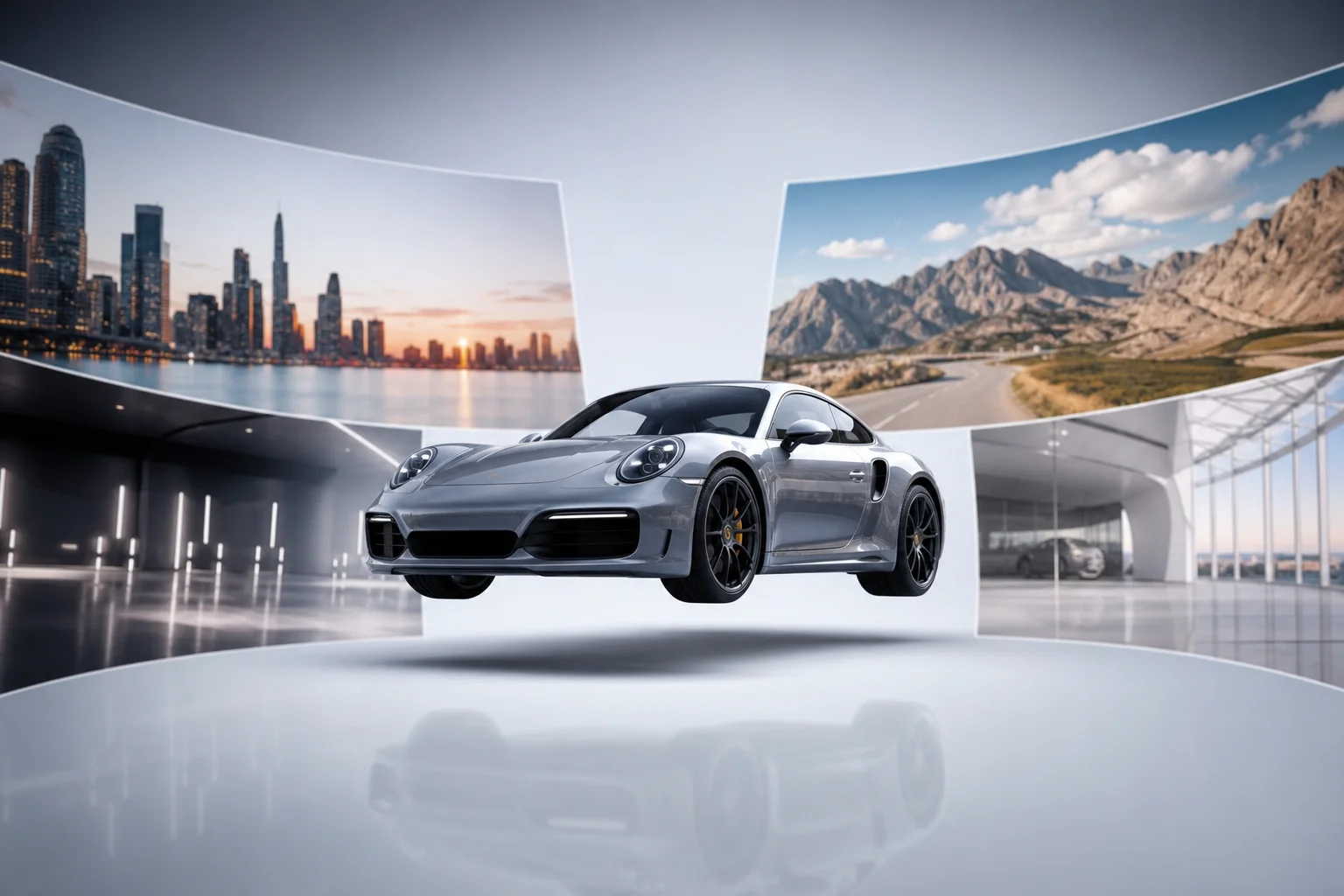
AI design transforms a single car photo into multiple high-end visual contexts—no studio required
1. Car Photo Booth – AI-Powered Studio Quality in Seconds
Car Photo Booth stands out as the most specialized solution for automotive professionals. We built this platform to solve a critical pain point: inconsistent, low-quality car photos that hurt conversion. By leveraging advanced object detection and lighting normalization, our AI instantly removes any background and replaces it with over 100 high-resolution environments—ranging from luxury showrooms to urban streets and scenic test tracks.
The system automatically optimizes image angles and corrects exposure imbalances, ensuring every output looks professionally shot. Users can process dozens of photos in a single batch, export at 4K resolution, and integrate results directly into inventory feeds or digital showrooms. For teams managing large fleets, this means going from raw lot photos to market-ready visuals in minutes, not days. Our clients in dealership networks and Turo operations consistently report faster listing turnaround and improved buyer engagement. For a deeper look at how automated editing works, see our guide on AI-powered car photo editing.
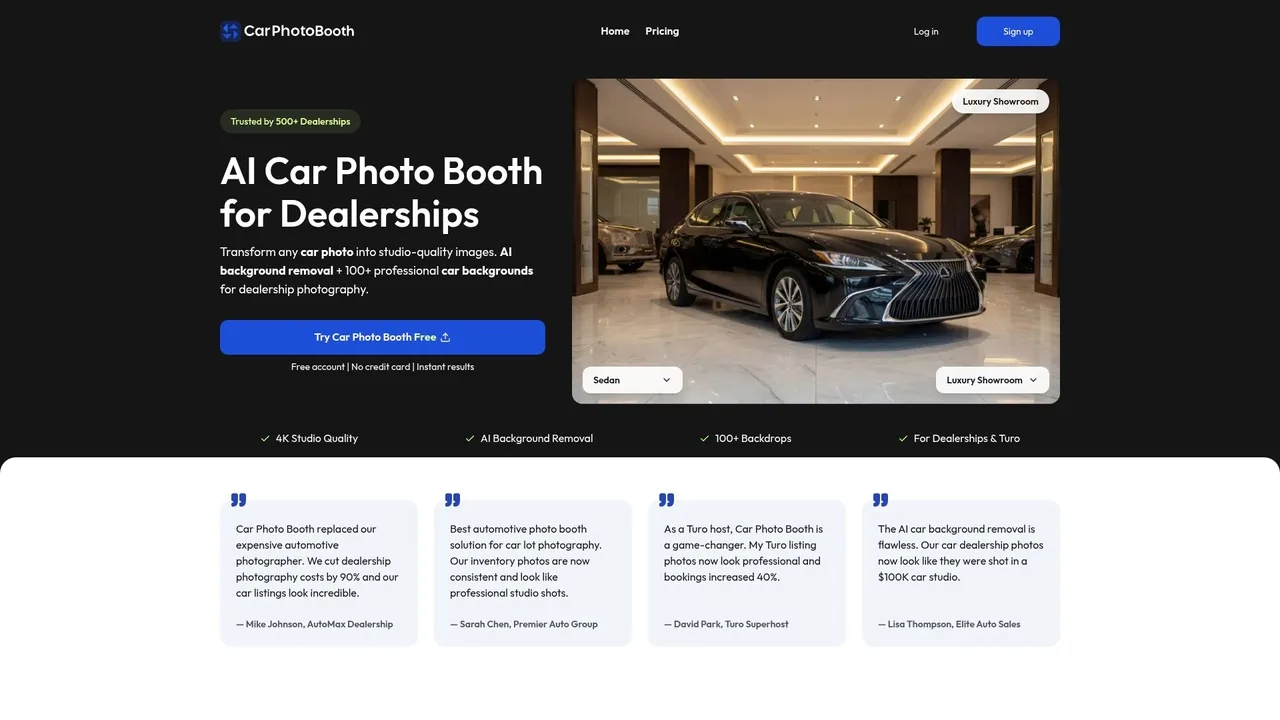
Car Photo Booth interface displaying batch-processed vehicle images with showroom backgrounds and AI text effects
2. Pixlr AI – Advanced Editing Meets Automotive Design
Pixlr AI offers robust design flexibility for users who need more than simple background swaps. Its smart cutout tool accurately isolates vehicles, even in cluttered outdoor settings, and pairs well with AI-generated backdrops tailored to automotive themes. The platform excels in creating dynamic ai posters for promotions, leveraging AI text effects that blend typography with lighting and perspective matching.
While not purpose-built for cars, Pixlr’s layer-based editing makes it ideal for custom campaigns—such as holiday sales or model launches—where branding and visual impact are key. However, it lacks scene-specific optimizations like tire reflection matching or showroom lighting simulation, which limits realism compared to dedicated automotive tools.
3. Adobe Firefly – Professional-Grade AI for Custom Automotive Content
Adobe Firefly leads in creative control, especially for teams already embedded in the Creative Cloud ecosystem. Its generative fill and text-to-image features allow designers to create custom environments—like a mountain pass at sunset or a futuristic cityscape—using simple prompts. These assets can be layered into high-end brochures, digital ads, or animated presentations.
Firefly’s AI text effect engine produces vector-grade typography that integrates seamlessly with car visuals. Pricing starts at $9.99/month for 2,000 premium credits according to G2, scaling with usage. While powerful, Firefly requires more manual input and design expertise, making it better suited for agencies than frontline dealership staff.
4. Canva AI – Simplified Design for Car Listings and Social Media
Canva AI dominates in accessibility. Its drag-and-drop interface and automotive-specific templates allow users to generate cohesive ai posters and social media assets in minutes. The AI background replacement is reliable for basic scenes, and text overlay tools support branded fonts and styling.
With built-in collaboration features, Canva fits teams managing multiple listings across platforms. However, its scene library is less detailed than specialized tools, and lighting adjustments are minimal—resulting in images that look designed, not photographed. Best for small dealerships or rental hosts who prioritize speed over photorealism.
5. Fotor AI – Quick Background Swap and Enhancement for Budget Users
Fotor AI delivers an entry-level option with functional background removal and one-click enhancements. It supports batch editing and offers a range of outdoor and studio scenes suitable for basic listings. The AI text effect library is limited to simple shadows and glows.
While affordable, Fotor often struggles with fine details like side mirrors or tire reflections, leading to less convincing composites. Outputs are serviceable for classifieds but fall short for premium marketing. Ideal for individual sellers or micro-fleets where cost is the primary constraint.
How AI Design Graphic Tools Cut Costs and Boost Conversions
Shifting from traditional studio shoots to AI-powered image generation isn't just a technological upgrade—it's a strategic business decision with measurable financial and performance outcomes. Professional car photography typically costs between $200 and $500 per hour, with an average four-hour session totaling $800 per vehicle. For dealerships managing large inventories or Turo hosts rotating multiple vehicles, these expenses scale rapidly, often exceeding budgets without guaranteeing faster time-to-market.
In contrast, AI tools reduce processing costs by up to 75%, according to industry analysis, enabling high-impact catalog images at a fraction of the price. Batch editing capabilities further amplify efficiency: where manual post-production once took 30–60 minutes per car, AI systems now deliver polished, studio-quality results in 5–15 minutes. This acceleration allows dealers to publish listings 30% faster, keeping inventory fresh and search rankings high.
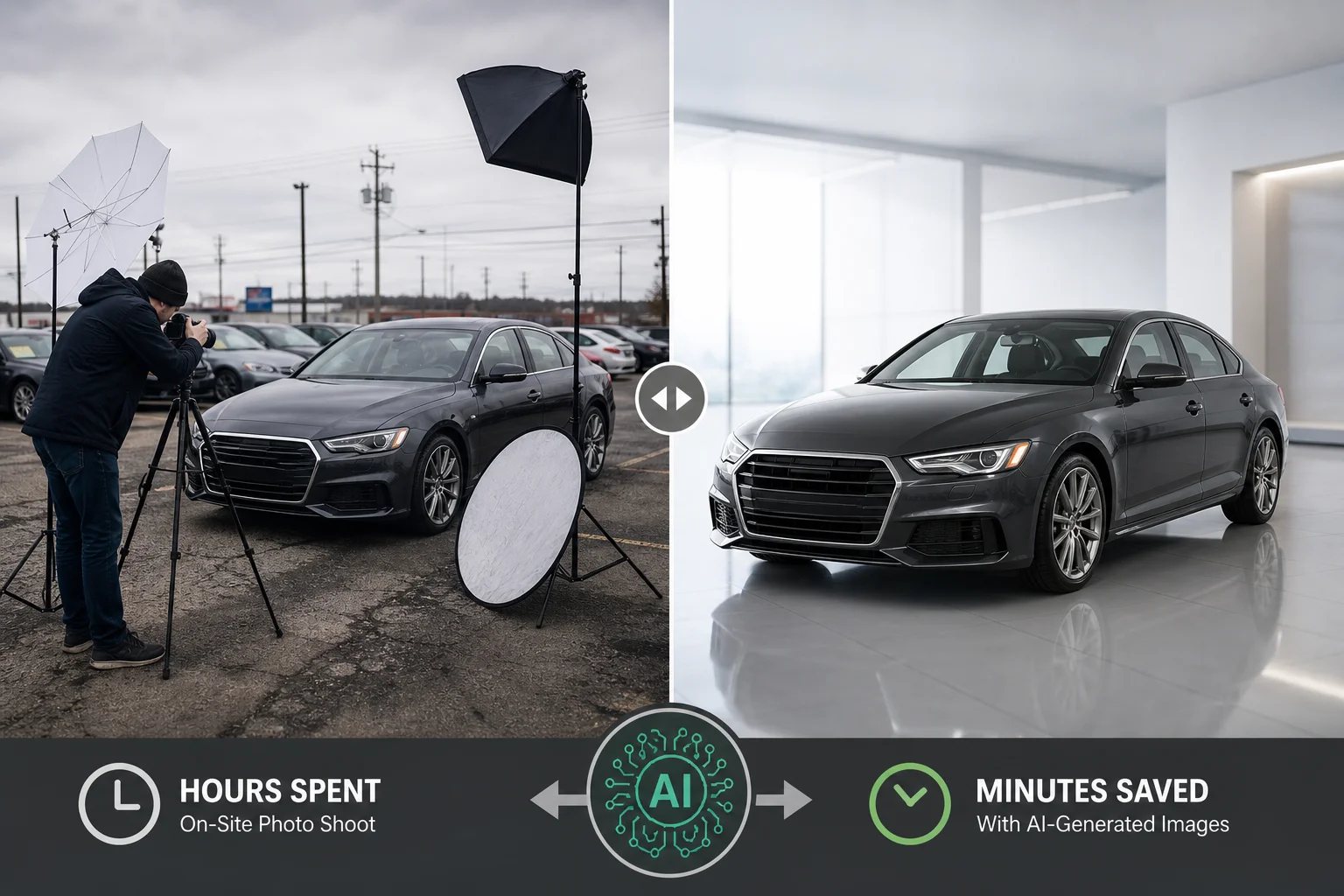
From chaotic lot to flawless listing: AI design graphic tools eliminate the need for physical studio shoots
Real ROI for Dealerships and Turo Hosts
The cost-per-image drop is dramatic. Where a single studio shoot can cost nearly $1,000 when accounting for photographer fees, location, and editing, AI platforms like Car Photo Booth process hundreds of images monthly for a fixed subscription. This scalability makes it feasible to photograph every vehicle consistently, eliminating reliance on generic stock visuals. We in Car Photo Booth ensure every output meets dealership-grade standards—automatically removing backgrounds and placing vehicles in premium environments, from urban streetscapes to showroom settings, ideal for creating compelling ai posters and digital ads.
Consistency Across Listings Drives Brand Trust
Uniformity in background style, lighting, and composition signals professionalism. Shoppers are more likely to engage with catalogs that look intentional and cohesive. Listings enhanced with AI visuals see up to a 50% increase in click-through rates, and conversion rates rise by 20–30% when imaging workflows are standardized. This trust translates directly to revenue: vehicles with professional photos sell 32% faster and command up to 20% higher prices. For deeper insights on refining these visuals, see our guide to AI-powered car photo editing.
Advanced Features: AI Posters, Text Effects, and Marketing Integration
Beyond background replacement and image cleanup, leading AI design platforms now enable automotive professionals to create complete marketing assets in seconds. These tools generate ai posters with dynamic overlays—such as badges for “Low Miles,” “Certified Pre-Owned,” or “Price Reduced”—using intelligent layout algorithms that maintain visual hierarchy and brand alignment. At Car Photo Booth, we’ve integrated AI-powered text effects that apply drop shadows, metallic finishes, and gradient fills to promotional copy, ensuring readability across diverse backdrops, from dusk-lit cityscapes to minimalist white studios.
Automating Promo Content with AI-Generated Text and Graphics
Modern AI systems analyze vehicle data and automatically suggest context-aware messaging. For example, a luxury SUV photographed at dusk may receive a bold “Adventure-Ready” banner with a brushed chrome effect, while an electric sedan could be tagged with a glowing “Zero Emissions” ribbon. These ai text effect enhancements are fully customizable, allowing dealerships and Turo hosts to maintain brand colors, fonts, and tone. This automation eliminates the need for manual graphic design, accelerating time-to-market for new listings and seasonal campaigns.
Exporting Multi-Format Assets for Omnichannel Use
Once a poster is generated, platforms like Car Photo Booth support one-click export in multiple formats optimized for web, social media, email headers, digital signage, and print. High-resolution PNGs retain transparency for flexible compositing, while compressed JPEGs ensure fast loading on inventory pages. This omnichannel readiness streamlines content distribution—no more resizing or reformatting. For teams managing large fleets, batch processing lets you apply consistent branding across hundreds of vehicles simultaneously.
For best practices in refining these visuals, explore our guide to AI-powered car photo editing.
Choosing the Right AI Design Tool for Your Automotive Business
Selecting the right AI design platform requires a strategic evaluation of quality, efficiency, and scalability. For automotive businesses—from growing Turo fleets to multi-location dealerships—the ideal tool must deliver consistent visual output while integrating smoothly into existing workflows.
Key Evaluation Criteria for B2B Users
Focus on background realism, rendering speed, scene variety, watermarking policies, export resolution, and data privacy. High-quality platforms generate seamless composites with accurate lighting and shadows, avoiding the "cut-out" look. Rendering should take under 30 seconds per image, with support for 4K exports and transparent PNGs. Scene libraries must go beyond generic backdrops, offering contextually relevant environments like urban showrooms or coastal highways. Ensure the service does not apply permanent watermarks and adheres to strict data handling standards to protect client vehicle information.
Scalability and Integration with Inventory Systems
For operations managing 50+ vehicles monthly, batch processing and API access are essential. Manual uploads become unsustainable at scale, while automated ingestion from inventory management systems reduces errors and accelerates time-to-market. In Car Photo Booth, we built our API to sync with dealer management software, enabling one-click processing of entire fleets—ideal for seasonal campaigns or rebranding efforts.
| Feature | High-Volume Dealerships | Small Fleets & Turo Hosts |
|---|---|---|
| Batch Processing | Required | Helpful |
| API Integration | Critical | Optional |
| Free Trial | Recommended | Essential |
| Customer Support | 24/7 or dedicated manager | Email/chat access |
Evaluate platforms with a free trial to test output quality and workflow fit. For a deeper dive into enhancing visuals post-processing, explore our guide to AI-powered car photo editing.
Frequently Asked Questions About AI Design in Car Photography
Modern AI tools produce highly realistic automotive visuals, with advanced models preserving fine details like reflections, glass textures, and alloy finishes. Backgrounds generated by AI are typically licensed for commercial use, eliminating copyright risks when used as intended. Most platforms, including Car Photo Booth, support standard mobile.jpg and.png files, making it simple to upload directly from smartphones. While AI performs best on clean, well-lit vehicles, minor dirt or scratches can often be minimized during processing. For damaged cars, results vary—severe imperfections may require manual retouching. File formats like JPEG, PNG, and WebP are widely supported, ensuring compatibility across inventory systems. Tools with AI text effect and ai poster generation can further enhance marketing impact directly from processed images. For best practices on cleaning up real-world imperfections, see our guide to AI-powered solutions for cleaning car pictures.
Final Recommendations for AI Design in Automotive Imaging (2026)
The shift from traditional photography to AI-powered automotive imaging is no longer speculative—it's operational best practice. For dealerships, Turo hosts, and auto marketers, tools like Car Photo Booth deliver studio-quality consistency at a fraction of the cost and time. With instant background replacement, professional lighting simulation, and seamless integration into listing workflows, AI eliminates the bottlenecks of conventional shoots. As demonstrated in our guide to AI-powered car photo editing, the technology reliably enhances visual appeal while scaling across fleets. By 2026, AI isn't just an alternative—it's the foundation of high-conversion automotive visuals.