
The automotive photography landscape is undergoing a dramatic transformation. Traditional approaches—hiring professional photographers at $10–$30 per vehicle, investing $38,000–$49,950 in physical photo booth equipment, or renting booths for $1,350–$1,717 monthly—have created a substantial financial barrier for dealerships, Turo hosts, and auto sellers. These methods are not only expensive; they're also time-consuming and often produce inconsistent results across inventory.
Quick Answer: AI design tools for automotive photography automatically remove backgrounds from car images and replace them with professional studio settings, delivering gallery-quality results in seconds rather than hours. For dealerships and auto sellers, this means reducing per-vehicle costs to as low as $3–$5 while maintaining consistent, polished aesthetics across entire inventories. The technology solves the core problem: high production costs combined with visual inconsistency that undermines online sales appeal.
According to CDK Global data, nearly 90% of car shoppers are influenced to begin their purchase journey based on quality photos from a dealer's website. Yet most dealerships struggle to maintain that quality standard across hundreds of vehicles. AI-powered automotive photography solutions are changing this equation by enabling dealers, photographers, and rental hosts to produce studio-grade images at scale—without the studio overhead. This article explores the best AI tools reshaping how vehicles are photographed, compared, and sold online, helping you understand which solutions fit your specific needs and budget.
Table of Contents
- How AI Design Technology Works for Vehicle Photography
- Top 5 AI Solutions for Automotive Photography in 2026
- Integrating AI Photography Tools into Your Dealership Workflow
- Cost Savings and ROI: Why Dealerships Are Switching to AI Design
- Choosing the Right AI Photography Solution for Your Business in 2026
How AI Design Technology Works for Vehicle Photography
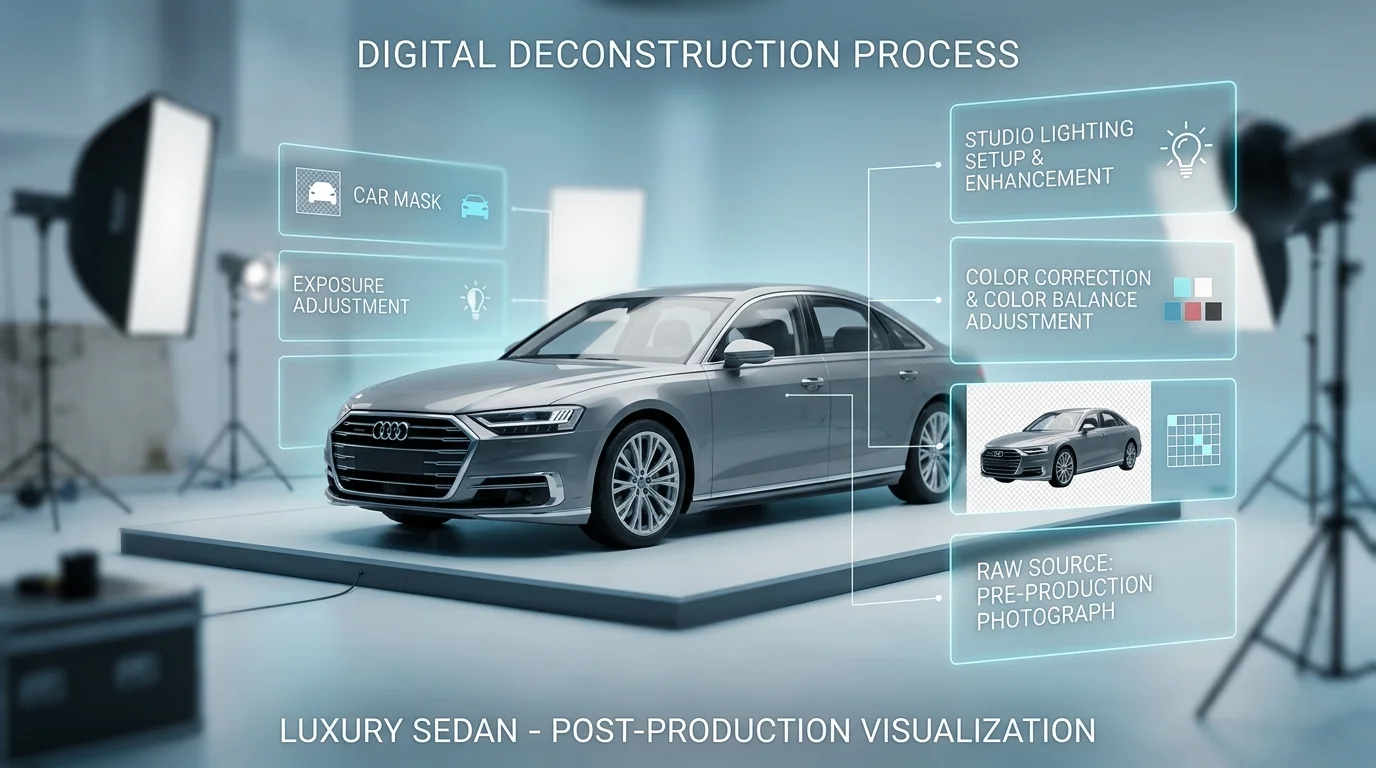
AI-powered automotive photography tools operate through three interconnected processes that transform raw lot photos into polished, market-ready assets. Understanding these mechanics helps dealerships and photographers evaluate which solutions best fit their workflow and quality standards.
Intelligent Background Detection and Removal
The first step involves machine learning models trained to recognize vehicle boundaries with precision. These algorithms analyze pixel data to distinguish the car from its surroundings—whether that's a cluttered dealership lot, outdoor lighting, or studio backdrop. Unlike basic color-selection tools, AI systems understand vehicle geometry, reflections, and shadows, preserving fine details like chrome trim and glass surfaces while cleanly isolating the subject. This automated design task eliminates hours of manual masking work that photographers traditionally performed in Photoshop.
Professional Background Library and Replacement
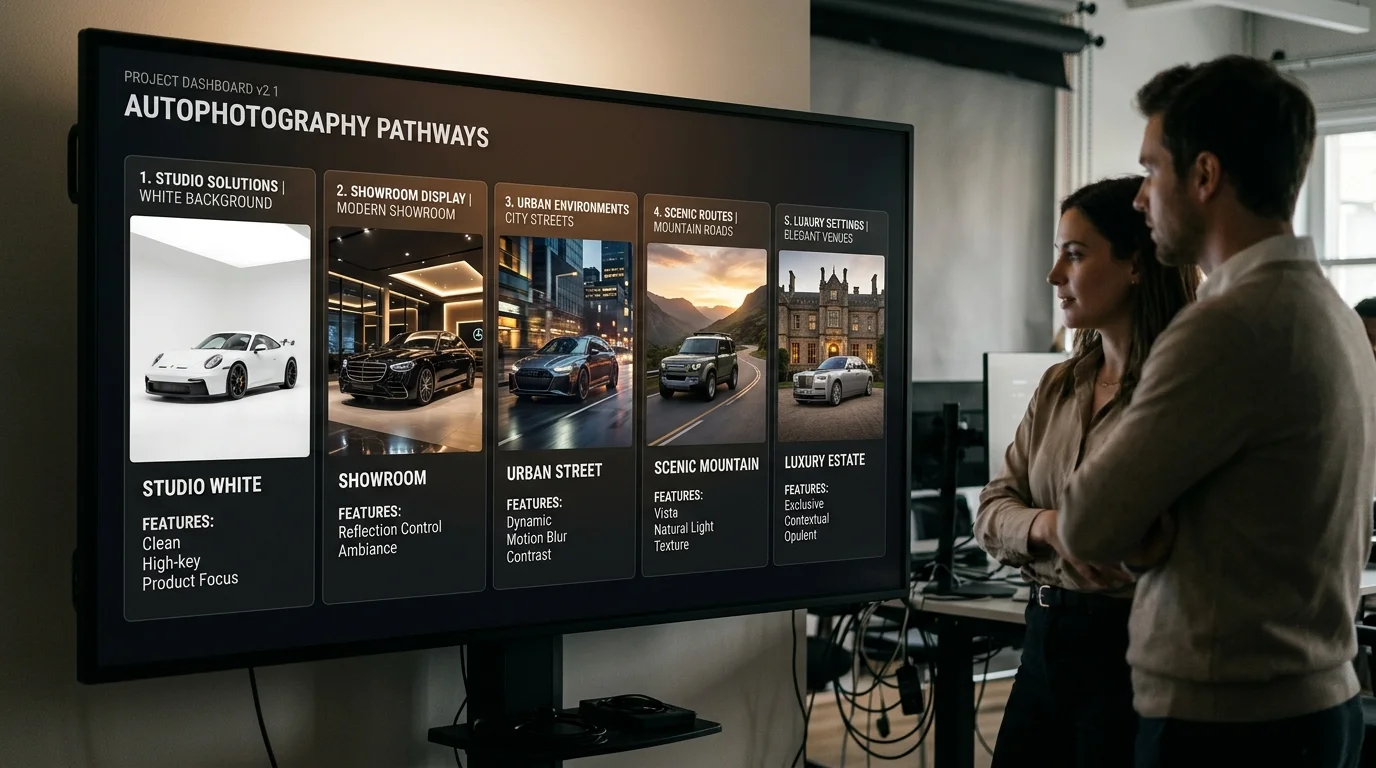
Once the vehicle is isolated, AI applies a curated background from a library of 100+ studio environments. These range from minimalist white studios and luxury showroom settings to urban streets and scenic landscapes. The system intelligently scales and positions the vehicle within each backdrop, maintaining proper perspective and lighting consistency. This capability allows dealerships to generate dozens of variations from a single source photo—each suitable for different marketing channels or customer preferences.
Automated Image Enhancement
Simultaneously, AI enhances exposure, color balance, and sharpness. The system corrects overexposed lot photos, adjusts white balance for consistent tone across inventory, and applies subtle sharpening to emphasize detail. Per 360Booth research, these workflows compress what traditionally takes 15–30 minutes per vehicle into under 7 minutes—enabling dealers to process entire lots in a single session.
The result: studio-quality images at production scale, without studio overhead or technical expertise required.
Top 5 AI Solutions for Automotive Photography in 2026
The automotive photography market has reached an inflection point. According to IntelBooth research, 63% of franchise dealers are now using AI image software for vehicle photography—a dramatic shift from manual editing workflows. This adoption reflects a fundamental truth: design automation and AI-powered tools have become non-negotiable for dealerships competing on inventory velocity and visual consistency.
The following comparison evaluates the five most effective AI solutions currently available for automotive photography, each addressing different operational needs and budget constraints.
| Solution | Primary Use Case | Key Features | Pricing | Best For |
|---|---|---|---|---|
| Car Photo Booth | Background removal & replacement | 100+ studio backdrops, 4K output, 10-sec processing | $7–$50/month | Dealerships, Turo hosts, high-volume dealers |
| CarCutter | Automated lot photo processing | Batch editing, background removal, color correction | Custom enterprise pricing | Large dealership groups, franchise networks |
| Remove.bg (Auto Edition) | Quick background isolation | One-click removal, API integration, bulk processing | $0.50–$5 per image | Individual photographers, small lots |
| Canva Pro (Design Automation) | Template-based photo enhancement | Preset backgrounds, brand consistency tools, resizing | $13/month | Marketing teams, multi-channel campaigns |
| Adobe Firefly (Generative Fill) | Advanced background generation | AI-generated backdrops, object removal, inpainting | $9.99–$54.99/month | Professional photographers, premium studios |
Why Car Photo Booth Leads for Dealerships
Car Photo Booth dominates the dealership segment because it solves the exact workflow bottleneck: converting lot photos into saleable assets at scale. The platform processes images in under 10 seconds, applies intelligent background replacement from 100+ curated studio environments, and maintains consistent 4K output across entire inventories. Unlike generic design automation tools, it's purpose-built for automotive commerce—meaning every backdrop, lighting adjustment, and output format reflects dealership requirements.
CarCutter's Strength in Enterprise Scale
CarCutter excels when dealership groups need batch processing across multiple locations. The platform has helped dealers increase speed to market by up to 82% through automated photo workflows, making it ideal for franchise networks managing thousands of SKUs monthly. However, it typically requires custom pricing and longer onboarding than self-service alternatives.
When to Choose Alternatives
Remove.bg offers cost-effective simplicity for photographers processing occasional batches. Canva Pro suits marketing teams building multi-channel campaigns with consistent branding. Adobe Firefly appeals to premium studios where generative backgrounds and advanced retouching justify subscription costs.
The decision ultimately hinges on volume, budget, and technical comfort. High-volume dealers benefit from purpose-built automotive solutions. Solo photographers or small operations may find lighter tools sufficient. Enterprise groups should evaluate batch processing speed and API integration capabilities.
Integrating AI Photography Tools into Your Dealership Workflow
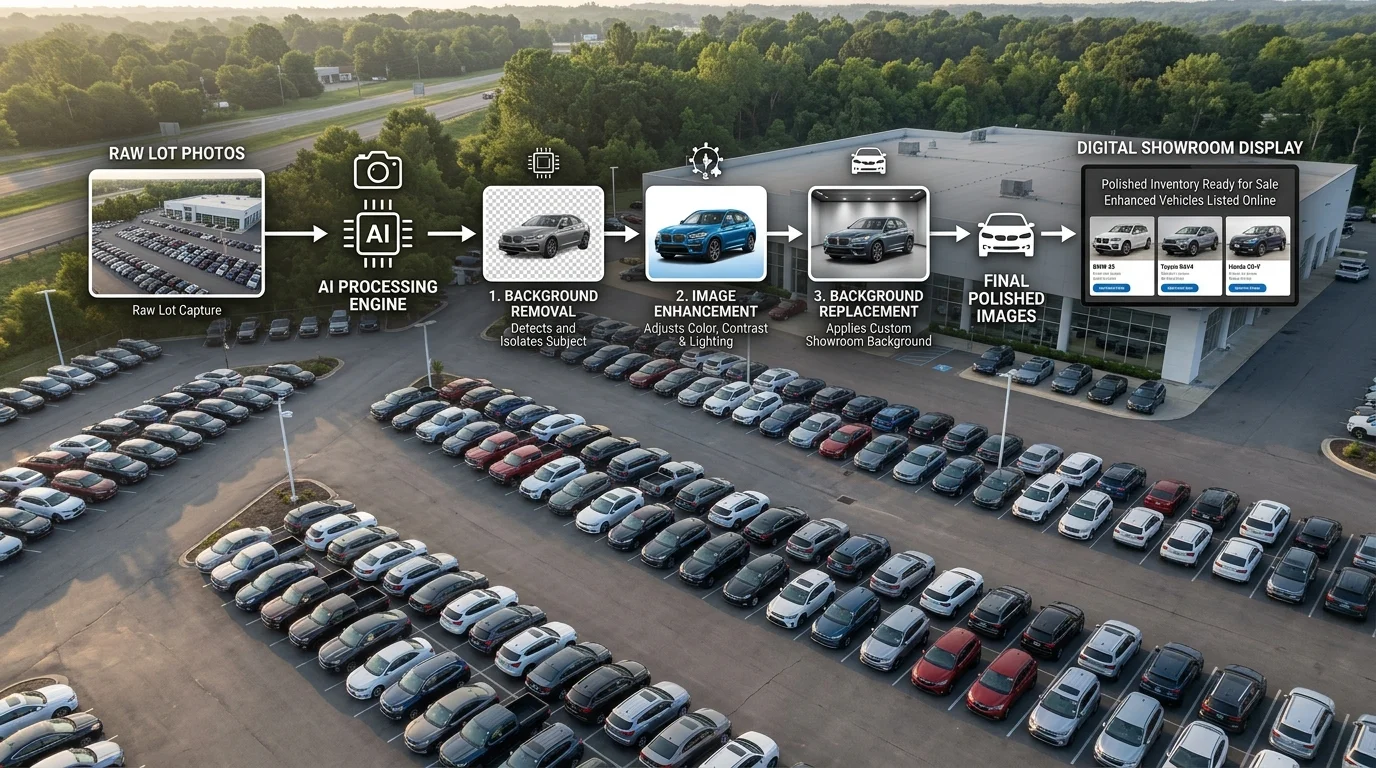
Implementing AI-powered photography into your dealership operations doesn't require overhauling existing processes—it works alongside them. Here's a practical framework for seamless integration:
1. Audit Your Current Photo Pipeline
Document how photos move from lot to listing today. Identify bottlenecks: Are images shot inconsistently? Do they require manual editing? How long does the full cycle take per vehicle? This baseline matters—you'll measure ROI against it.
2. Upload Raw Lot Photos
Most AI design tools accept batch uploads. Photograph vehicles in natural light on your lot (no studio required). Upload 10-50 images at once into your chosen platform. Processing happens in seconds to minutes depending on volume.
3. Select Professional Backgrounds
Choose from 100+ backdrop options—showroom interiors, white studios, urban scenes, or outdoor settings. Consistency across your inventory builds brand trust. Dealerships typically select 3-5 signature backgrounds for all listings.
4. Process in Batches
This is where time savings compound. A single vehicle photo that took 2 hours to edit manually now processes in under 10 minutes using AI background removal and replacement. Batch 20 cars, and you've reclaimed a full workday monthly.
5. Export for Multi-Channel Use
Generate 4K-quality images optimized for your website, mobile apps, and third-party listing sites. Most platforms export directly to your inventory management system or cloud storage.
6. Measure ROI
Track three metrics: time saved (hours per vehicle), cost reduction (70-80% lower than traditional studio photography), and inventory turnover (faster sales cycles from professional presentation). Dealerships using AI photography tools report reduced photo editing time from 2 hours to 10 minutes per vehicle, directly improving speed to market.
Dealership workflows benefit most when AI tools integrate with existing inventory systems rather than replacing them—think of it as accelerating the design workflow you already have.
Cost Savings and ROI: Why Dealerships Are Switching to AI Design
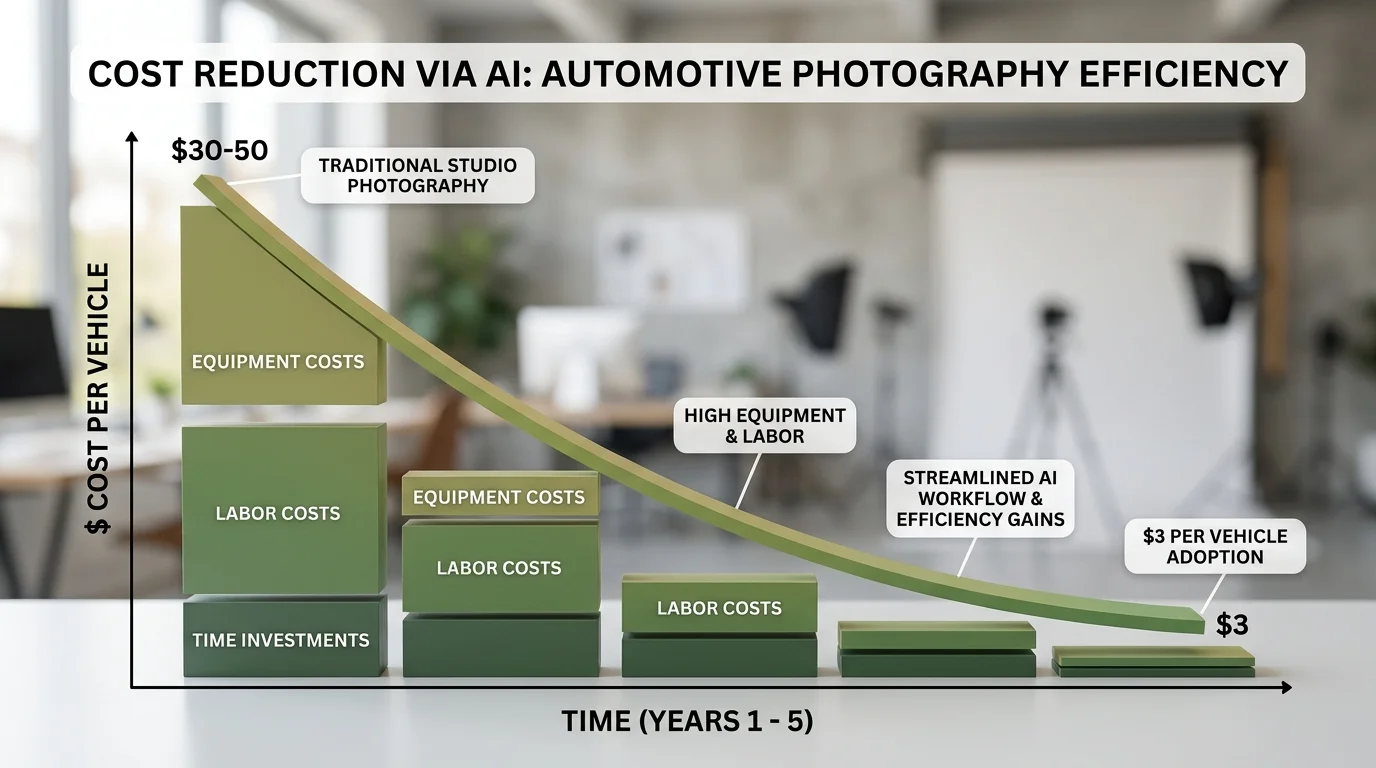
The financial case for AI-powered automotive photography is stark. Traditional studio photography costs $30–50 per vehicle, while physical photo booths demand $25,000–$60,000 in upfront capital investment. In contrast, AI design solutions like Car Photo Booth operate at just $3 per car, eliminating equipment costs entirely and shifting photography from a capital expense to a variable cost model.
The real savings compound when you factor in speed-to-market. According to CDK Global data, dealers lose approximately $50 daily for every vehicle not properly merchandised online. Getting a car listed three to five days faster saves dealerships $12,600–$30,000 monthly in holding costs alone—a figure that dwarfs the cost of professional photography.
| Dealership Size | Monthly Inventory | Traditional Cost | AI Solution Cost | Monthly Savings | Annual Savings |
|---|---|---|---|---|---|
| Small (50 cars) | $1,500–$2,500 | $150–$250 | $150–$250 | $1,350–$2,250 | $16,200–$27,000 |
| Medium (200 cars) | $6,000–$10,000 | $600–$1,000 | $600–$1,000 | $5,400–$9,000 | $64,800–$108,000 |
| Large (500+ cars) | $15,000–$25,000 | $1,500–$2,500 | $1,500–$2,500 | $13,500–$22,500 | $162,000–$270,000 |
Beyond raw cost reduction, dealerships report faster inventory turnover, consistent brand presentation across listings, and measurable conversion improvements. When you transform vehicle photos into studio-quality images in seconds rather than hours, the breakeven point arrives within weeks—not months.
Choosing the Right AI Photography Solution for Your Business in 2026
The decision to adopt AI design tools for automotive photography is no longer a competitive advantage—it's a requirement. The market has matured enough that every serious dealership, Turo host, and automotive photographer must evaluate solutions based on three fundamental criteria: ease of use, cost per image, and background library quality.
Ease of use determines adoption speed. If your team needs training or technical support to process a single car, you've already lost momentum. The best solutions operate on a "upload, click, download" principle—no learning curve, no friction. This is why many dealerships gravitate toward platforms that integrate directly into existing workflows rather than requiring new software installations.
Cost per image matters at scale. Whether you're processing 50 cars monthly or 500, per-unit economics compound quickly. A solution costing $5 per image across 200 vehicles runs $1,000 monthly; at $0.50 per image, that same volume costs $100. The difference funds additional marketing or inventory expansion.
Background library quality separates professional from mediocre results. A collection of 100+ professionally curated backdrops—showroom, white studio, urban, natural—ensures every vehicle matches your brand aesthetic. Limited backdrop options force compromise.
Start with a free trial. Most reputable platforms, including Car Photo Booth, offer no-credit-card trials that let you test real workflows before committing. Process 10–15 vehicles from your current inventory. Evaluate output quality, processing speed, and whether the interface feels intuitive to your team. The right solution should feel obvious within minutes.
AI photography tools have fundamentally shifted automotive retail economics. The question isn't whether to adopt—it's which solution aligns with your volume, budget, and brand standards. Transform your vehicle photos into studio-quality images today by testing a platform risk-free. Your inventory turnover will thank you.