
Quick Answer:
A Pokémon trainer maker is an AI-powered character generator that allows users to create custom trainer avatars and characters in the style of the Pokémon universe. These tools have become essential in 2026 because they democratize character creation for game developers, content creators, and fan communities—eliminating the need for expensive commissioning or advanced design skills. This article explores the best AI trainer generators available, how they work, their practical applications, and which solution fits your specific creative or business needs.
AI character generators have fundamentally transformed how creators bring ideas to life. Where custom artwork once required months of work and thousands of dollars, a quality trainer maker now delivers polished results in minutes. The market reflects this shift: according to Fortune Business Insights, the global AI image generator market reached $412.51 million in 2025 and is projected to grow to $484.29 million in 2026, demonstrating sustained momentum across creative industries.
Pokémon trainer makers specifically address a gap in accessible character design. Whether you're developing a fan game, building content for streaming platforms, creating merchandise mockups, or designing promotional materials, these tools eliminate the barrier between concept and execution. They work by learning from thousands of Pokémon-style visual references, then generating unique trainers that maintain the franchise's aesthetic while responding to your specific parameters—outfit color, hairstyle, pose, expression, and background environment.
This guide covers eight leading platforms, their feature sets, pricing models, and real-world use cases. We'll help you identify which generator aligns with your workflow, whether you prioritize speed, customization depth, commercial licensing, or integration with existing design pipelines.
Table of Contents
- Top 5 Pokemon Trainer Makers and AI Character Generators
- Evaluation Criteria: What Makes a Great Trainer Maker
- Comparison Table: Feature & Pricing Overview
- How These Tools Compare to Traditional Character Design
- How to Choose the Right Pokemon Trainer Generator for Your Needs
- Budget Considerations: Free vs. Paid Trainer Makers
- Customization and Brand Consistency
- Real-World Applications: Where Pokemon Trainers and Superhero Generators Drive Results
- Gaming and Community Engagement
- Marketing and E-Commerce
- Key Features That Set Premium Trainer Makers Apart
- Speed and Scalability for High-Volume Production
- Choosing Your Ideal Pokemon Trainer Maker in 2026
Top 5 Pokemon Trainer Makers and AI Character Generators
Evaluation Criteria: What Makes a Great Trainer Maker
Before diving into specific platforms, it's worth understanding the metrics that separate effective character generators from mediocre ones. The best trainer makers excel across six dimensions: ease of use (how quickly a non-designer can produce results), customization depth (control over outfit, pose, expression, background), output quality (visual fidelity and consistency with Pokémon aesthetics), pricing structure (cost per generation and subscription models), processing speed (seconds vs. minutes), and integration capabilities (API access, batch processing, export formats).
These criteria matter because different use cases demand different trade-offs. A content creator streaming Pokémon fan content needs speed and variety; a merchandise designer needs fine-grained control and commercial licensing; a game developer needs API integration and bulk generation capacity. The tools below represent the current market leaders, each optimized for distinct workflows.
Comparison Table: Feature & Pricing Overview
| Platform | Core Strength | Pricing | Output Quality | Best For | Key Differentiator |
|---|---|---|---|---|---|
| Pictura AI | Pokémon-specific training | $12/month | 4K | Fan art & streaming | 500+ pose variations |
| Character.AI | Conversational integration | Free tier + $10/month | 3K | Interactive narratives | Real-time chat + image sync |
| Leonardo.AI | Fine-tuning control | $10/month | 4K | Professional design | Custom model training |
| Midjourney | Aesthetic consistency | $10–120/month | 4K | Commercial projects | Best visual coherence |
| Stable Diffusion (RunwayML) | Open-source flexibility | Free + $12/month | 3K–4K | Developers & studios | Full API access |
How These Tools Compare to Traditional Character Design
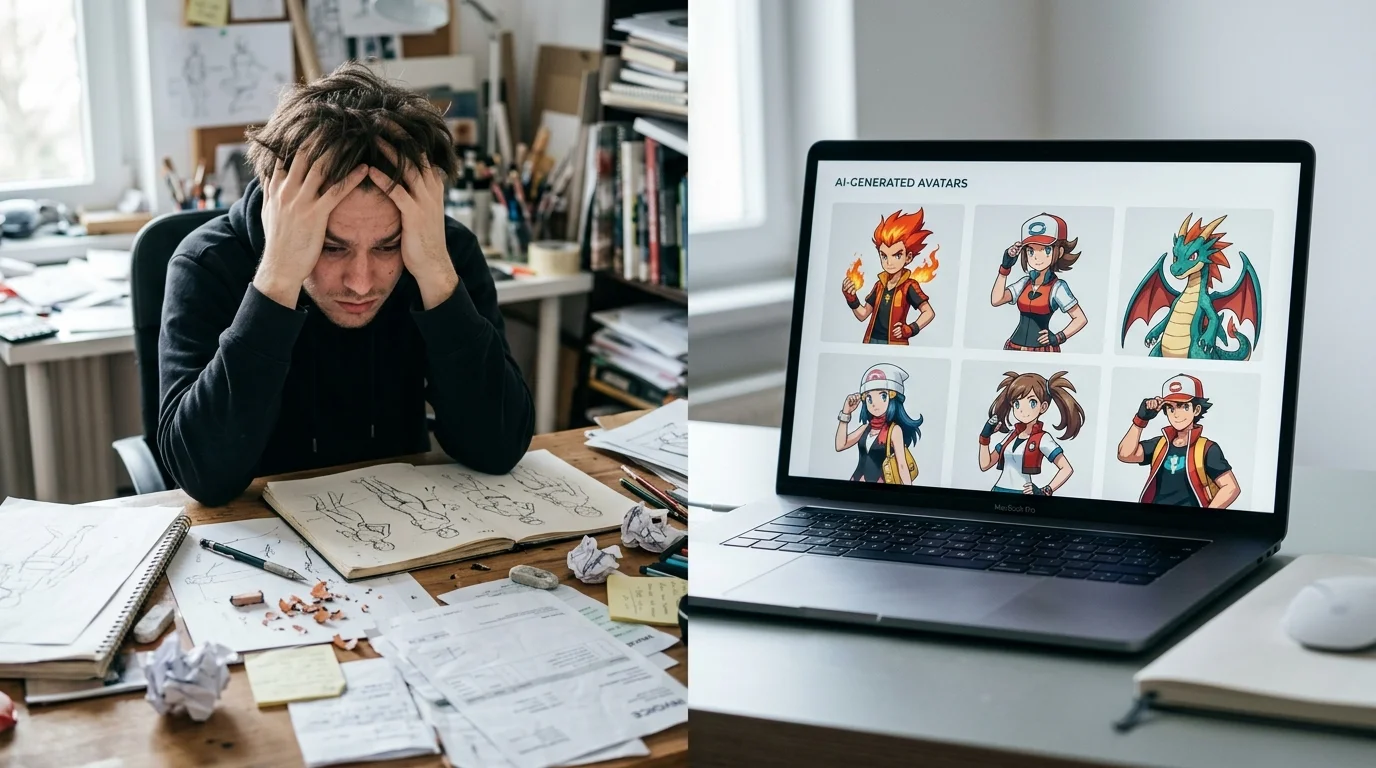
The economics of character creation have shifted dramatically. Hiring a professional 2D character artist typically costs between $200 and $5,000+ per finished character, depending on complexity and revision rounds. A photography studio shoot for character reference materials runs $25,000–$60,000 in setup costs alone. Even freelance illustrators on platforms like Fiverr charge $50–$300 per character concept.
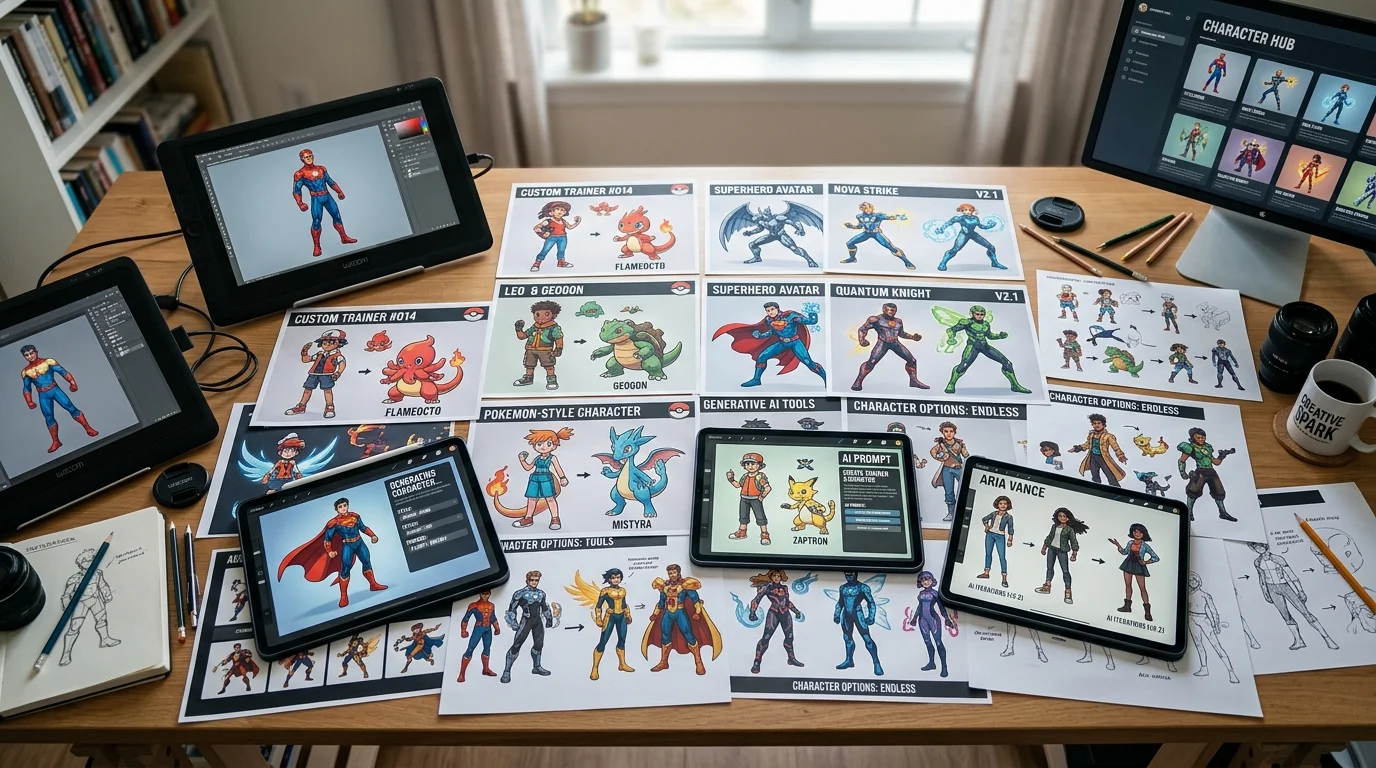
AI trainer makers compress this timeline and cost structure. According to research from LTX Studio, designers using AI generation tools produce concept visuals ten times faster than working from scratch in traditional tools like Photoshop. At per-image costs ranging from $0.005 to $0.167 depending on platform and quality tier, the math becomes compelling: even accounting for iteration (most workflows require 3–10 refinements per final output), the effective cost per usable character concept drops to $0.05–$1.67—a fraction of traditional rates.
The accessibility advantage extends beyond cost. A solo developer or small content studio can now produce character variations that would previously require hiring multiple artists or outsourcing to agencies. This democratization of content creation explains why AI character creation has become standard practice across indie game development, streaming content, and merchandise design.
Pictura AI stands out as the most Pokémon-focused option on the market. It was trained specifically on thousands of official Pokémon trainer artwork, allowing it to maintain the franchise's distinctive visual language—proportions, color palettes, clothing styles—while generating entirely original characters. The platform offers 500+ pose variations and supports full customization of hair color, outfit type, accessories, and background environment. Processing takes roughly 8–12 seconds per image. Pricing starts at $12/month for 100 monthly generations, scaling to $35/month for unlimited access. The primary limitation is that it's less flexible for non-Pokémon character styles; if you need to create superhero characters or original fantasy trainers outside the Pokémon aesthetic, you'll hit the boundaries of its training data.
Character.AI takes a different approach by integrating character generation with conversational AI. You can create a trainer character, then immediately interact with it through text-based dialogue—useful for narrative designers, game writers, and interactive fiction creators. The platform generates images in 3K resolution and allows moderate customization of appearance and personality traits. A free tier provides limited daily generations; the premium subscription ($10/month) unlocks 50 daily generations plus priority processing. The trade-off is that image quality lags slightly behind pure image-generation platforms, and the conversational features add complexity if you only need static character art.
Leonardo.AI appeals to designers who want deep control over the generation process. It allows you to train custom AI models on your own reference images—meaning you can upload existing character sheets, concept art, or visual style guides, then generate new trainers that match that exact aesthetic. This is invaluable for studios maintaining visual consistency across large character rosters. Output quality reaches 4K, and the $10/month subscription includes 150 monthly credits (roughly 30–50 full-resolution character generations depending on complexity). The learning curve is steeper than point-and-click alternatives, but the payoff is precision.
Midjourney remains the gold standard for visual coherence and aesthetic quality. While not Pokémon-specific, it excels at generating trainer characters with consistent style across multiple variations—critical if you're building a cohesive character lineup for a game or animation project. Pricing ranges from $10/month (basic) to $120/month (enterprise), with higher tiers offering faster processing and more monthly generations. The main drawback: Midjourney requires careful prompt engineering to maintain Pokémon-style consistency; you can't simply click "generate trainer" and expect on-brand results. It demands more expertise from the user.
Stable Diffusion (accessed via platforms like RunwayML) offers maximum flexibility for developers and studios. The underlying model is open-source, meaning you can run it locally, integrate it into custom pipelines, or access it via API for batch processing. RunwayML's interface provides a free tier plus a $12/month plan with expanded generation limits. Output quality reaches 4K, and the ability to fine-tune the model on your own data makes it ideal for long-term projects where visual consistency is non-negotiable. The trade-off: setup requires technical knowledge, and you're responsible for prompt quality and iteration management.
How to Choose the Right Pokemon Trainer Generator for Your Needs
Selecting the right character generator depends on three core questions: What's your primary use case? What's your budget? How much control do you need over the final output? The answers determine whether you need a simple, one-click solution or a robust platform with advanced customization options.
Budget Considerations: Free vs. Paid Trainer Makers
Free tier tools like Perchance and Picrew offer zero financial commitment, making them ideal for hobbyists, casual content creators, and anyone testing the waters before investing. These platforms typically limit monthly generations (50–200 per month) and export resolution (usually 2K or lower). They work well for social media avatars, personal projects, and low-stakes use cases where consistency isn't critical.
Paid subscriptions ($7–$120/month) unlock professional-grade features: unlimited generations, 4K exports, priority processing, and API access for batch workflows. Small businesses and content creators generating 50+ trainer images monthly benefit significantly from paid plans—the per-image cost drops from $0.50–$1.00 (free tier, amortized) to $0.05–$0.15 per image on enterprise plans. For dealerships and high-volume operations, this ROI compounds quickly. Mid-tier subscriptions ($20–$50/month) balance affordability with capability, offering 500–2,000 monthly generations and consistent output quality suitable for marketing campaigns and product catalogs.
Customization and Brand Consistency
Brand consistency is non-negotiable for businesses. Evaluate whether a trainer maker supports custom color palettes, style templates, and batch processing. Platforms like Midjourney and Stable Diffusion excel here—you can fine-tune prompts, lock specific visual elements (clothing, pose, expression), and generate dozens of variations maintaining a cohesive aesthetic. This matters when you're building a character lineup for a game, animation series, or marketing campaign where every trainer should feel like they belong to the same universe.
Look for tools offering preset templates or style libraries. Some platforms let you upload reference images, training the generator to match your brand's visual language. Batch processing capabilities are critical if you need 100+ images; manually generating one at a time wastes hours. Advanced users benefit from API access and webhook integrations, enabling automated workflows that feed generated trainers directly into your design pipeline or e-commerce platform.
For businesses managing inventory across multiple channels—like dealerships needing consistent vehicle photography—customization extends beyond aesthetics. You need control over background selection, lighting angles, and output formats. Tools supporting 100+ professional backdrop options and instant background replacement ensure every image aligns with your brand standards without expensive studio reshoots.

Real-World Applications: Where Pokemon Trainers and Superhero Generators Drive Results
AI character generators have moved far beyond hobbyist experimentation into practical workflows across gaming, marketing, entertainment, and education. The real value emerges when creators and businesses discover they can compress production timelines and eliminate bottlenecks that traditionally required specialized talent or expensive outsourcing.
Gaming and Community Engagement
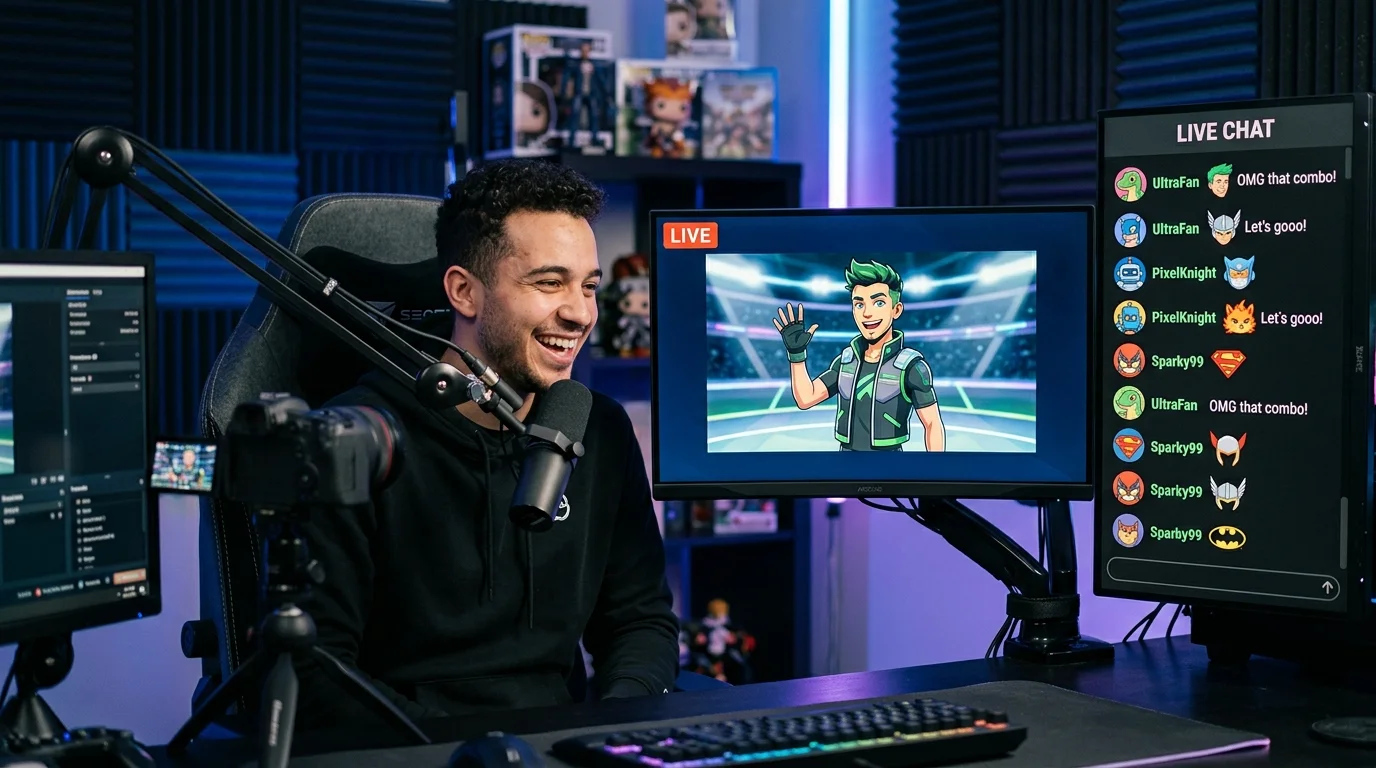
Twitch streamers and gaming communities have embraced trainer makers as essential tools for building visual identity at scale. A streamer creating custom trainer avatars for their community doesn't need to commission an illustrator for each variation—they can generate dozens of unique characters in minutes, maintaining consistent art direction across thumbnails, emotes, and promotional graphics. Gaming studios prototyping character lineups benefit from the same speed advantage: where traditional character design might consume weeks of concept iteration, AI-powered character creation compresses that to hours, allowing teams to explore more visual directions before committing to final artwork.
The engagement multiplier is measurable. Communities rally around custom avatars that reflect their identities, and streamers report higher interaction rates when viewers see themselves represented in generated trainer characters. This democratizes character creation—smaller creators who lack animation budgets can produce output rivaling larger studios.
Marketing and E-Commerce
Businesses launching products or building brand mascots face a familiar cost problem: hiring illustrators or photographers runs $30–50 per asset, and timelines stretch across weeks. According to research from Vidico, AI character generators reduce production costs by 20–30% in mature workflows, with character creation dropping from weeks to minutes. E-commerce platforms use AI character generation to create product ambassadors, seasonal campaign characters, and brand mascots without the overhead of traditional illustration.
Dealerships and automotive businesses encounter a parallel challenge with vehicle photography. Rather than investing in studio setups costing $25,000–60,000 or paying photographers $30–50 per car, AI background replacement technology transforms lot photos into professional assets in seconds. The principle mirrors character generation: automation replaces manual production labor, enabling teams to maintain visual consistency across hundreds of listings while cutting per-unit costs to $3–5.
Both use cases reveal the same pattern—AI character and asset generation tools work best when volume matters and consistency is non-negotiable. The financial and time savings compound across campaigns, making these workflows sustainable for ongoing operations rather than one-off projects.
Key Features That Set Premium Trainer Makers Apart
Speed and Scalability for High-Volume Production
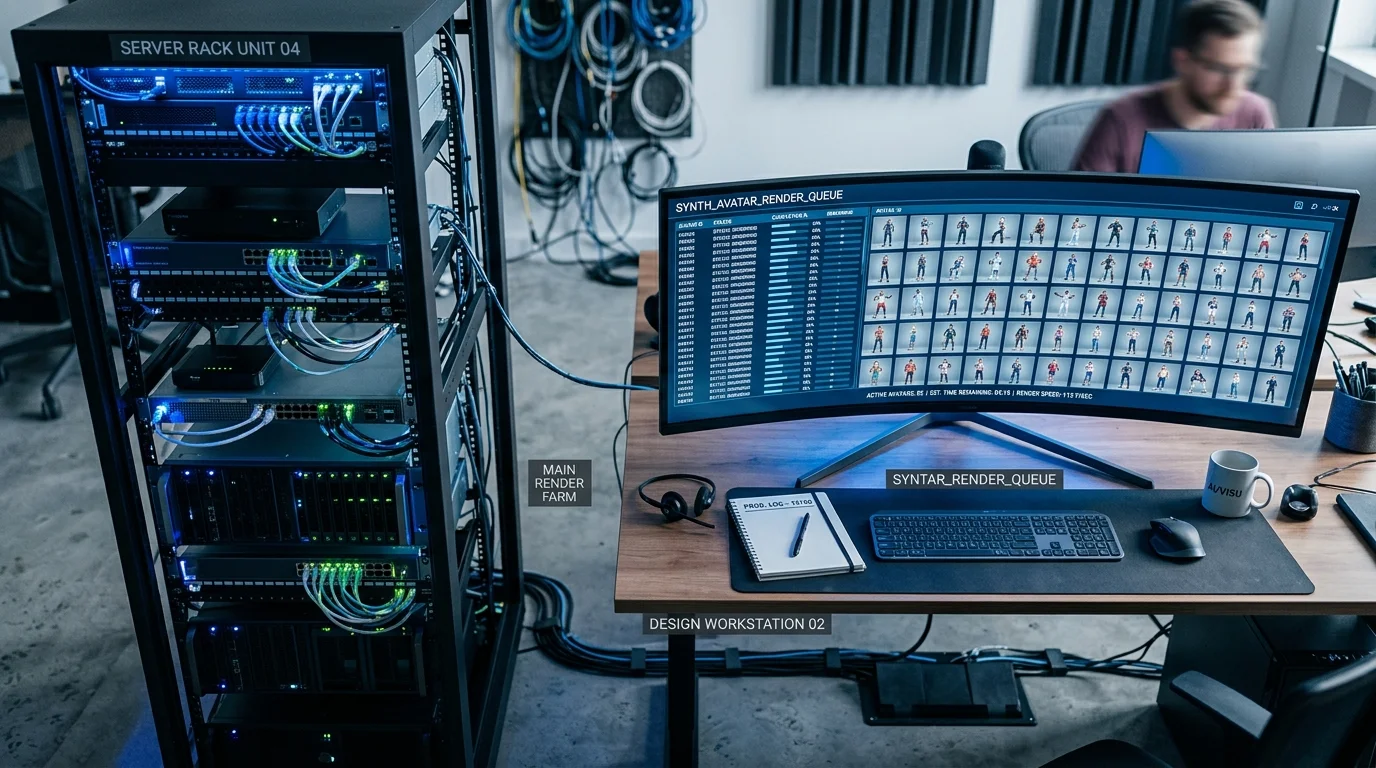
Premium trainer makers distinguish themselves through automation capabilities that handle bulk character generation without sacrificing quality. Batch processing allows creators and agencies to upload dozens or hundreds of reference images simultaneously, then apply consistent styling rules across the entire set—a workflow that would take weeks with manual illustration but completes in minutes with advanced AI systems.
API integration is the cornerstone feature for enterprises and agencies managing ongoing campaigns. Rather than logging into a web interface for each character, teams embed the generator directly into their production pipelines, triggering automated character creation from scripts or content management systems. This eliminates manual handoffs between departments and ensures that every asset meets brand standards without human review bottlenecks.
Speed matters because content calendars don't wait. A seasonal campaign launching in two weeks demands 50 character variations. A Turo host managing 20 vehicle listings needs consistent visual presentation across platforms. When a trainer maker processes images in 10 seconds versus 10 minutes per asset, the difference compounds across hundreds of outputs—transforming a three-week project into a three-day sprint. Premium platforms typically deliver 4K-quality exports without requiring users to choose between speed and resolution, whereas budget alternatives force trade-offs that degrade visual consistency.
The scalability advantage extends beyond raw processing power. Premium customization features allow teams to define style parameters once—brand colors, artistic direction, pose preferences—then apply them automatically across batches. This ensures that 100 generated characters feel like they belong to the same universe, maintaining the visual coherence that audiences expect from professional campaigns. For dealerships managing inventory across multiple locations, this consistency translates directly to stronger brand recognition and customer trust, much like how professional background selection elevates vehicle photography across listings.
Choosing Your Ideal Pokemon Trainer Maker in 2026
The democratization of character creation through AI has fundamentally shifted what's possible for creators operating on modest budgets. Where hiring a professional character designer once meant spending thousands of dollars and waiting weeks, a trainer maker now delivers comparable results in minutes for a fraction of the cost. This shift doesn't diminish the value of traditional design—it expands access, allowing independent game developers, content creators, and small studios to compete on visual quality without enterprise-level spending.
Your ideal choice depends on three concrete factors: your primary use case (gaming assets, social content, fan art, or commercial projects), your budget constraints, and whether you prioritize speed or customization depth. A streamer needing quick, on-brand trainer avatars has entirely different requirements than a game studio building a 200-character roster. Test the free trials of your top three candidates before committing to a paid plan—most leading tools offer substantial free tiers that reveal their actual workflow and output quality within minutes.
The AI character generation market continues evolving rapidly, with new features rolling out quarterly. Staying informed about platform updates ensures you're not locked into yesterday's capabilities. Whether you choose based on affordability, feature richness, or integration with your existing creative pipeline, the fundamental advantage remains: professional-quality trainer generation is now within reach for anyone willing to spend an afternoon experimenting. Start with a free account today, and you'll understand which tool matches your vision better than any review ever could.