
Car advertising has fundamentally transformed. A decade ago, a handful of smartphone snapshots sufficed to move inventory. Today, buyers scroll through dozens of listings in minutes, and the difference between a vehicle that sells in days versus one that languishes for weeks often comes down to a single factor: image quality. Professional photography directly impacts conversion rates, buyer engagement, and ultimately, your bottom line. In an increasingly competitive market, dealerships and individual sellers who invest in polished, studio-quality visuals consistently outperform those relying on hastily shot lot photos.
Quick Answer: Advertise a car effectively by pairing high-quality, professional photography with strategic SEO optimization and platform-specific presentation. Studio-quality images boost buyer confidence and click-through rates, while proper dealership SEO and automotive keyword targeting ensure your listings reach qualified buyers searching online. Tools like AI background replacement can deliver professional results without studio costs, making premium visuals accessible to sellers of any size.
This guide walks you through the complete strategy for advertising vehicles online—from mastering photography fundamentals and leveraging visual AI technology to optimizing your listings for search engines and maximizing buyer engagement across platforms. Whether you're managing a multi-location dealership or selling a single vehicle, you'll discover actionable tactics that transform ordinary photos into conversion-driving assets.
Table of Contents
- The Core Elements of Effective Car Advertising: Beyond Basic Photos
- Where and How to Advertise Your Car: Channels and Platforms
- AI-Powered Car Photography: The Modern Solution to Inventory Challenges
- Best Practices for Creating Ads That Convert: Design and Messaging
- Frequently Asked Questions About Advertising Cars
- Getting Started With Professional Car Advertising in 2025
The Core Elements of Effective Car Advertising: Beyond Basic Photos
Successful car advertising rests on four interconnected pillars: professional photography, strategic platform placement, compelling vehicle descriptions, and consistent visual branding. Each element amplifies the others, but photography remains the foundation—it's the first impression that determines whether a buyer clicks through or scrolls past.
Traditional dealership photography often fails because it's inconsistent. A vehicle shot on a cloudy Tuesday looks dramatically different from one photographed on a sunny Friday. Lighting varies, backgrounds clash with lot clutter, and editing quality fluctuates across dozens of photos. This visual inconsistency erodes buyer confidence and makes inventory appear disorganized, even when the vehicles themselves are premium stock.
The numbers validate this problem. According to research from 360Booth, high-quality car photos increase online listing views by 47% and generate 62% more leads compared to lower-quality images. Beyond engagement, listings with professional photography sell 32% faster, and vehicles with studio-quality images command up to 20% higher prices. These aren't marginal gains—they're transformational metrics that directly impact revenue.
The cost barrier has historically been steep. Professional car photographers charge $100 to $300 per hour, translating to $7 to $50 per vehicle depending on scope. Physical photo booths—the dealership standard—require $38,000 to $42,875 in capital investment or $1,350 to $1,717 monthly rental fees. For independent sellers and smaller operations, these costs are prohibitive.
Modern AI-enhanced photography solutions address this directly. Tools that remove backgrounds and apply professional studio backdrops deliver consistency at a fraction of traditional costs. A single lot photo—taken with any smartphone camera—can be transformed into a studio-quality asset in seconds, complete with controlled lighting, professional backgrounds, and 4K resolution. This democratizes dealership-grade photography, allowing sellers of any size to compete visually with larger operations.
Strategic SEO for dealerships amplifies these visual assets. Optimized titles, descriptions, and keyword placement ensure your polished photos reach qualified buyers actively searching for vehicles. But without professional imagery, even perfect SEO underperforms—buyers need visual confidence before they engage with text.
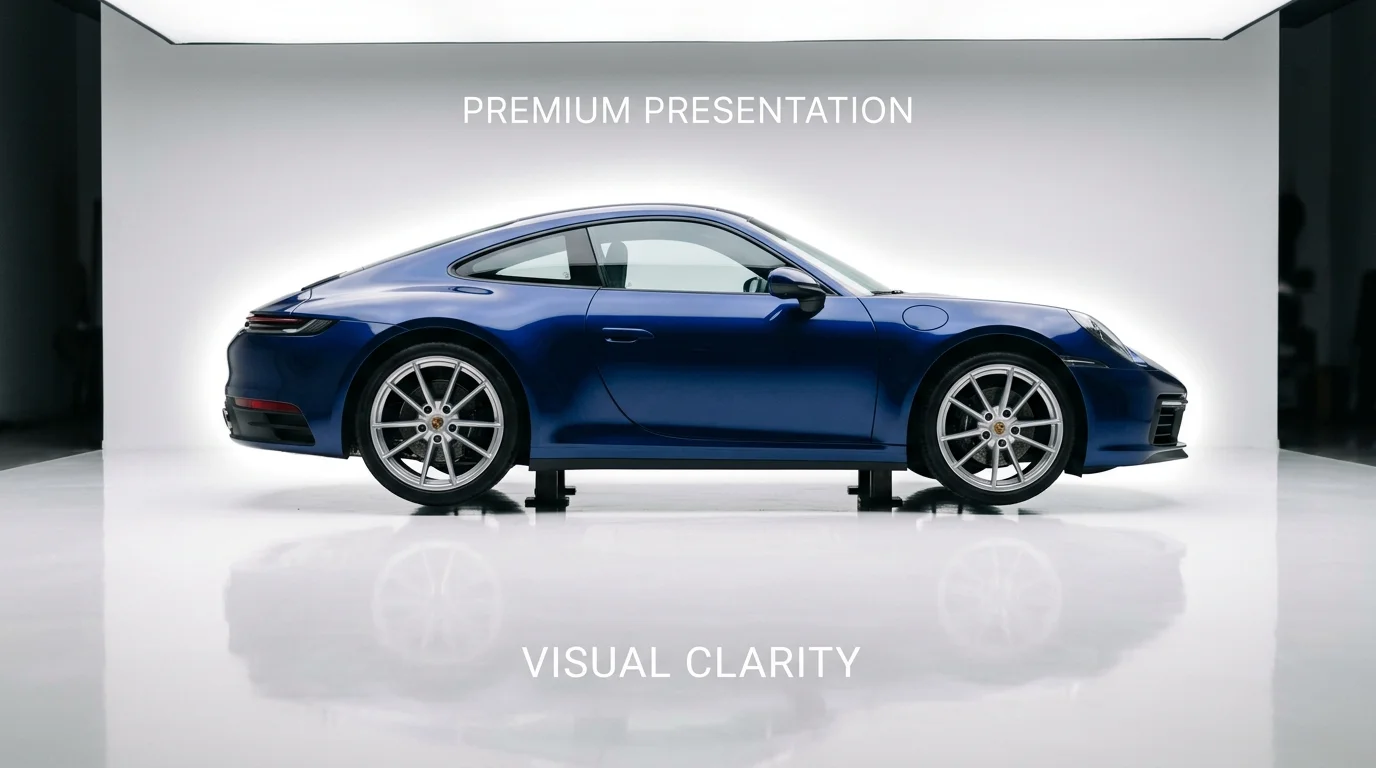
Where and How to Advertise Your Car: Channels and Platforms
The platform you choose determines not just visibility, but how your vehicle's imagery performs algorithmically. Each major advertising channel—from Facebook Marketplace to AutoTrader to your own dealership website—has distinct photo requirements, audience behavior, and algorithmic preferences. Understanding these nuances ensures your inventory reaches qualified buyers while your photography investment pays dividends across channels.
Facebook Marketplace and Craigslist remain high-volume channels for individual sellers and smaller dealerships. Facebook requires a minimum of two images (up to 20 maximum), and per CARVID's marketplace guidelines, these must show the actual vehicle with no banners, text overlays, or placeholder images. The platform's algorithm prioritizes listings with multiple angles and clear condition visibility. Optimal specs: JPG format, 1200×900 pixels minimum, under 5MB per file. Craigslist accepts up to 24 photos but performs best with 8–12 high-quality images showing exterior, interior, engine bay, and detail shots. Both platforms penalize low-resolution or heavily filtered imagery—buyers need authentic confidence before engagement.
AutoTrader, Cars.com, and Edmunds cater to serious buyers actively researching vehicles. These aggregator sites favor 4K-quality imagery with consistent lighting and neutral backgrounds. AutoTrader recommends 15–20 photos per listing, with specific angles: front three-quarter, rear three-quarter, driver side, passenger side, interior dashboard, and trunk. File sizes should not exceed 3MB; 1920×1440 pixels is the standard. These platforms' SEO algorithms reward detailed, keyword-optimized titles and descriptions paired with professional photography—the visual-text combination signals dealership legitimacy to both search engines and buyers.
Dealership websites and Instagram demand cohesive visual branding. Your site's photo gallery should maintain consistent backgrounds, lighting, and styling across all vehicles. Instagram's algorithm favors carousel posts (multiple images per post) with high engagement; 1080×1350 pixels works best for vertical feed posts. TikTok performs well with short video clips (15–60 seconds) showing vehicle walkarounds or detail reveals—lower production quality is acceptable here, as authenticity drives engagement.
Professional backgrounds dramatically improve performance across all channels. Rather than inconsistent lot photography, applying studio-quality backdrops creates visual uniformity that algorithms and buyers both reward. This consistency signals professionalism and makes your inventory appear curated rather than hastily photographed.
| Platform | Recommended Photos | Optimal Dimensions | Key Algorithm Factor |
|---|---|---|---|
| Facebook Marketplace | 2–20 images | 1200×900px | Actual vehicle, no overlays |
| Craigslist | 8–12 images | 800×600px minimum | Variety of angles |
| AutoTrader | 15–20 images | 1920×1440px | 4K quality, consistent lighting |
| Dealership Website | 12–18 images | 1920×1440px | Cohesive branding, backgrounds |
| 3–5 per carousel | 1080×1350px | Engagement, carousel format |
For dealership SEO specifically, photo metadata matters. Include vehicle details in image alt text ("2024 Honda Civic EX sedan silver exterior three-quarter view") and filename structure. This reinforces keyword relevance for search engines while improving accessibility. Pair professional imagery with optimized title tags, meta descriptions, and structured data markup to maximize organic visibility.
The cost-per-vehicle advantage becomes clear when you standardize photography across channels. Rather than hiring photographers for each platform's unique requirements, transforming lot photos into platform-optimized assets—with background removal and professional backdrop application—ensures consistency while reducing production time from hours to seconds.
AI-Powered Car Photography: The Modern Solution to Inventory Challenges
The traditional approach to dealership car photography—hiring professional photographers, renting studio space, or maintaining in-house equipment—has created a bottleneck that directly impacts inventory turnover and online visibility. Every day a vehicle sits without professional imagery is a day it fails to compete effectively against competing listings. According to CDK Global research, dealers lose up to $50 in potential revenue per vehicle per day when photos aren't merchandised properly, and nearly 90% of online shoppers are influenced by the quality of a dealer's photography before they even initiate contact.
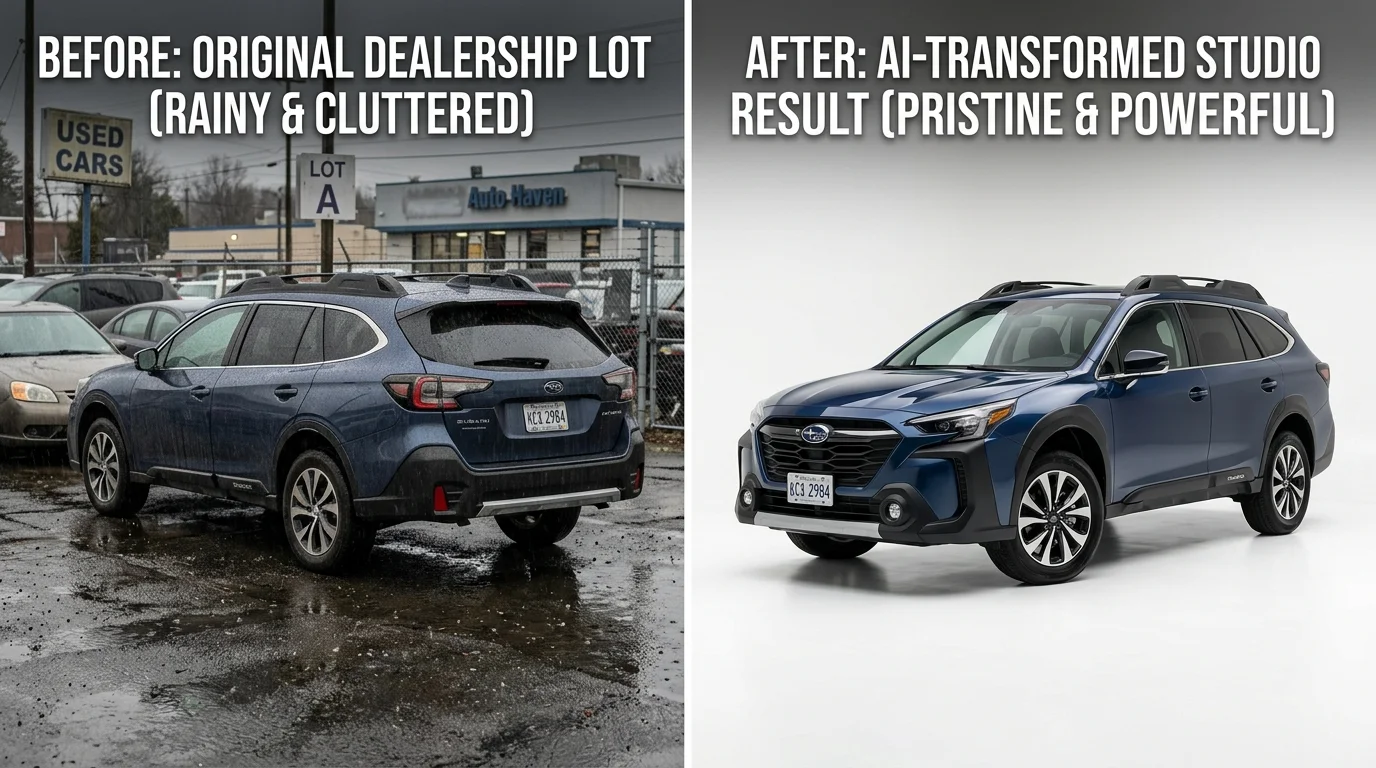
Artificial intelligence has fundamentally transformed this equation. AI-powered background removal and replacement technology allows dealerships to convert lot photos—taken with any smartphone or basic camera—into studio-quality assets in seconds. The process is straightforward: upload an image, the AI removes the original background (parking lot, cluttered lot line, poor weather conditions), and applies one of hundreds of professional backdrops ranging from showroom interiors and white studio settings to outdoor luxury environments. This eliminates the inconsistency that plagues traditional lot photography while maintaining the authentic vehicle representation that builds buyer trust.
The cost advantage is dramatic. Traditional automotive photography runs $30–50 per vehicle, while AI-powered solutions reduce this to approximately $3–5 per car. For a dealership processing 50 vehicles monthly, this translates to savings of $1,250–2,350 per month—without sacrificing quality. Processing time shrinks from hours (shooting, editing, uploading) to seconds, which directly accelerates listing publication and improves search engine indexing speed. When combined with proper dealership SEO practices—optimized alt text, structured data markup, and platform-specific image dimensions—this speed advantage compounds across your entire digital marketing ecosystem.
Consistency across platforms becomes automatic. Rather than hiring different photographers or investing in multiple studio setups to meet Facebook Marketplace, AutoTrader, Instagram, and your dealership website requirements, AI background replacement generates platform-optimized images from a single source photo. A vehicle shot under poor lot lighting becomes a polished showroom asset. This uniformity strengthens brand perception and improves click-through rates by presenting every vehicle with equal visual weight, regardless of when or where it was photographed.
The real-world impact extends beyond cost and speed. Dealerships report faster inventory turnover, higher engagement rates on listing platforms, and improved conversion metrics when transitioning from inconsistent lot photography to standardized AI-enhanced imagery. The technology works across all vehicle types, conditions, and angles, making it particularly valuable for high-volume operations where manual photo editing creates workflow bottlenecks. For Turo hosts and independent sellers, the democratization of professional-quality imagery levels the competitive playing field against larger dealership operations.
Best Practices for Creating Ads That Convert: Design and Messaging
Effective car advertising demands visual clarity and strategic information hierarchy. The design of your listing—whether on AutoTrader, Facebook Marketplace, or your dealership website—directly influences whether a buyer clicks through or scrolls past. Clean, uncluttered layouts perform consistently better because they guide the viewer's eye to what matters: the vehicle itself, its price, mileage, and condition.
Start with the vehicle as the hero. Position your primary image to occupy the dominant visual space, ensuring the car fills 60-70% of the frame without competing background distractions. This is where professional backgrounds become essential to your conversion strategy. Rather than fighting lot clutter, poor lighting, or weather conditions in your original shots, AI background replacement transforms ordinary lot photos into polished studio assets, creating visual consistency across your entire inventory. A white, showroom, or urban backdrop immediately signals professionalism and allows the vehicle's lines and features to command attention.
Layer critical information strategically. Price should appear prominently—top-left or top-right, depending on your platform's conventions. Mileage, year, and key features (transmission type, fuel economy, safety ratings) belong in the secondary visual tier, readable at a glance but not competing with the image. Use high-contrast text colors: dark copy on light backgrounds or vice versa. Avoid thin fonts or low-contrast combinations that strain the eye on mobile devices, where 70% of automotive searches now originate.
Call-to-action buttons require intentional design. "Schedule Test Drive," "Contact Dealer," or "View Details" should use contrasting colors—typically bright blues, greens, or oranges—and occupy sufficient space to be thumb-friendly on smartphones. Ambiguous or buried CTAs kill conversions; clarity drives action.
Brand positioning matters, but subtly. Your dealership logo or Turo host name belongs in a corner, not across the vehicle. Watermarks or excessive branding create visual noise and suggest amateurism—the opposite of what professional photography communicates.
Research shows the optimal number of photos for generating leads on marketplace sites is 9 photos, with listings showing 71% more lead generation compared to those with 30+ images due to image fatigue. This constraint demands that each image earn its place. Consistency in background, lighting, and angle across all nine shots reinforces brand authority and reduces cognitive load for buyers evaluating multiple vehicles. When every photo maintains the same professional standard—achievable through AI-powered background replacement—your inventory appears curated and trustworthy, directly improving automotive SEO performance and click-through rates across platforms.
Frequently Asked Questions About Advertising Cars
How many photos should I include in a listing?
The optimal range is 8–12 photos per listing. Cars.com allows up to 30 photos, but research shows that listings with 9 images generate 71% more leads than those exceeding 30—a phenomenon driven by image fatigue. Each photo must justify its inclusion; redundant angles dilute impact. Prioritize variety: front three-quarter view, side profile, interior dashboard, seating area, trunk, and detail shots of condition or features. Consistency matters enormously for dealership SEO performance; when all images maintain identical professional standards through tools like AI background replacement, your inventory signals authority and trustworthiness across search results.
What image resolution do I need?
Minimum 1200×800 pixels ensures crisp display across desktop and mobile devices. Higher resolution (1920×1280 or 4K) improves perceived quality and supports zoom functionality, which buyers use to inspect condition details. Dealerships using AI-powered photo enhancement can generate 4K exports that rival studio photography without the associated costs.
How often should I refresh photos?
Update photos when inventory changes or seasonally—typically every 3–6 months. Stale imagery signals inactive listings to algorithms, suppressing visibility. Seasonal refreshes (winter vs. summer backgrounds) can improve click-through rates by presenting vehicles in contextually relevant environments.
Can AI photos replace professional photography entirely?
Yes, for most dealership use cases. AI background removal and replacement eliminates the need for expensive studio rentals or on-location shoots. The technology transforms lot photos into studio-quality assets in seconds, making professional-grade imagery accessible at scale.
How do I measure ad performance?
Track three core metrics: click-through rate (CTR), lead volume, and conversion rate. CTR reveals whether imagery and headlines attract clicks; lead volume indicates platform reach; conversion rate shows how many inquiries become test drives or purchases. A/B test different photo styles to identify what resonates with your audience.
Getting Started With Professional Car Advertising in 2025
Effective car advertising in 2025 rests on three non-negotiable pillars: studio-quality photography, strategic platform selection, and consistent visual branding. The market has shifted decisively away from amateur lot photos and generic listings. Dealerships, Turo hosts, and independent sellers who invest in professional-grade imagery consistently outperform competitors in click-through rates, lead volume, and conversion metrics. The challenge has never been understanding what works—it's been accessing professional results at scale without prohibitive costs.
This is where AI-powered photography changes the equation. Rather than booking photographers at $30–50 per vehicle or maintaining expensive studio infrastructure, dealerships can now transform ordinary lot photos into 4K studio-quality assets in seconds. Over 500 dealerships have already made this shift, recognizing that the technology eliminates the traditional bottleneck between inventory volume and visual presentation quality. When you can refresh your entire catalog in hours instead of weeks, and at a fraction of traditional costs, the competitive advantage becomes immediate.
Starting your professional car advertising strategy means committing to three concrete actions: audit your current photo inventory for consistency and quality, select platforms aligned with your target buyer behavior, and implement a repeatable workflow for maintaining fresh, branded imagery. AI-powered photo enhancement eliminates the friction from this process, allowing you to scale professional results across dozens or hundreds of vehicles without hiring additional staff or renting studio space.
The future of automotive marketing belongs to those who can deliver professional imagery at volume. Ready to transform your inventory? Start free with Car Photo Booth—no credit card required, instant results. Your first step toward competitive advantage is one upload away.