

Over 90% of car buyers conduct extensive online research before stepping into a dealership—and if your dealership isn't visible in those searches, you're losing deals before the conversation even starts. In 2025, dealership SEO has shifted from a nice-to-have marketing tactic to a core revenue driver. The dealerships that rank for local search terms, appear in Google Maps results, and dominate their market's first page are the ones capturing qualified buyers actively searching for inventory in their area.
This isn't about vanity metrics or traffic volume. It's about reaching buyers at the exact moment they're ready to make a decision. According to research from Demand Local, 92% of consumers use digital channels to research vehicles before purchase, spending an average of 14 hours and 19 minutes on their online buying journey. That's 14+ hours where your dealership either competes for their attention or remains invisible.
Quick Answer:
Car dealership SEO is the practice of optimizing your website, inventory listings, and online presence to rank higher in search results for local car-buying queries. It matters because most buyers research online before visiting—if you're not ranking, you're not competing. This article covers the essential strategies dealerships need in 2025 to dominate local search, from technical optimization to content that converts browsers into showroom visitors.
What follows is a roadmap of proven tactics: how to structure your site for search engines, which keywords actually drive qualified traffic, how to leverage Google Business Profile for local dominance, why high-quality vehicle photography (including professionally edited images that showcase your inventory) influences both SEO and conversion rates, and how to build authority through content and reviews. By the end, you'll understand why auto dealer SEO isn't optional anymore—it's the foundation of a modern dealership's growth strategy.
Table of Contents
- Local SEO Foundations: Claim, Optimize, and Dominate Your Local Market
- Claim and Optimize Your Google Business Profile
- Expand to Bing and Apple Business Profiles
- Ensure NAP Consistency Across All Directories
- Complete Your Business Information Checklist
- Technical SEO and Website Performance: The Foundation for Ranking
- Content Strategy for Dealerships: Vehicle Listings, Blog Posts, and Visual Content
- Building Authority: Backlinks, Reviews, and Digital PR for Dealerships
- Measuring Success: SEO Metrics, Tracking, and Continuous Optimization
- Moving Forward: Your 2025 Car Dealership SEO Roadmap
Local SEO Foundations: Claim, Optimize, and Dominate Your Local Market
Local SEO is where dealership visibility begins. When a buyer searches "used cars near me" or "Honda dealer in [city]," they're signaling immediate purchase intent—and if your dealership doesn't appear in those results, you've already lost the sale. According to research from Demand Local, "near me" searches for car dealerships have increased by 200% year-over-year, making local optimization non-negotiable for automotive dealership SEO success.
The foundation rests on three pillars: claiming your business profiles, ensuring NAP consistency (Name, Address, Phone), and completing your business information across all platforms. This isn't busywork—it directly impacts how search engines and customers find you.
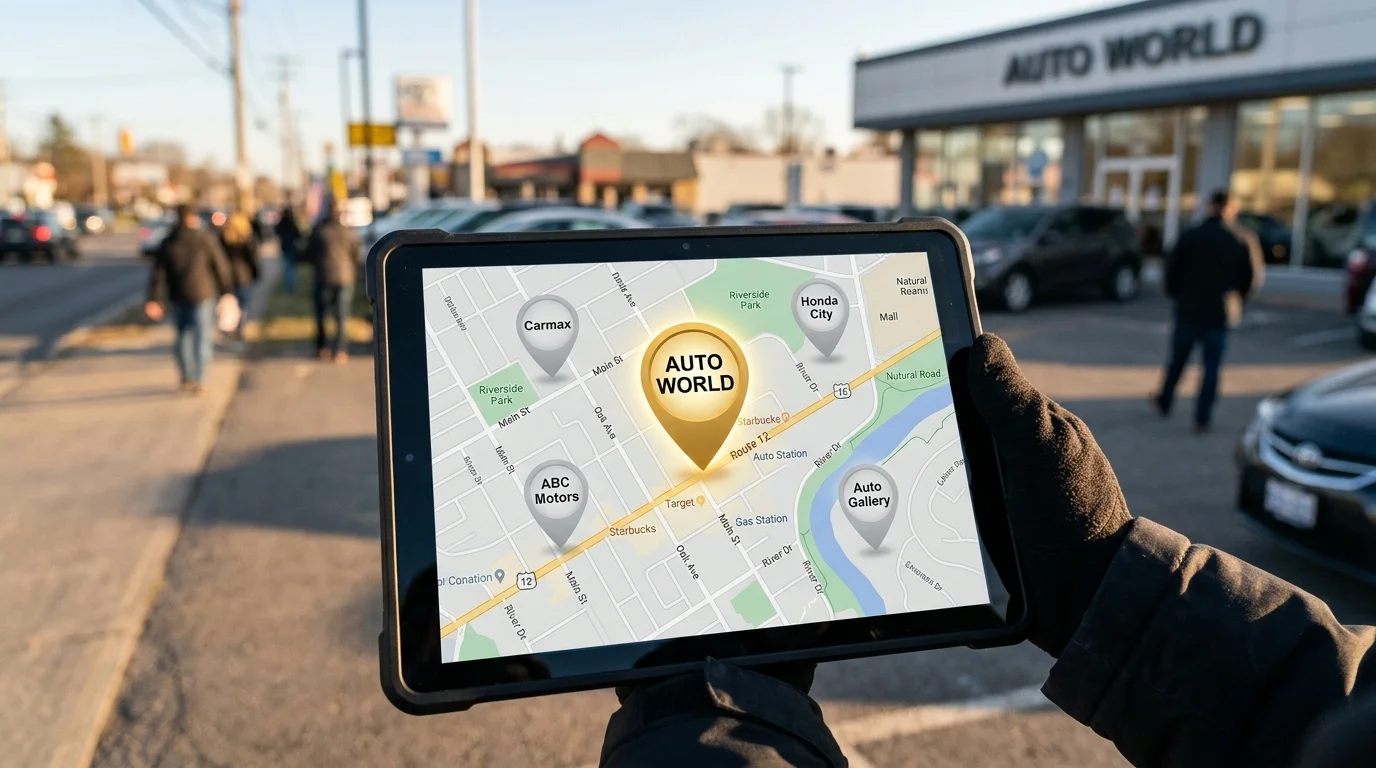
Claim and Optimize Your Google Business Profile
Your Google Business Profile is your dealership's front door on Search and Maps. According to research from Blogging Wizard, the primary category you select ranks as the #1 local ranking factor, scoring 193 out of 149 potential ranking factors. This single choice matters more than most other optimizations combined.
Action steps:
- Verify ownership of your dealership's profile (Google will send verification via postcard or phone)
- Select the most accurate primary category: "Car Dealership" or "Used Car Dealer"
- Add all secondary categories (e.g., "Auto Repair," "Car Rental") if applicable
- Complete every field: hours, phone, website, services offered
- Upload high-quality photos—at least 10-15 images showing your lot, showroom, and inventory. Professional vehicle photography directly influences both local rankings and conversion rates; consider tools that transform lot photos into studio-quality images to ensure consistency across your profile
- Add current offers and promotions (e.g., "Trade-in specials," "Financing available")
- Respond to all reviews within 24-48 hours—Google now emphasizes "popularity" as a primary ranking factor, evaluating how often people interact with your business through profile visits, reviews, and website clicks
Expand to Bing and Apple Business Profiles
Google dominates, but Bing and Apple Maps serve significant traffic, especially among older demographics and Apple device users.
Bing Places for Business:
- Claim your profile at bingplaces.com
- Mirror your Google Business Profile information exactly (NAP consistency is critical)
- Add business hours, photos, and service areas
Apple Business Register:
- Claim at apple.com/business/register
- Provide consistent business details
- Apple Maps users often convert at high rates due to intent-driven searches
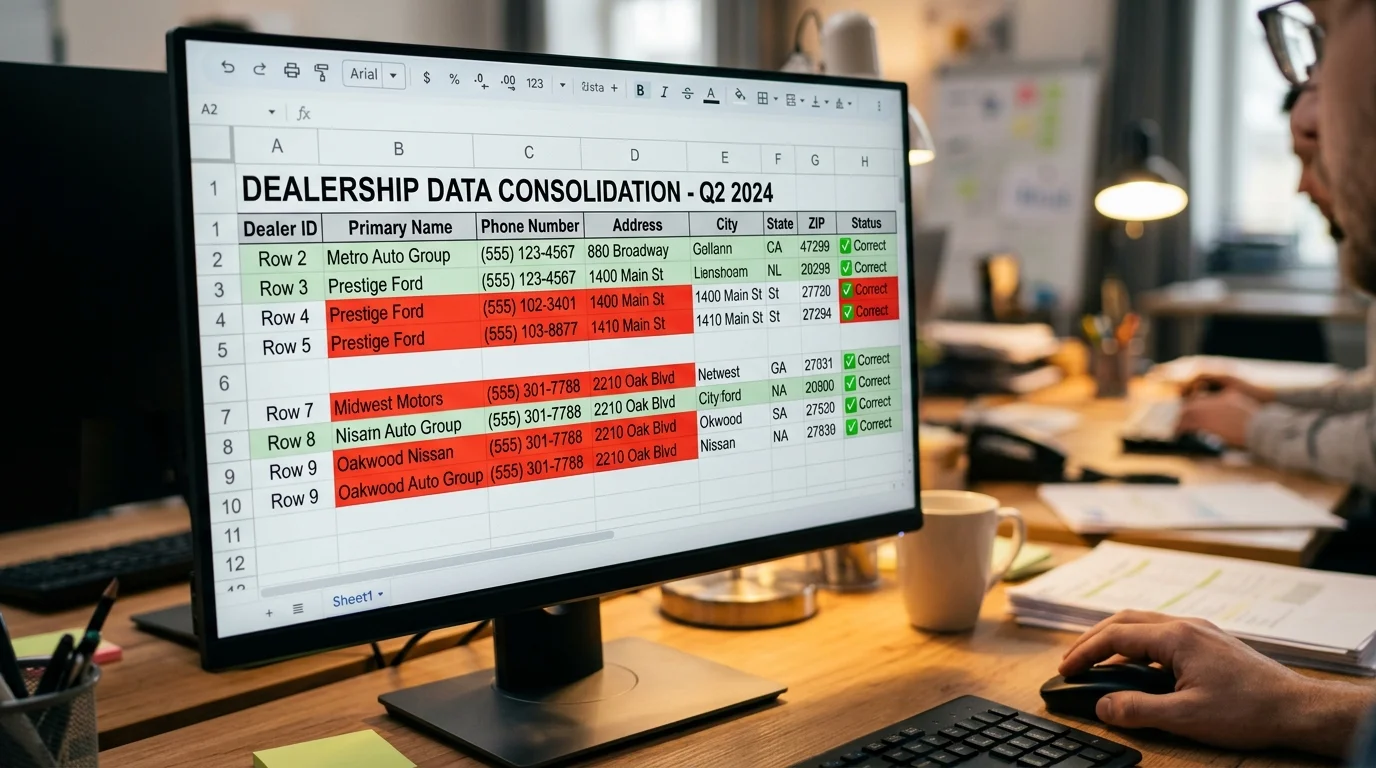
Ensure NAP Consistency Across All Directories
Inconsistent business information confuses search engines and damages local rankings. Your name, address, and phone number must be identical across every platform.
Audit your current presence:
- Search "[your dealership name]" + "address" on Google
- Check major automotive directories: Edmunds, Cars.com, Kelley Blue Book, and Autotrader—these are increasingly the first and last stop in the vehicle shopping process, according to Cox Automotive research
- Verify local directories (Yelp, Better Business Bureau, local chamber listings)
- Update any mismatched information immediately
Complete Your Business Information Checklist
| Element | Priority | Impact |
|---|---|---|
| Business hours (including holidays) | Critical | Prevents missed leads |
| Service categories | Critical | Improves local ranking factors |
| High-quality photos (15+) | High | Boosts engagement and CTR |
| Current offers/promotions | High | Drives foot traffic |
| Customer reviews (respond to all) | High | Signals active, trustworthy business |
| Service area (if applicable) | Medium | Expands local visibility |
| Payment methods accepted | Medium | Reduces friction |
Local SEO foundations aren't glamorous, but they're the difference between appearing in the local pack and disappearing entirely. Claim your profiles today, ensure consistency, and watch your "near me" visibility grow.
Technical SEO and Website Performance: The Foundation for Ranking
Local SEO foundations matter, but they mean nothing if your website can't be crawled, indexed, or ranked by Google. Technical SEO is the invisible infrastructure that determines whether search engines can even access your content—and whether users will stay once they arrive. For auto dealer SEO, this foundation is non-negotiable.
Google's ranking algorithm now heavily weights Core Web Vitals, which measure real-world user experience. According to Google Search Central, your site must achieve Largest Contentful Paint (LCP) under 2.5 seconds, Interaction to Next Paint (INP) under 200 milliseconds, and Cumulative Layout Shift (CLS) under 0.1 for a "Good" rating. Slow-loading dealership sites lose leads before the first image loads. Mobile responsiveness is equally critical—over 60% of dealership searches now happen on mobile devices, and Google prioritizes mobile-first indexing. If your site isn't responsive, you're invisible to the majority of your audience.
Beyond speed, ensure your site has proper HTTPS encryption, a valid XML sitemap submitted to Google Search Console, and clean URL structure. Schema markup—particularly LocalBusiness, Product, and AggregateRating schemas—tells Google exactly what your dealership is, what vehicles you sell, and what customers think. This structured data directly improves your appearance in search results and local pack listings.
| Technical Issue | Impact on Rankings | Quick Fix |
|---|---|---|
| LCP > 3 seconds | Ranking penalty + high bounce rate | Optimize images, enable lazy loading, use CDN |
| Not mobile-responsive | Excluded from mobile index | Implement responsive design, test on mobile |
| Missing HTTPS | Trust signal lost, ranking penalty | Install SSL certificate (usually free via hosting) |
| No XML sitemap | Pages not discovered or indexed | Generate sitemap, submit to Google Search Console |
| Missing schema markup | Lost rich snippets, lower CTR | Add LocalBusiness + Product schemas |
| Broken internal links | Crawl budget wasted, poor ranking flow | Audit and fix 404 errors, improve link structure |
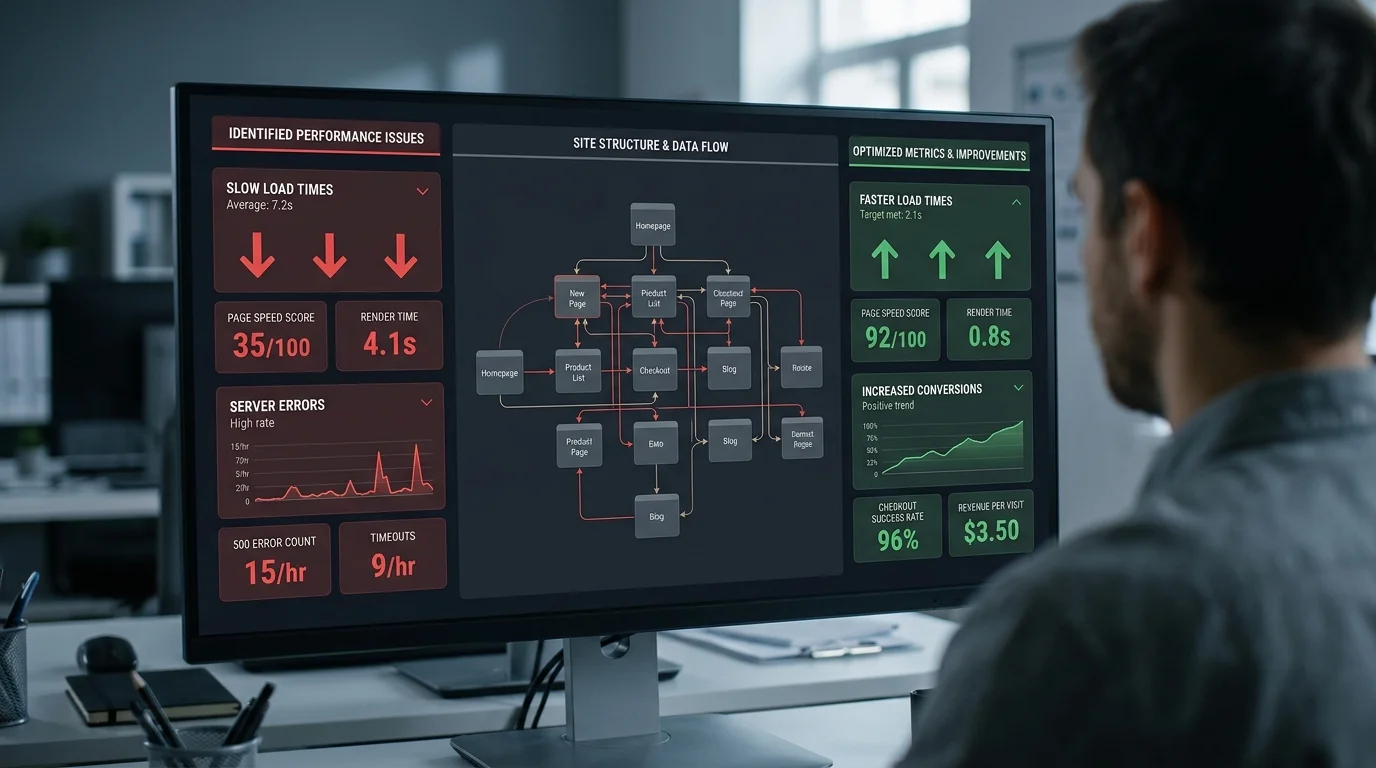
Crawlability and indexing are foundational. Use Google Search Console to monitor crawl errors, ensure robots.txt isn't blocking important pages, and check that your sitemap includes all critical dealership pages—inventory, service pages, contact information. High-quality car photos are essential for engagement, and when you're transforming lot photos into studio-quality images, optimize those images too: compress file sizes, use descriptive alt text (which also improves accessibility), and implement responsive image formats. A dealership with perfect local SEO but a slow, unresponsive website will lose to competitors with solid technical foundations.
Content Strategy for Dealerships: Vehicle Listings, Blog Posts, and Visual Content
Vehicle listings are the backbone of automotive dealership SEO. A thin, generic description—"2022 Honda Civic, blue, clean title"—wastes ranking potential. Instead, craft comprehensive listings that answer buyer questions naturally. Include trim level, mileage, key features, service history, warranty details, and unique selling points. This depth signals expertise to search engines and keeps visitors on your page longer, improving dwell time metrics that Google monitors.
Title tags and meta descriptions deserve precision. Rather than "Honda Civic for Sale," use "2022 Honda Civic EX Sedan | Low Mileage | Certified Pre-Owned | [Your City]." Meta descriptions should highlight what makes each vehicle stand out—financing options, warranty coverage, recent service records. These elements appear in search results and directly influence click-through rates. Long-tail keywords flow naturally here: "certified pre-owned Honda Civic under $20,000" or "fuel-efficient sedan with extended warranty" capture specific buyer intent without forcing awkward phrasing.
Blog content establishes your dealership as a trusted authority. Publishing buying guides, financing tips, maintenance advice, and seasonal content captures informational search traffic—prospects researching before they're ready to visit. A post titled "How to Choose Between New and Used Vehicles" or "Understanding Auto Loan Terms" positions your dealership as educator, not just seller. This builds E-E-A-T signals that Google rewards, especially for YMYL (Your Money, Your Life) content like automotive purchases.
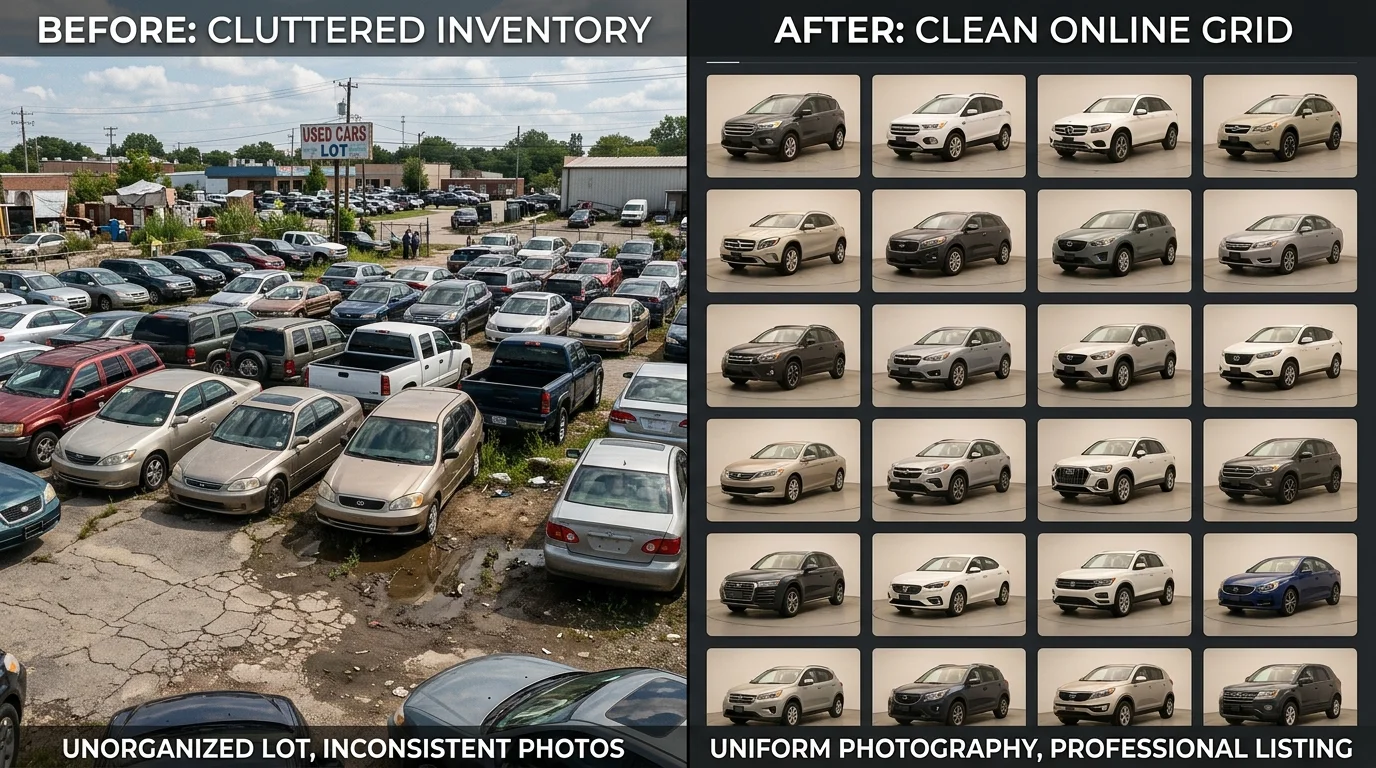
Visual content drives engagement and conversions. According to research from Demand Local, 75% of auto shoppers are influenced by video during research, with video viewers 1.81x more likely to purchase. Video walkthroughs showing interior details, trunk space, and condition build buyer confidence. However, producing studio-quality photos and videos at scale is expensive—professional photographers charge $30–50 per vehicle, and physical photo booths cost $25,000–$60,000 upfront.
This is where AI-enhanced photography transforms your workflow. Tools that change car photo backgrounds remove lot clutter and replace it with professional showroom or outdoor settings in seconds, delivering visual consistency across your entire inventory without studio costs. Optimized images—compressed for fast loading, tagged with descriptive alt text, formatted responsively—improve both SEO and accessibility. Consistency in visual presentation, whether through AI enhancement or professional photography, signals quality and builds trust with potential buyers browsing your listings.
Building Authority: Backlinks, Reviews, and Digital PR for Dealerships
Authority signals—backlinks, reviews, and brand mentions—are critical ranking factors that search engines use to determine trustworthiness. For auto dealership SEO, building authority isn't just about rankings; it directly influences buyer confidence and conversion rates.
The Review Advantage
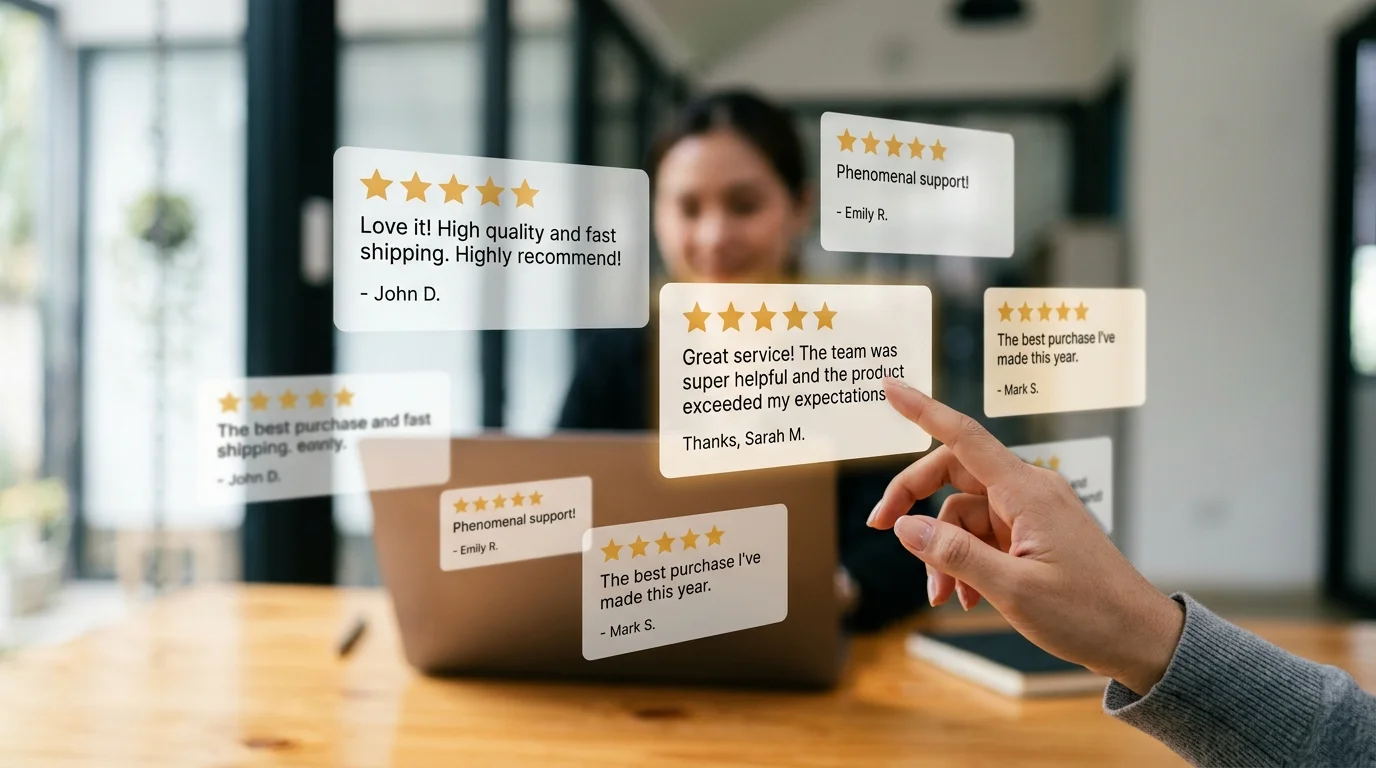
According to research from Chatmeter, 93% of consumers say online reviews impact their purchase decisions, and 97% read reviews before visiting a local business. Review recency matters significantly—dealerships that stop collecting new reviews consistently see their local rankings slip. Top-ranking dealerships maintain an average review length of just under 350 words, suggesting that detailed, substantive feedback carries more weight than brief comments.
Respond to every review—positive or negative—within 24–48 hours. Thank satisfied customers by name, address specific concerns in negative reviews with solutions, and keep responses professional and concise. This demonstrates active management and shows potential buyers that you take feedback seriously.
Earning Quality Backlinks
Backlinks from automotive publications, local news outlets, and industry associations signal relevance and authority. Pitch newsworthy stories: sponsorships of local events, charitable initiatives, or unique inventory angles. Reach out to local business directories, chamber of commerce listings, and automotive blogs. Guest contributions to industry publications—even short articles on vehicle care or buying tips—generate both backlinks and brand visibility.
Avoid low-quality link schemes or paid link networks; Google penalizes these tactics. Focus on earning links naturally through valuable content and genuine relationships with journalists and industry partners.
Digital PR and Influencer Partnerships
Collaborate with local automotive influencers, YouTube reviewers, or Turo hosts who can feature your inventory. These partnerships generate backlinks, social signals, and authentic endorsements that resonate with buyers researching online.
Consistency in visual presentation strengthens authority signals—professional, studio-quality photos across all listings signal competence and build trust. Tools that transform ordinary car photos into professional studio images ensure uniform quality across your entire inventory without expensive studio costs, reinforcing your dealership's professional brand across every touchpoint where authority matters most.
Measuring Success: SEO Metrics, Tracking, and Continuous Optimization
SEO success for car dealerships isn't intuitive—it requires disciplined measurement and ongoing refinement. Without proper tracking infrastructure, you're essentially driving blind, unable to distinguish between strategies that generate qualified leads and those that merely inflate vanity metrics.
Start with Google Analytics 4 (GA4), which replaced Universal Analytics and offers superior event tracking for dealership conversions. Configure it to capture critical touchpoints: form submissions, phone call clicks, inventory page views, and time spent on vehicle detail pages. These events reveal which inventory attracts serious buyers versus casual browsers. Set up conversion goals around lead generation—not just traffic volume—because organic visitors who never inquire cost you nothing but opportunity.
Beyond traffic volume, track keyword rankings for your target terms. Tools that monitor your position for phrases like "used cars near me" or "luxury sedans in [city]" help you identify which pages are gaining traction and which need optimization. More importantly, monitor competitor SERP positions. If a competitor suddenly ranks above you for high-intent keywords, you've identified a content or technical gap worth addressing immediately.
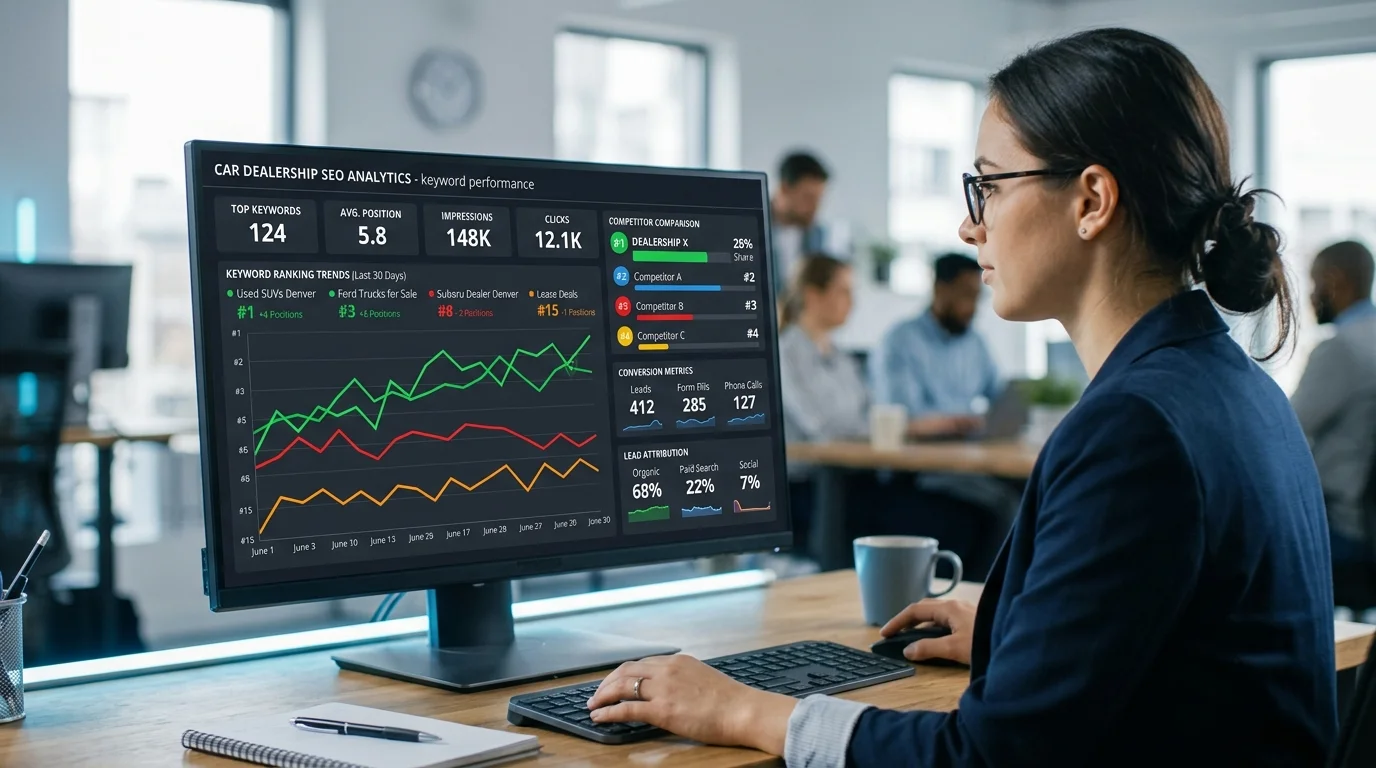
Call tracking deserves special attention. Dealerships live on phone leads, yet many fail to attribute calls back to specific keywords or landing pages. Services that generate unique phone numbers per traffic source reveal which SEO efforts actually drive showroom visits—the metric that matters most.
Cost per lead and revenue attribution complete the picture. Calculate how much organic traffic costs you to acquire (factoring in content creation, technical maintenance, and tools) against the revenue generated from those leads. This forces accountability and prevents you from optimizing for rankings that don't convert.
Continuous optimization means monthly reviews of performance data, A/B testing landing page layouts, and refreshing underperforming content. Consistency in visual presentation across listings strengthens these efforts—professional, studio-quality photos signal competence and improve engagement metrics. Tools that transform ordinary car photos into professional studio images ensure uniform quality across your entire inventory, directly improving click-through rates and conversion metrics that drive your SEO ROI upward.
Moving Forward: Your 2025 Car Dealership SEO Roadmap
Start with local visibility
Audit and fully optimize your Google Business Profile, NAP data, categories, and service areas.
Standardize how every location is named and described across the web to strengthen auto dealer SEO for "near me" and brand queries.
Fix technical roadblocks
Check crawlability, indexation, Core Web Vitals, mobile usability, and structured data for inventory and reviews.
Prioritize issues that block or slow down inventory pages—these are the engine of automotive dealership SEO.
Upgrade content and visuals
Rewrite key category, model, and service pages around real search intent; clean up thin or duplicate listings.
Make every vehicle page conversion-ready with clear CTAs and consistent, high-quality imagery. Tools that transform lot photos into professional studio images deliver studio-quality results in seconds without expensive equipment or studio rentals.
Build authority and trust
Systematically collect reviews, respond to them actively, and develop local partnerships and PR to earn backlinks and mentions.
Monitor brand reputation in search: reviews and mentions directly impact click-through rates and conversion rates.
Measure, iterate, and look ahead
Set up conversion goals, call tracking, and UTM parameters; review monthly which keywords and pages actually drive leads and sales.
SEO is a long-term investment: growth takes months, but then consistently lowers your cost per lead. Some tasks can be handled by your marketing team or sales manager, while complex technical and content projects benefit from agency or consultant support.
As AI search and generative answers evolve, dealerships that maintain pristine websites, regularly update content and visuals, and build a systematic SEO foundation today will dominate tomorrow's search landscape.