

In the automotive world, first impressions happen online long before a buyer steps foot on your lot. A vehicle's digital presence—powered by a robust website and professional photography—directly influences whether a prospect clicks "contact dealer" or scrolls to a competitor. Dealerships, Turo hosts, and independent sellers face a critical challenge: traditional studio photography costs $30–50 per vehicle, making it economically unfeasible to refresh inventory regularly. Meanwhile, inconsistent lot photos and outdated website platforms erode buyer confidence and limit your search engine visibility. The solution lies in combining modern dealership platforms with AI-powered photography tools that deliver studio-quality results in seconds at a fraction of traditional costs.
Quick Answer:
The best websites for dealers in 2025 prioritize mobile responsiveness, integrated inventory management, and SEO optimization—paired with AI photo solutions that eliminate expensive studio shoots. Tools like Car Photo Booth transform ordinary lot photos into professional images at $3 per vehicle instead of $30–50, while modern dealership CRM platforms streamline customer relationships and sales workflows. Speed matters: AI background removal takes 10 seconds versus hours of manual editing, letting you list more vehicles faster and capture buyer demand before competitors do.
This article explores the top dealership website providers, automotive CRM platforms, and AI photography solutions that work together to maximize your online visibility and conversion rates. We'll examine how to balance website features with photography quality, compare pricing models across platforms, and guide you toward the right combination for your business size and budget. Whether you're running a multi-location franchise or managing a small independent lot, you'll find actionable recommendations grounded in real cost comparisons and feature analysis.
Table of Contents
- Essential Features Every Dealership Website Should Include
- Inventory Management & Real-Time Updates
- CRM Integration for Lead Tracking
- Top Dealership Website Platforms for 2025
- AI-Powered Car Photo Solutions: The Game Changer for Dealer Imagery
- How AI Background Removal & Replacement Works
- Cost Comparison: Traditional Photography vs. AI Solutions
- Integrating Professional Photos Into Your Dealership Website & Listings
- Making Your Final Choice: Websites for Dealers in 2025
- For Solo Dealers & Small Lots — Budget-First Approach
- For Growing & Multi-Location Dealerships — Scalable Systems
- Final Thoughts on Choosing Dealer Websites & Photo Solutions for 2025
Essential Features Every Dealership Website Should Include
A dealership website is only as effective as the tools it provides—both to your team and to your buyers. The right platform combines six core capabilities that directly impact how quickly vehicles sell and how efficiently your operation runs.
Inventory Management & Real-Time Updates
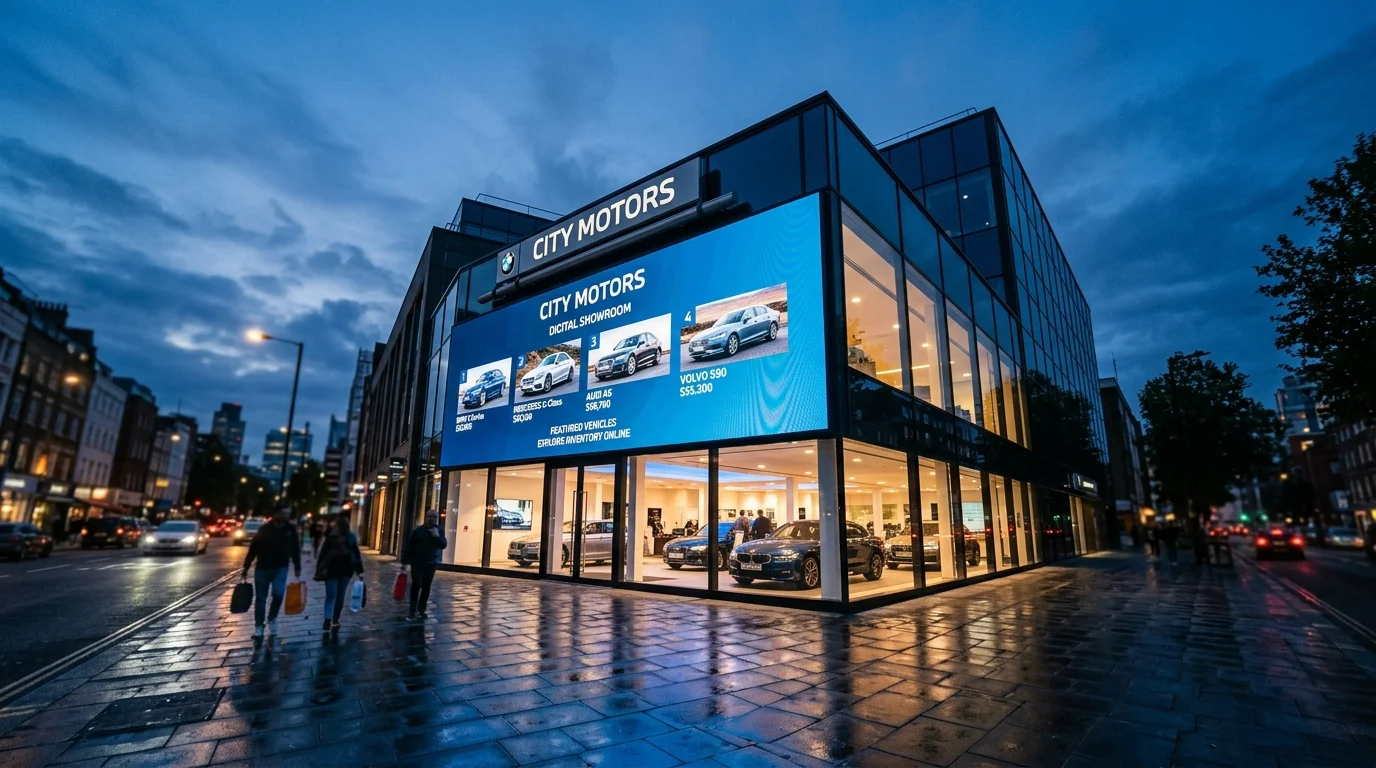
Modern dealership websites live or die by inventory accuracy. When a customer sees a vehicle listed that's already sold, you've lost their trust before they even call. Integrated inventory management systems solve this by syncing your lot data across multiple channels—your website, Autotrader, CarGurus, Facebook Marketplace—from a single source. This eliminates manual updates and the errors that come with them.
Real-time synchronization means when a salesperson marks a car as sold on the lot, it disappears from all listing sites within minutes, not hours. You avoid double-booking, reduce customer frustration, and free your team from tedious data entry. The system should also allow bulk photo updates, so when you refresh your vehicle imagery—whether through professional studio shots or AI-enhanced photos—those changes propagate instantly across every platform where your inventory appears.
CRM Integration for Lead Tracking
An automotive CRM system connected to your website captures every inquiry, test drive request, and follow-up opportunity automatically. When a prospect submits a form or calls, the lead flows directly into your sales team's workflow without manual data entry. This speed matters: leads contacted within the first hour are significantly more likely to convert than those contacted later.
A connected CRM tracks the entire customer journey—from initial inquiry through negotiation to post-sale service. Your team sees which vehicles generate the most interest, which buyers are most engaged, and where deals typically stall. This intelligence lets you adjust pricing, photography, and inventory mix based on real buyer behavior, not guesswork. Integration also enables automated follow-up sequences, so no lead falls through the cracks simply because someone forgot to call back.
Top Dealership Website Platforms for 2025
Selecting the right dealership website provider is foundational to your digital strategy. The platform you choose determines how quickly your inventory syncs across channels, how well your CRM captures leads, and ultimately how many qualified buyers reach your sales team. Below is a concise comparison of leading dealership website providers to help you evaluate options based on your dealership size, budget, and technical needs.

| Platform | Best For | Key Strengths | Typical Pricing | Dealer Size |
|---|---|---|---|---|
| Dealer.com | Established dealerships seeking enterprise solutions | Robust inventory management, multi-location support, strong SEO tools | Starting at $1,650/month | Large (50+ vehicles) |
| DealerSync | Performance-focused dealerships | Sub-2 second load times, mobile optimization, real-time inventory sync | $800–$2,000/month | Mid to Large |
| Dealer Inspire | Dealerships prioritizing design & UX | Modern templates, AI-powered chatbots, lead scoring | $1,200–$2,500/month | Mid to Large |
| DealerFire | Budget-conscious independent dealers | Affordable entry point, solid core features, decent mobile experience | $400–$1,200/month | Small to Mid |
| Overfuel | High-volume dealers needing speed | Fast deployment, inventory automation, lead routing | $1,500–$3,000/month | Large |
Each platform integrates with major inventory feeds and CRM systems, but they differ in setup complexity, customization depth, and support responsiveness. Dealer.com and Overfuel cater to larger operations with complex workflows, while DealerFire suits independent dealers testing the waters without massive upfront investment. DealerSync stands out for performance metrics—faster page load times directly correlate with higher conversion rates.
Beyond the platform itself, consider how photography assets flow into your website. Most dealership website providers accept standard JPEG uploads, but they don't optimize or enhance those images. This is where tools like professional car backgrounds and AI background replacement become critical: you can upload studio-quality vehicle photos to any platform, regardless of which one you choose. The website provider handles the digital storefront; your photo quality determines whether buyers click deeper into listings.
Evaluate each platform's reporting dashboard, mobile responsiveness, and integration ecosystem before committing. Request a demo with your actual inventory data to see how the system performs under real conditions.
AI-Powered Car Photo Solutions: The Game Changer for Dealer Imagery
The photography bottleneck has long been the invisible cost drain in automotive retail. Traditional studio setups demand massive capital investment—physical photo booths run $38,000 to $42,875 to purchase, or $1,350 to $1,717 monthly to rent. Professional car photographers charge $200 to $500 per hour, translating to $10 to $30 per vehicle when you factor in shooting, editing, and delivery. For a dealership moving 50 cars monthly, that's $500 to $1,500 spent purely on imagery before any marketing happens. The real pain point isn't just cost—it's consistency. Lot photos vary wildly in lighting, angle, and background clutter, creating a disjointed online storefront that undermines buyer confidence.
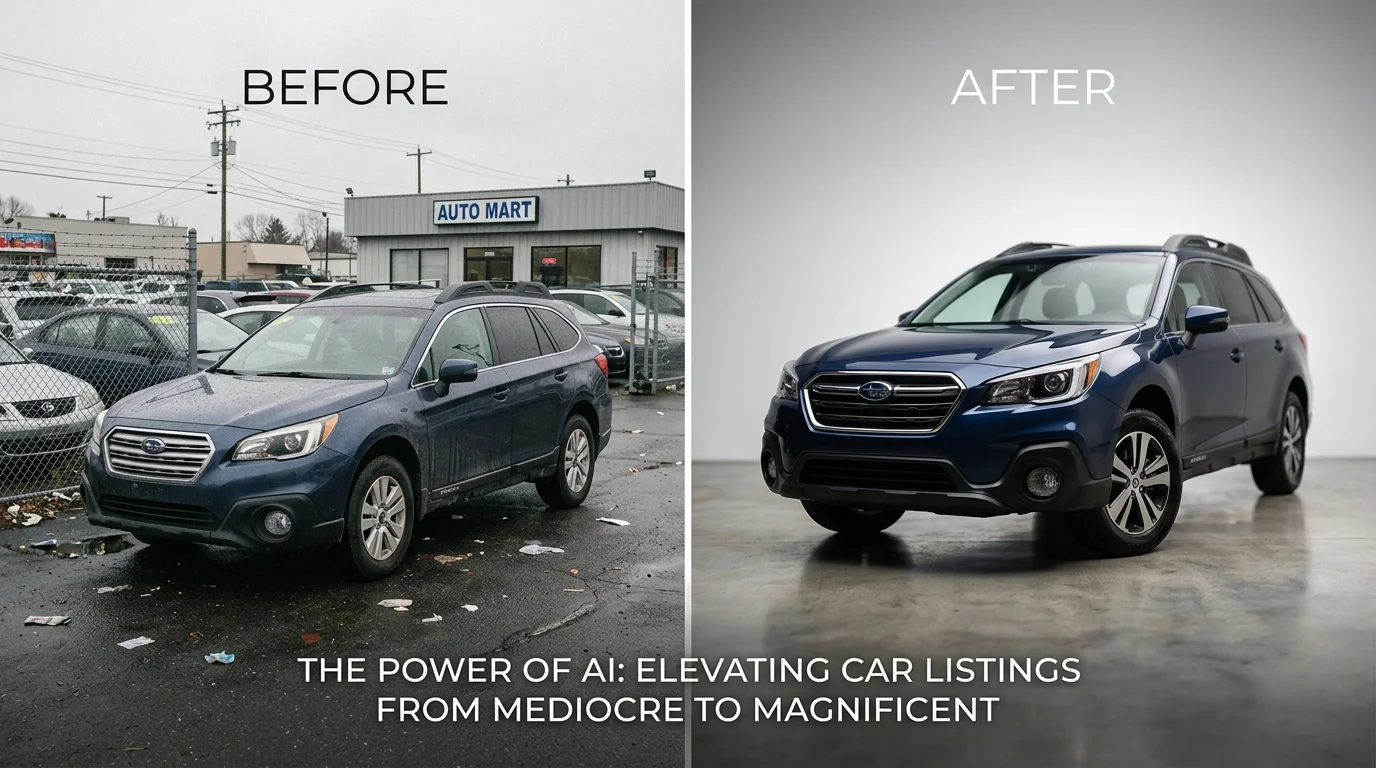
AI-powered car photo solutions fundamentally reshape this economics. Tools like Car Photo Booth eliminate the studio entirely by automating background removal and replacement in seconds. A smartphone photo of a vehicle on your lot becomes a studio-quality asset with a professional showroom, white cyclorama, or scenic background applied instantly. The per-image cost drops to as low as $3, and processing time shrinks from hours to 10 seconds. For dealerships, Turo hosts, and independent photographers, this means inventory can be refreshed weekly without renegotiating photographer contracts or waiting for editing queues.
How AI Background Removal & Replacement Works
The process begins with computer vision: AI detects the vehicle's edges, isolates it from the surrounding environment, and removes the original background with pixel-level precision. What makes this different from simple chroma-key or masking is that the algorithm understands automotive geometry—it preserves reflections on chrome, distinguishes between the car's shadow and the lot surface, and handles complex angles without leaving halos or artifacts.
Once isolated, the vehicle integrates seamlessly into one of 100+ professional backdrops. These aren't generic blurred backgrounds; they're curated showroom interiors, luxury garage settings, urban streets, and natural landscapes designed specifically for automotive presentation. The AI adjusts lighting and shadow to match the vehicle's original exposure, so a car shot in afternoon sunlight doesn't suddenly look like it was photographed at dawn. The entire transformation—detection, removal, integration, and export—completes in seconds at 4K resolution, with no watermarks or quality degradation.
This consistency is what transforms a dealer's online presence. Every vehicle in your inventory now shares a cohesive visual language, whether you're listing a used sedan or a luxury SUV. Buyers scrolling through listings see professionalism, not a patchwork of amateur lot photos and expensive studio shots.
Cost Comparison: Traditional Photography vs. AI Solutions
The financial case is stark. According to DealerRefresh community data, dealers typically pay $10 to $30 per vehicle for professional photography services. Add in the hidden costs—scheduling delays, photographer no-shows, editing revisions—and the timeline stretches from days to weeks for a full inventory refresh.
Physical photo booths demand upfront capital that smaller dealers can't justify. Rental avoids the $40K purchase, but monthly fees ($1,350–$1,717) still lock you into a fixed cost regardless of inventory turnover. You're also limited to booth locations and operating hours, which constrains flexibility when you need emergency refreshes or seasonal inventory spikes.
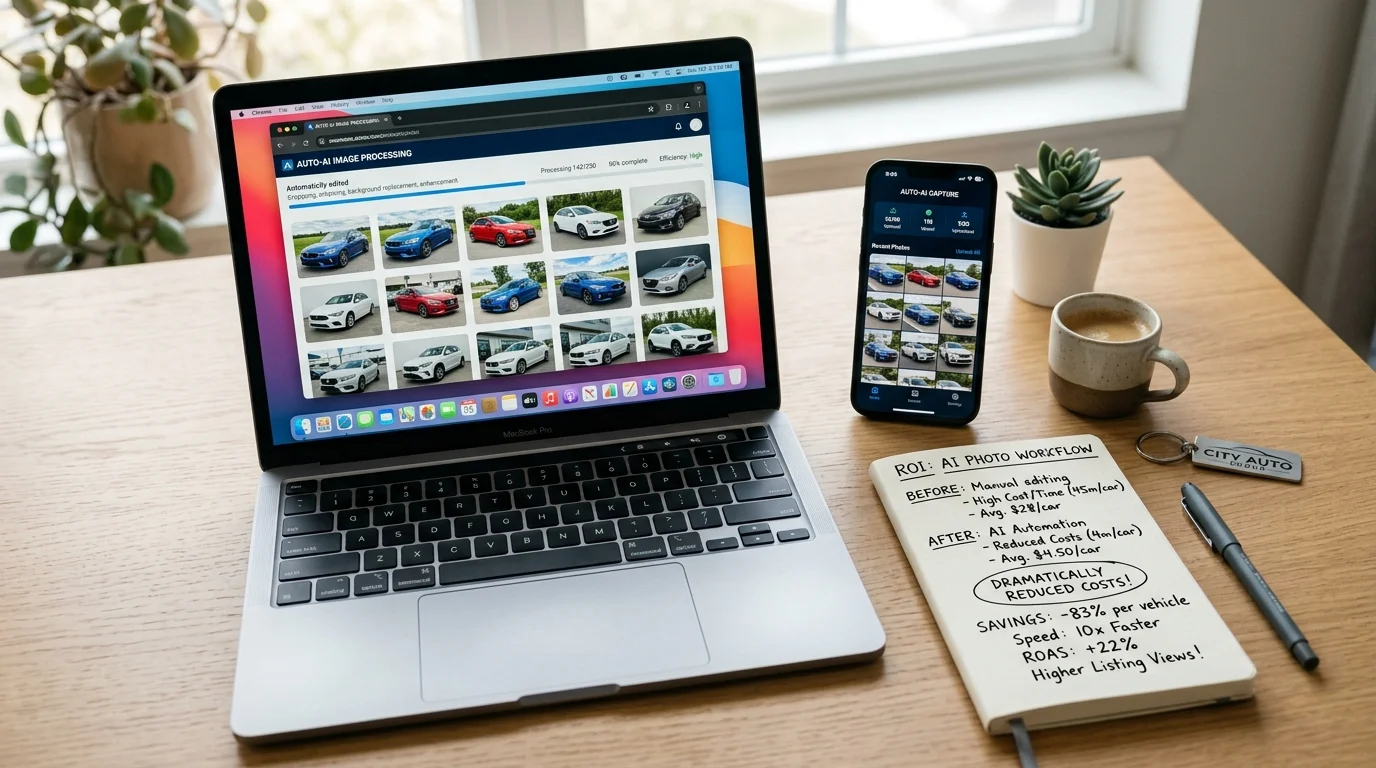
AI solutions invert this model. Car Photo Booth's starter plan costs $7 monthly for 15 photos, or roughly $5 per car. Enterprise dealers processing 500+ vehicles monthly see costs drop to $0.20 per image through volume pricing. No equipment to maintain, no studio space to rent, no scheduling conflicts. Upload a photo, select a background, download the result—all within the time it takes to write an email.
The ROI compounds when you factor in speed. A photographer needs 30 minutes to an hour per vehicle (shooting, travel, setup). An AI tool processes 15 cars in the time it takes to drink coffee. For a dealer refreshing inventory quarterly, AI eliminates weeks of photographer coordination and cuts photography spend by 80–90%.
Integration with dealership websites and automotive CRM systems is seamless. Most platforms accept standard JPEG uploads, so studio-quality AI-enhanced photos flow directly into your inventory management system without compatibility friction. The bottleneck shifts from image creation to listing optimization—exactly where it should be.
Integrating Professional Photos Into Your Dealership Website & Listings
The moment a buyer lands on your dealership website or scrolls through an online marketplace, image quality determines whether they click deeper or move to a competitor. According to research from CDK Global, nearly 90% of car shoppers are enticed to start their sales journey based on quality photos from a dealer's website. This isn't just about aesthetics—it's about conversion mechanics. High-quality vehicle photos increase listing views by 47% and generate 62% more leads, fundamentally shifting how buyers perceive your inventory before they ever contact your sales team.
The technical foundation matters as much as the visual one. Image file size and resolution directly impact page load speed, which affects both user experience and search engine rankings. A 5MB unoptimized photo can slow your dealership website provider's platform and frustrate mobile shoppers. Professional photos should be exported at 2K–4K resolution (2560×1920 pixels minimum for web), then compressed to 150–300KB per image without visible quality loss. This balance ensures crisp, detailed images that load in under two seconds—a critical threshold for retaining buyer attention.
Placement strategy amplifies impact. Feature your best three angles (front, side, interior) prominently above the fold on listing pages, then organize additional shots by category (exterior, wheels, interior details, trunk). This hierarchy guides the buyer's eye and reduces cognitive load. When distributing across platforms—Facebook Marketplace, Craigslist, Autotrader, or Turo—maintain consistent branding by using the same professional backgrounds and lighting. Inconsistent imagery across channels signals lower credibility and dilutes your dealership's visual identity.
Email marketing and retargeting campaigns benefit equally from professional photos. A well-composed vehicle image in a promotional email generates 27–40% higher click-through rates than generic lot shots. Tools like Car Photo Booth streamline this workflow by allowing you to batch-process inventory photos with consistent studio backgrounds, then export directly into your CRM or email platform without manual resizing or watermarking delays.
The ROI compounds when you factor in lead quality. Professional photos don't just attract more clicks—they attract qualified leads. Buyers who engage with studio-quality images have already mentally committed to a higher price point and are less likely to ghost after scheduling a test drive. For dealerships managing 50+ vehicles monthly, this shift from volume to quality fundamentally changes your sales pipeline efficiency.
Making Your Final Choice: Websites for Dealers in 2025
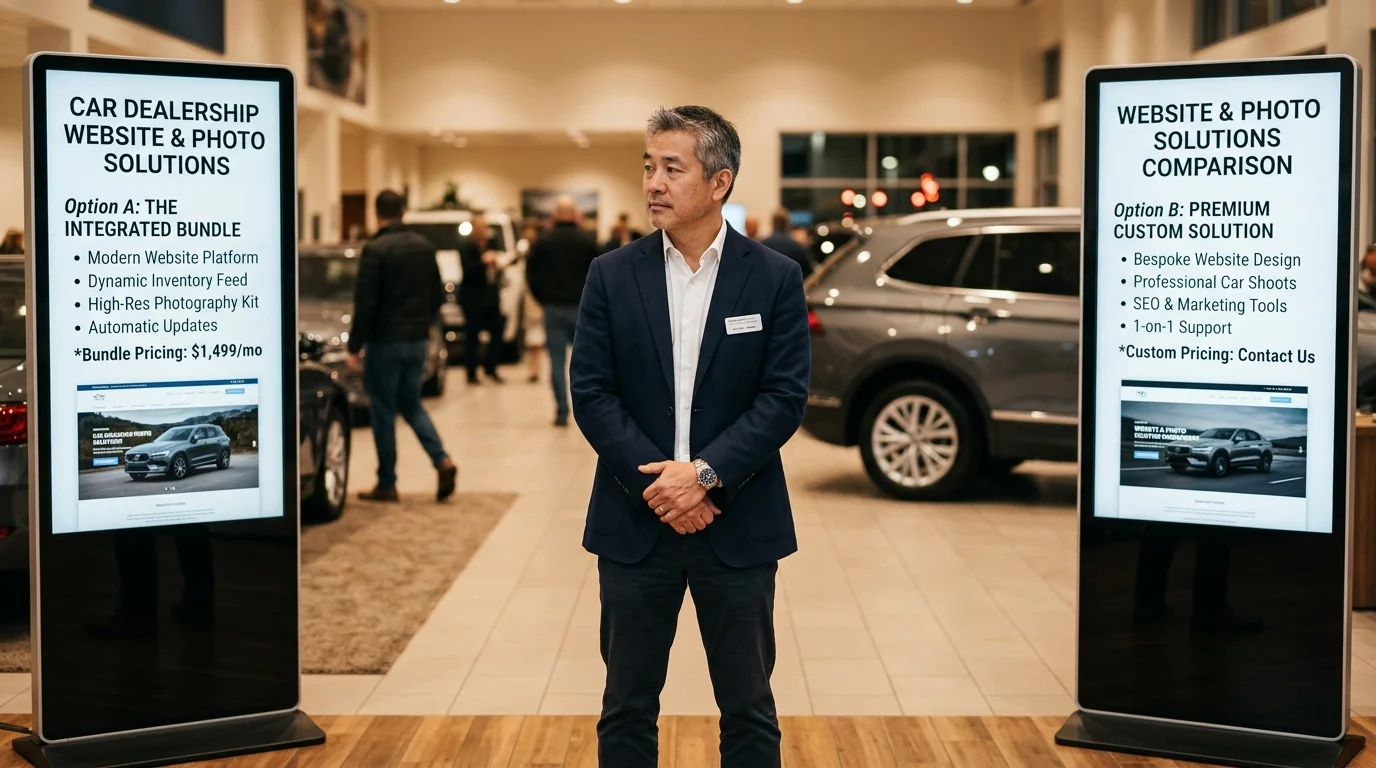
The right combination of website platform and photo solution depends on three factors: inventory volume, budget constraints, and technical comfort level. Rather than a one-size-fits-all recommendation, successful dealerships match their tools to their operational reality.
For Solo Dealers & Small Lots — Budget-First Approach
Independent dealers managing 10–30 vehicles monthly need affordability without sacrificing professionalism. A lightweight website builder like Wix or Squarespace paired with AI photo tools eliminates the need for expensive studio setups or technical staff. The workflow is straightforward: photograph vehicles on the lot, upload images to an AI background removal tool, and publish directly to your site and Autotrader within minutes. This approach costs under $100 monthly total—far below hiring a photographer or renting booth space. The trade-off is manual effort; you're handling photography and editing yourself, but the learning curve is minimal. For photo processing, tools that remove backgrounds from car photos automatically and replace them with professional studio backgrounds eliminate the inconsistency problem that plagues lot photos. Test free trials before committing—most platforms offer 10–15 free edits to validate the workflow fits your process.
For Growing & Multi-Location Dealerships — Scalable Systems
Mid-market dealerships with 50–200 vehicles need infrastructure that grows with inventory without proportional cost increases. Dedicated dealership platforms like Dealer.com or Manheim paired with batch-processing photo workflows solve the volume problem. An automotive CRM integrated into your website platform tracks leads from photo click-through to test drive, closing the loop between imagery quality and conversion metrics. For photo efficiency, hybrid approaches work best: hire a photographer quarterly for hero shots, then use AI tools to standardize the remaining inventory. This balances quality with cost—you're not paying $30–50 per vehicle, but you're also not relying entirely on smartphone snapshots. Batch processing 100+ photos weekly becomes manageable when your photo tool exports directly into your CRM without manual resizing or watermarking delays. Consistency across platforms—Facebook, Craigslist, your website—signals professionalism and builds buyer confidence in your inventory quality.
Test free trials and request demos from platform providers before signing annual contracts. The cost of switching later far exceeds the time invested in evaluation now.
Final Thoughts on Choosing Dealer Websites & Photo Solutions for 2025
The right combination of dealership website platform and photo solution has shifted from a luxury investment to a competitive necessity. Your website must deliver responsive design, seamless inventory management, and CRM integration—but none of that matters if your vehicle imagery fails to convert browsers into buyers. The economics of automotive photography have fundamentally changed: you no longer need to choose between professional quality and affordability.
AI-powered photo solutions have democratized studio-quality imagery. What once required a $25,000–$60,000 physical booth setup and $30–50 per vehicle now costs a fraction of that. When you transform ordinary lot photos into professional studio-quality images, consistency across your website, Facebook, Craigslist, and Autotrader signals professionalism to every buyer who encounters your inventory.
The winning strategy combines mid-market platforms like Dealer.com or Manheim with batch-processing workflows. Hire a photographer quarterly for hero shots, then standardize the remaining 100+ vehicles weekly using AI tools that integrate directly into your CRM. This hybrid approach balances quality with cost—you're not overpaying for every image, and you're not relying on smartphone snapshots.
Start now: Test a free trial with your preferred dealership website platform and try Car Photo Booth with a free account—no credit card required. Compare which combination fits your workflow, inventory volume, and budget. The cost of switching later far exceeds the evaluation time invested today.