
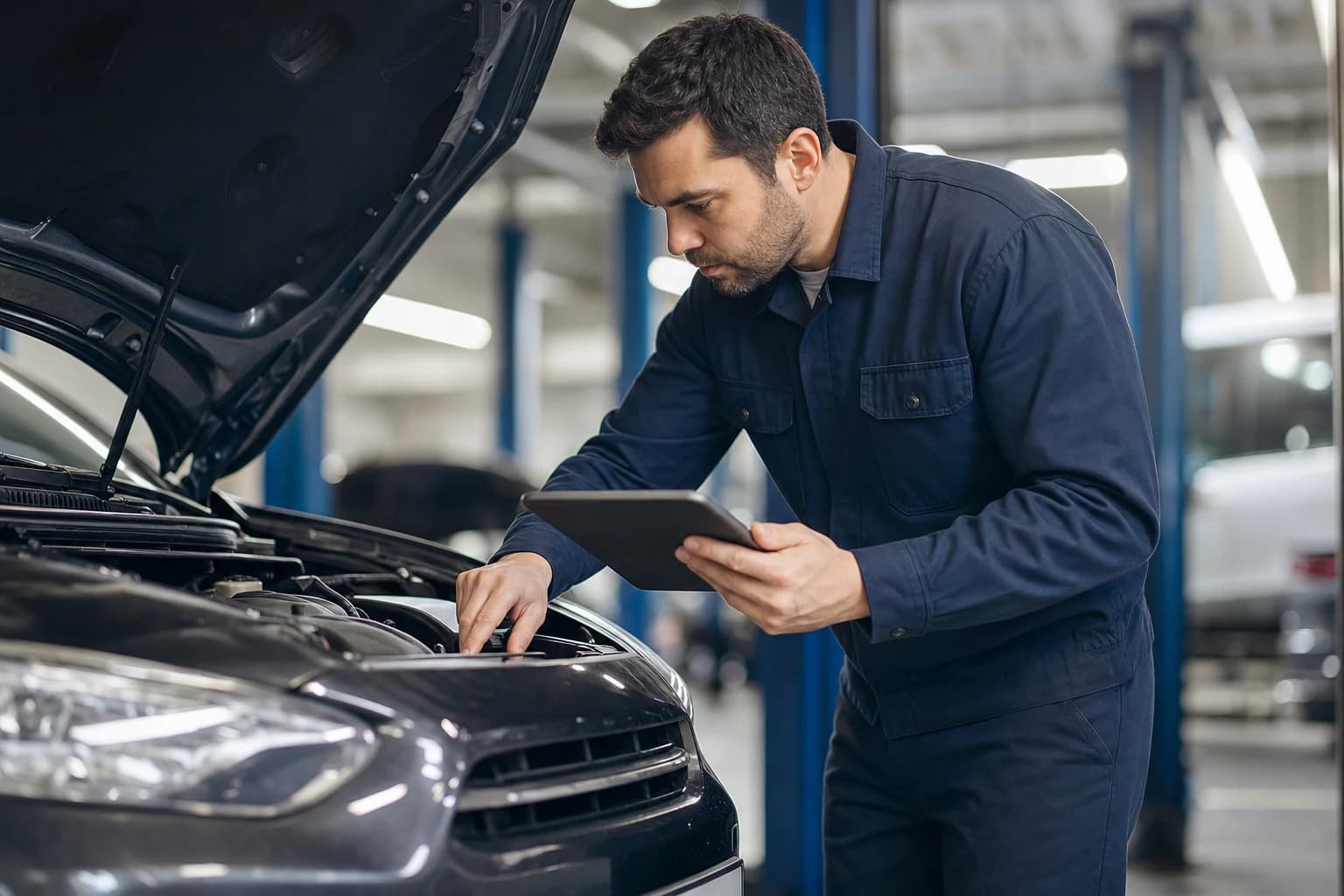
Understanding car inspection costs in 2026 requires clarity on both regional standards and service scope. The answer to how much is car inspection varies, but national benchmarks provide a reliable baseline.
Quick Answer: The average car inspection cost in 2026 is $50, with most vehicle owners paying between $20 and $100, according to data from CostWhale. Prices fluctuate based on location, inspection type (safety, emissions, or pre-purchase), and facility rates. This guide covers inspection types, regional pricing trends, and how AI tools like Car Photo Booth streamline documentation by transforming on-site vehicle photos into standardized, professional-grade records for listings and reports.
Table of Contents
- Types of Car Inspections and Their 2026 Price Ranges
- How AI Photography Is Transforming Car Inspection Documentation
- Factors That Influence How Much You’ll Pay for an Inspection
- How to Choose the Right Inspection Service in 2026
- Car Inspection Cost FAQs in 2026
- Final Tips for Managing Car Inspection Costs in 2026
Types of Car Inspections and Their 2026 Price Ranges
For dealerships, Turo operators, and fleet managers, understanding the differences between inspection types is critical to balancing cost, vehicle reliability, and customer trust. Each inspection serves a distinct purpose, from pre-sale due diligence to ongoing maintenance oversight. The question of how much is the car inspection depends largely on the depth and intent of the evaluation.
Pre-Purchase Inspections: What’s Included and Average Cost
A pre-purchase inspection (PPI) is a comprehensive assessment conducted before a vehicle changes hands. It typically covers engine performance, transmission, suspension, brakes, electrical systems, and frame integrity. For dealers and rental hosts, a PPI minimizes risk and strengthens buyer or renter confidence. In 2026, these inspections range from $150 to $300 for mainstream vehicles at independent shops, while specialized services for European luxury models (e.g., BMW, Porsche) can cost $300 to $600. According to an analysis by Chariotz, the higher cost reflects the need for brand-specific diagnostic tools and expertise.
A visual metaphor for the trust and due diligence behind every pre-purchase inspection
Multi-Point and Diagnostic Checks Compared
Multi-point inspections involve a technician visually and mechanically evaluating 30–50 key components, including tires, lights, fluids, and belts. These are often offered at no cost during routine service visits. When billed separately, prices range from $50 to $200. In contrast, diagnostic inspections use advanced scan tools to identify error codes and underlying issues within a vehicle’s computer systems. These are more targeted and typically cost between $100 and $175, depending on complexity.
For dealerships managing high-turnover inventory, multi-point checks ensure consistency across listings, while diagnostic scans are reserved for vehicles with reported issues. A standardized visual record—such as those enhanced via AI-powered car photo editing—can complement these inspections by providing timestamped, professional documentation.
Seasonal and Trip-Readiness Inspections for Fleet Operators
Fleet operators rely on seasonal inspections to prevent breakdowns during peak rental periods. These checks focus on battery health, coolant levels, tire tread, and HVAC performance. Many operators bundle them with oil changes to reduce downtime. While individual costs vary, integrating inspection photography into digital reports streamlines audits and resale prep. At Car Photo Booth, we help fleets transform on-site snapshots into uniform, professional visuals—eliminating the need for costly studio shoots while maintaining brand consistency.
| Inspection Type | Typical Cost (2026) | Primary Use Case |
|---|---|---|
| Pre-Purchase (Standard) | $150 – $300 | Used car sales, high-value rentals |
| Pre-Purchase (Luxury) | $300 – $600 | European imports, performance vehicles |
| Multi-Point | $50 – $200 (or free) | Routine fleet and inventory checks |
| Diagnostic | $100 – $175 | Troubleshooting check-engine lights |
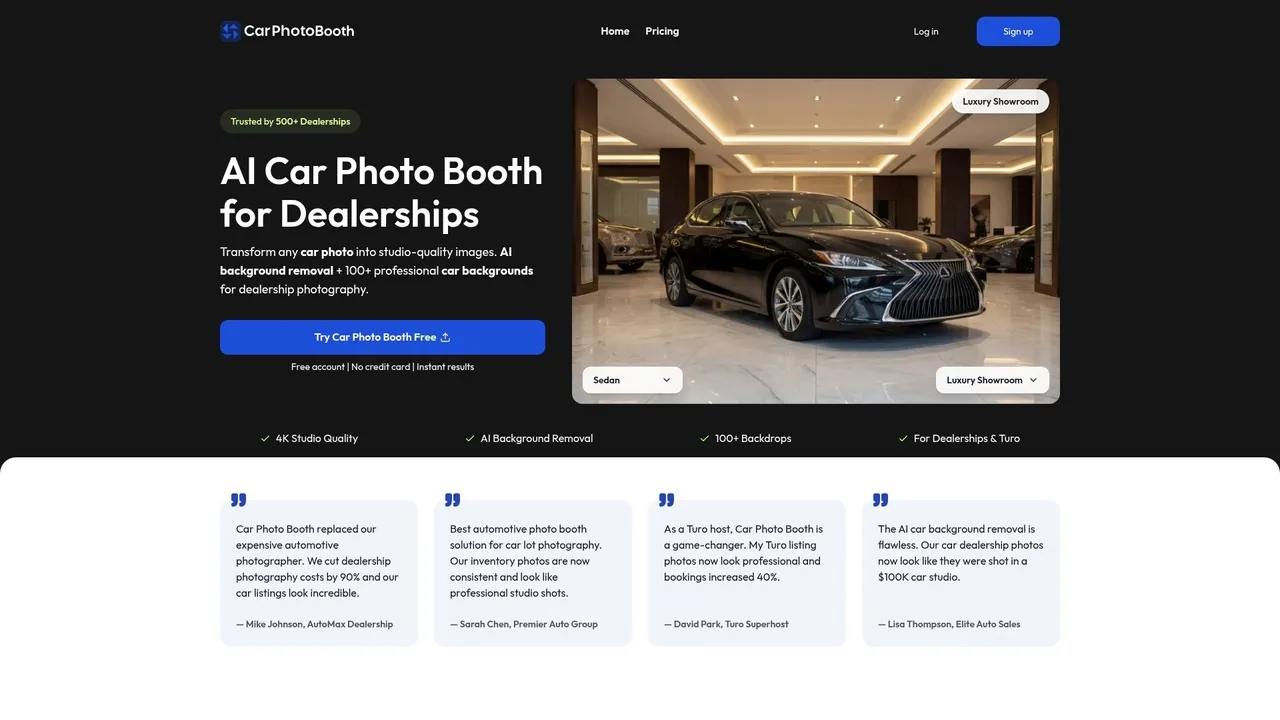
Car Photo Booth transforms smartphone snapshots into professional, standardized vehicle images for inspection reports and listings
How AI Photography Is Transforming Car Inspection Documentation
Professional visuals are no longer optional in car inspections—they’re a cornerstone of trust and transparency. High-quality, consistent imagery enhances transparency, supports accurate vehicle assessments, and strengthens buyer confidence during resale or rental onboarding. At Car Photo Booth, we’ve engineered an AI-driven solution that transforms basic smartphone snapshots into studio-grade inspection photos in seconds, eliminating the cost and logistical friction of traditional photography.
Why Visual Consistency Matters in Pre-Inspection Reporting
Inconsistent lighting, cluttered backgrounds, and uneven angles undermine the credibility of inspection reports. When dealerships or Turo hosts submit photos taken under varying conditions, evaluators must spend extra time interpreting damage or wear, increasing the risk of oversight. Standardized visuals ensure every vehicle is presented under the same conditions, making comparisons accurate and assessments faster. This uniformity is especially critical for fleet audits and multi-location dealerships managing large inventories.
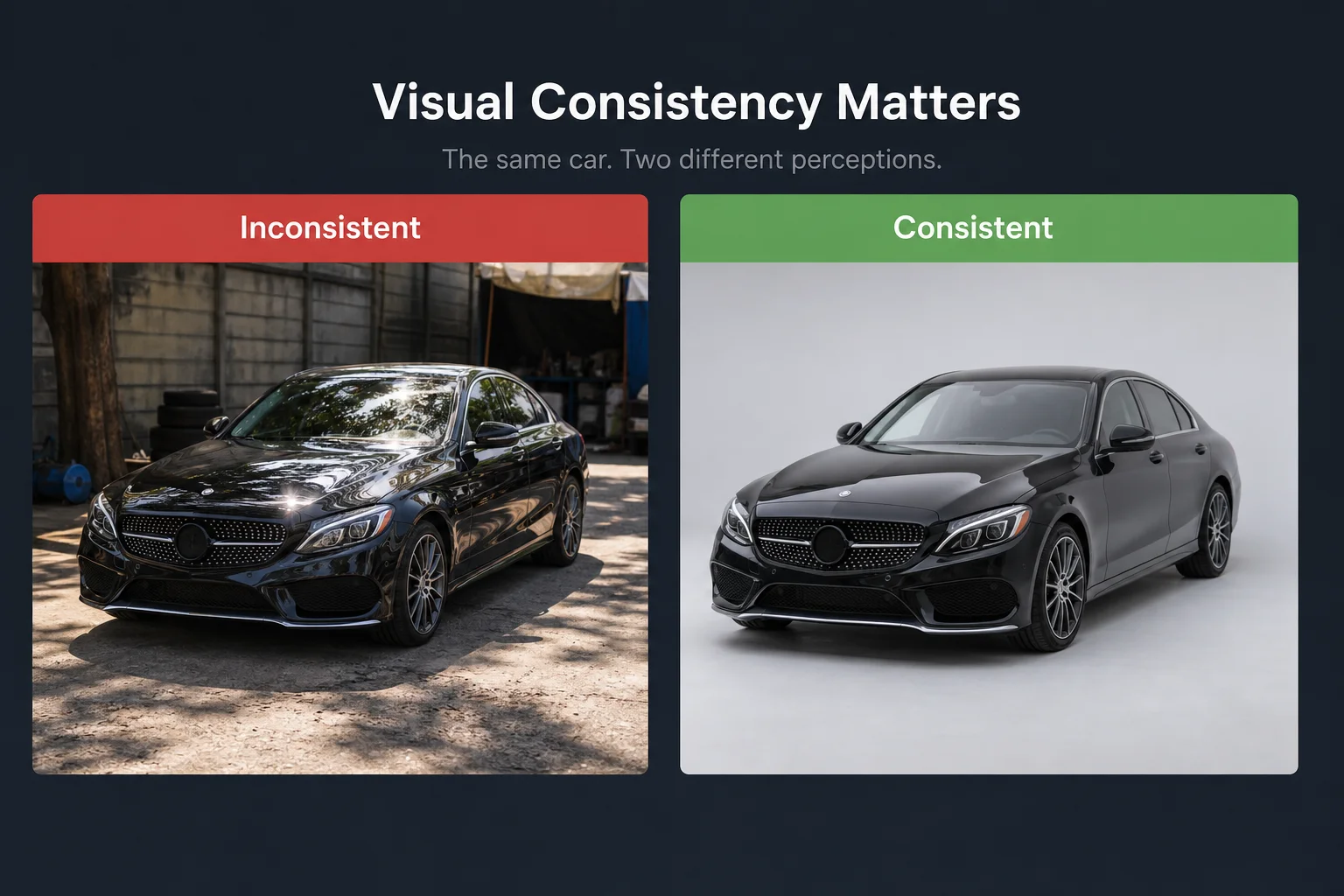
Visual inconsistency undermines trust—standardized AI-enhanced images ensure professional, comparable documentation
How Car Photo Booth AI Enhances Inspection Workflows
Our AI removes any background automatically and replaces it with a professional setting—be it a showroom, white studio, or urban environment—ensuring every image aligns with brand standards. This eliminates retakes due to poor lighting or background distractions. For dealers and rental operators, this means inspection documentation can be generated on-site with minimal effort, accelerating time-to-market. The result is a polished, trustworthy visual record that supports pricing accuracy and reduces disputes.
Integrating AI Images into Inspection Reports
Embedding AI-enhanced photos into digital reports is seamless. After processing images through Car Photo Booth, users can export high-resolution files directly into PDF summaries, inventory management systems, or customer-facing portals. For detailed guidance on optimizing visual workflows, see our complete guide to cleaning up car pictures for online listings.
Factors That Influence How Much You’ll Pay for an Inspection
Car inspection pricing in 2026 is not standardized—it varies significantly based on several interrelated factors. Understanding these variables allows dealers, Turo hosts, and fleet operators to forecast costs accurately and choose the most efficient service model for their volume and geographic footprint.
Geographic and Market-Based Price Differences
Inspection costs fluctuate by region, largely driven by labor rates, regulatory requirements, and market demand. For example, in Pennsylvania, most stations charge between $35 and $50 for a standard safety inspection, with urban stations typically at the higher end ($45–$50) and rural locations offering rates as low as $35–$40, according to PA Vehicle Inspections. States with mandatory annual inspections—such as Pennsylvania, New York, and Texas—tend to have more competitive pricing due to higher service volume. In contrast, 13 states including Florida, Alaska, and Michigan do not require regular safety or emissions checks, which can limit provider availability and shift costs toward private, on-demand evaluations.
Vehicle Age, Make, and Complexity Premiums
Luxury, performance, and electric vehicles (EVs) often incur higher inspection fees due to specialized diagnostic tools and technician training. EVs, in particular, require assessment of battery health, regenerative braking systems, and software calibration—adding 20–30 minutes to a standard check. Older vehicles may also command higher fees if rust, aftermarket modifications, or outdated components require deeper scrutiny. High-end brands like BMW, Mercedes, or Tesla often necessitate dealership-level diagnostics, increasing labor costs. Using AI-enhanced photo documentation from Car Photo Booth reduces subjectivity in cosmetic evaluations, helping standardize pre-inspection assessments and minimizing disputes over wear and tear.
Dealership vs. Independent Shop vs. Mobile Services
| Service Type | Avg. Cost Range (2026) | Best For |
|---|---|---|
| Independent Shop | $35 – $60 | Routine checks, budget-conscious |
| Dealership Service | $70 – $120 | Luxury, EVs, warranty compliance |
| Mobile Inspection | $80 – $150+ | Fleet audits, multi-location ops |
Dealerships offer OEM-aligned inspections but at a premium. Independent shops provide cost-effective standard checks, while mobile services—though more expensive—deliver efficiency for businesses managing dispersed inventory. Mobile units eliminate vehicle transport costs and downtime, a key advantage for rental fleets and large dealerships. Integrating AI-generated, consistent vehicle imagery streamlines these mobile workflows, enabling faster reporting and reducing repeat visits due to documentation gaps. For best practices in visual documentation, see our guide to cleaning up car pictures for online listings.
How to Choose the Right Inspection Service in 2026
Selecting the right inspection provider in 2026 goes beyond price—it’s about ensuring accuracy, consistency, and digital readiness. For dealerships, Turo hosts, and fleet operators, the inspection process is a critical touchpoint for trust, compliance, and resale value. A poorly documented inspection can delay sales, trigger disputes, or undermine buyer confidence, especially in digital-first markets where visual proof is paramount.
Look for ASE-Certified Technicians and Clear Reporting
Technician expertise is non-negotiable. ASE-certified professionals must have at least two years of hands-on experience and pass rigorous exams, with mandatory recertification every five years to keep pace with evolving vehicle systems—including advanced driver-assistance and EV powertrains. This ensures consistent, up-to-date evaluations across all makes and models.
Equally important is reporting quality. Opt for providers who deliver structured, visual reports with annotated photos. In our work at Car Photo Booth, we’ve seen how AI-enhanced images—cleaned, standardized, and background-optimized—integrate seamlessly into inspection reports, improving clarity and professionalism. A detailed report should include timestamps, issue categorization, and high-resolution visuals that align with your digital listing standards. For best practices in creating consistent, compelling vehicle imagery, see our guide to cleaning up car pictures for online listings.
Ask What’s Included and Verify Warranty Coverage
Transparency in scope prevents surprise costs. Before booking, confirm exactly what systems are inspected—brakes, battery health, tire wear, fluid levels, and ADAS calibration—and whether digital deliverables like PDF summaries or API-accessible reports are included. Ask about follow-up protocols for flagged issues and whether repairs come with warranty-backed labor and parts. Providers that offer integrated digital workflows, including automated photo processing, reduce manual rework and improve turnaround time.
Read Reviews and Compare Digital Service Offerings
Evaluate providers based on client feedback, especially from peers in your segment—Turo operators, independent dealers, or fleet managers. Prioritize those offering app-based scheduling, cloud-hosted reports, and compatibility with AI photo platforms. Seamless integration with tools like Car Photo Booth ensures that every inspection comes with presentation-ready images, eliminating the need for costly retakes or third-party editing. In a digital marketplace, consistency isn’t just aesthetic—it’s a signal of operational rigor.
Car Inspection Cost FAQs in 2026
How often should I get my car inspected?
For dealerships, Turo operators, and fleet managers, routine inspections are mission-critical—typically conducted pre-listing, post-rental, or after significant mileage intervals (e.g., every 15,000 miles). Older vehicles or those in harsh operating environments may require quarterly checks. Proactive inspection cycles reduce liability, ensure compliance, and maintain customer trust in fast-turnover markets.
Is an inspection the same as a diagnostic?
No. A standard inspection evaluates visible and operational components—tires, lights, brakes, fluids—while a diagnostic focuses on electronic systems via OBD-II scanning, uncovering hidden engine, transmission, or emissions issues. Both are complementary: inspections support safety and presentation, while diagnostics reveal mechanical health.
Can I drive with a failed inspection?
Legally, it depends on the violation’s severity and jurisdiction. Safety-critical failures—such as brake or steering defects—may render a vehicle illegal to operate until repaired. For rental and dealer fleets, operating a failed vehicle risks liability, insurance denial, and reputational damage. Immediate remediation is standard practice.
Are car inspections required in most states in 2026?
As of 2026, approximately 17 states require routine safety inspections either annually or biennially, while 27 states enforce some form of emissions testing, according to the Vermont Legislative Research Service. Requirements vary widely—some apply only to certain counties or vehicle ages—so operators must verify local mandates to remain compliant.
How can AI photography reduce my inspection-related costs?
Professional visuals streamline post-inspection workflows. At Car Photo Booth, we’ve found that standardized, studio-quality images reduce disputes over cosmetic conditions, minimize listing returns, and eliminate the need for re-inspection photography. By automatically generating consistent, background-free visuals, our platform integrates seamlessly with inspection reports—cutting editing time and enhancing customer confidence. For a full breakdown of inspection documentation best practices, see our Complete Vehicle Inspection Checklist for Dealerships and Auto Businesses.
Final Tips for Managing Car Inspection Costs in 2026
Understanding inspection types—from safety and emissions to pre-purchase and compliance—is essential for accurate budgeting and operational planning. Costs vary by region, vehicle class, and service depth, but one constant is rising demand for digital documentation that supports transparency. This is where AI-powered photography becomes a strategic advantage. At Car Photo Booth, we’ve seen firsthand how studio-quality, background-free images reduce disputes, accelerate approvals, and integrate seamlessly with digital inspection reports. By eliminating costly reshoots and manual editing, our platform helps dealerships and fleet operators maintain consistent, professional visuals at scale. For those building comprehensive inspection workflows, refer to our Complete Vehicle Inspection Checklist for Dealerships and Auto Businesses. As AI reshapes vehicle evaluation standards, the fusion of visual precision and automation isn’t just a cost saver—it’s the foundation of trust in digital automotive transactions.