
Blurred car photos are silent deal-killers in online automotive sales. A potential buyer scrolling through listings makes split-second decisions based on image quality, and a fuzzy photo signals neglect—whether the vehicle is actually well-maintained or not. According to research from Auto Remarketing, 95% of car buyers say professional-looking images significantly boost perceived vehicle value, while 87% would click on well-lit, framed photos over blurry ones. The stakes are real: listings with clear, high-resolution pictures generate 30% more leads for new vehicles and up to 40% for used or certified stock. For dealerships and Turo hosts operating on thin margins, every lost click is revenue walking out the door.
Quick Answer: Blurred photos can be repaired using AI upscaling tools that enhance resolution and sharpness, professional photo editing software with deconvolution filters, or by replacing the entire background with studio-quality alternatives. The fastest solution for automotive sellers is AI background removal and replacement, which eliminates the blurry original backdrop entirely and substitutes it with a crisp, professional studio environment—transforming a mediocre lot photo into a showroom-ready asset in seconds.
This section covers why image clarity matters for your bottom line, the mechanics of how blur damages buyer perception, and the practical repair methods that actually work for high-volume automotive operations. We'll explore both quick fixes and comprehensive solutions, then show you which approach fits your workflow best.
Table of Contents
- Understanding What Causes Blurred Car Photos
- Four Methods to Fix Blurred Photos (From Basic to Advanced)
- Why Prevention Beats Repair: Best Practices for Sharp Car Photos
- Scaling Photo Repair: Tools and Workflows for Dealerships and Turo Hosts
- Transform Blurred Photos Into Sales-Ready Listings Today
Understanding What Causes Blurred Car Photos
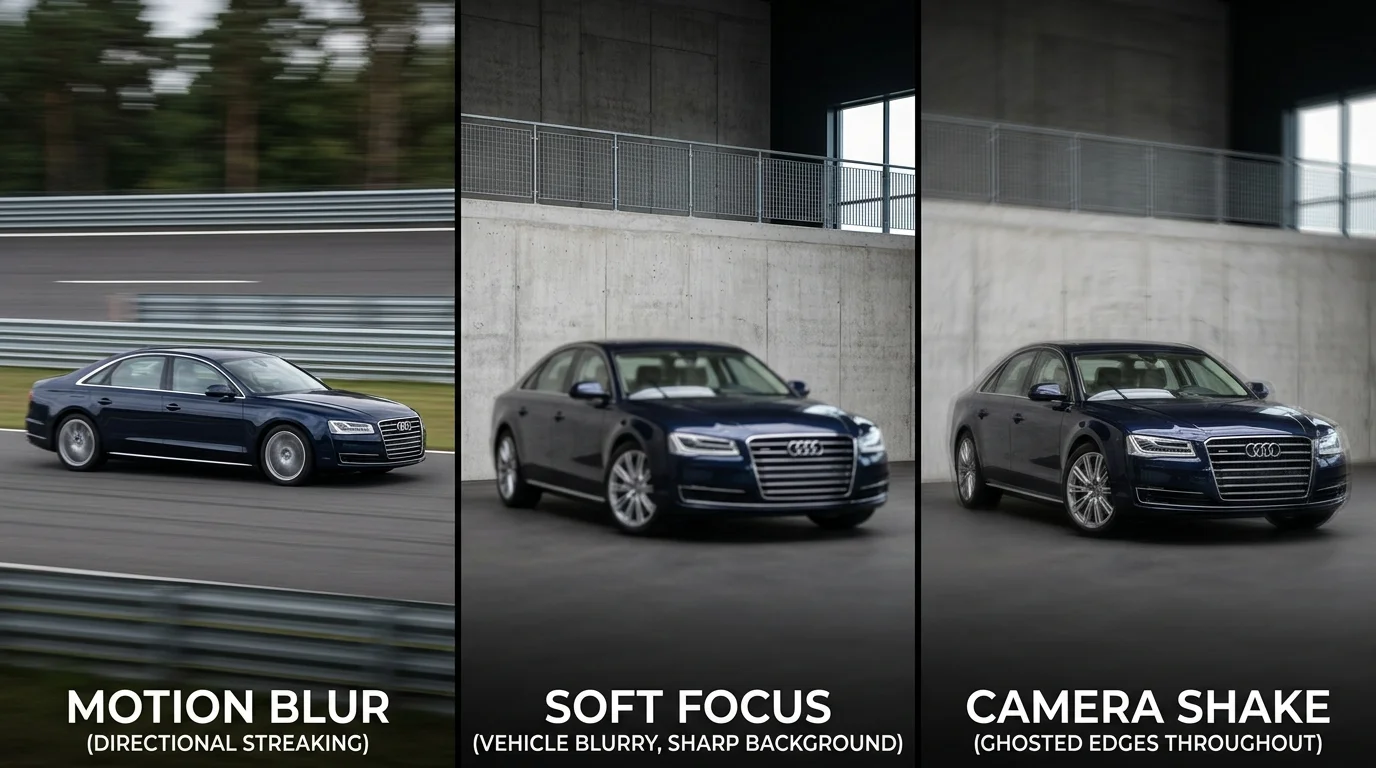
Blurred automotive photos stem from three distinct mechanical failures in the image capture process, each producing visually different results and requiring different preventive strategies. Diagnosing which type of blur you're facing is the first step toward fixing it—or preventing it altogether in future shoots.
Camera shake occurs when the camera moves during exposure, typically in low-light dealership environments where shutter speeds drop dangerously slow. When you're handheld shooting indoors without supplemental lighting, your camera compensates by staying open longer to gather light. According to Photography Mad's guidance on shutter speed, you should maintain a minimum shutter speed of 1/125th of a second to prevent camera shake on stationary vehicles. Below this threshold, even slight hand tremor translates into soft, ghosted edges across the entire frame—the vehicle outline becomes fuzzy rather than crisp. This is the most common culprit in lot photography.
Incorrect focus settings create a different visual signature: sharp backgrounds with a blurry vehicle, or vice versa. Autofocus systems can lock onto reflections in the windshield, the background scenery, or the wrong plane of the car entirely, leaving your subject out of focus. This happens frequently during test drive photography when the vehicle is in motion or when shooting through dealership glass with competing light sources.
Motion blur appears as directional streaking—the vehicle looks smeared in the direction it traveled. This occurs during moving shots or when subjects shift position mid-exposure. For stationary lot photos, this is less common but still happens with windy conditions moving the vehicle slightly or when photographing vehicles being driven onto the lot.
Understanding which blur type affects your inventory helps you select the right repair approach—whether that's adjusting camera settings, using faster lenses, or leveraging AI solutions that eliminate the blurry background entirely through professional background replacement.
Four Methods to Fix Blurred Photos (From Basic to Advanced)
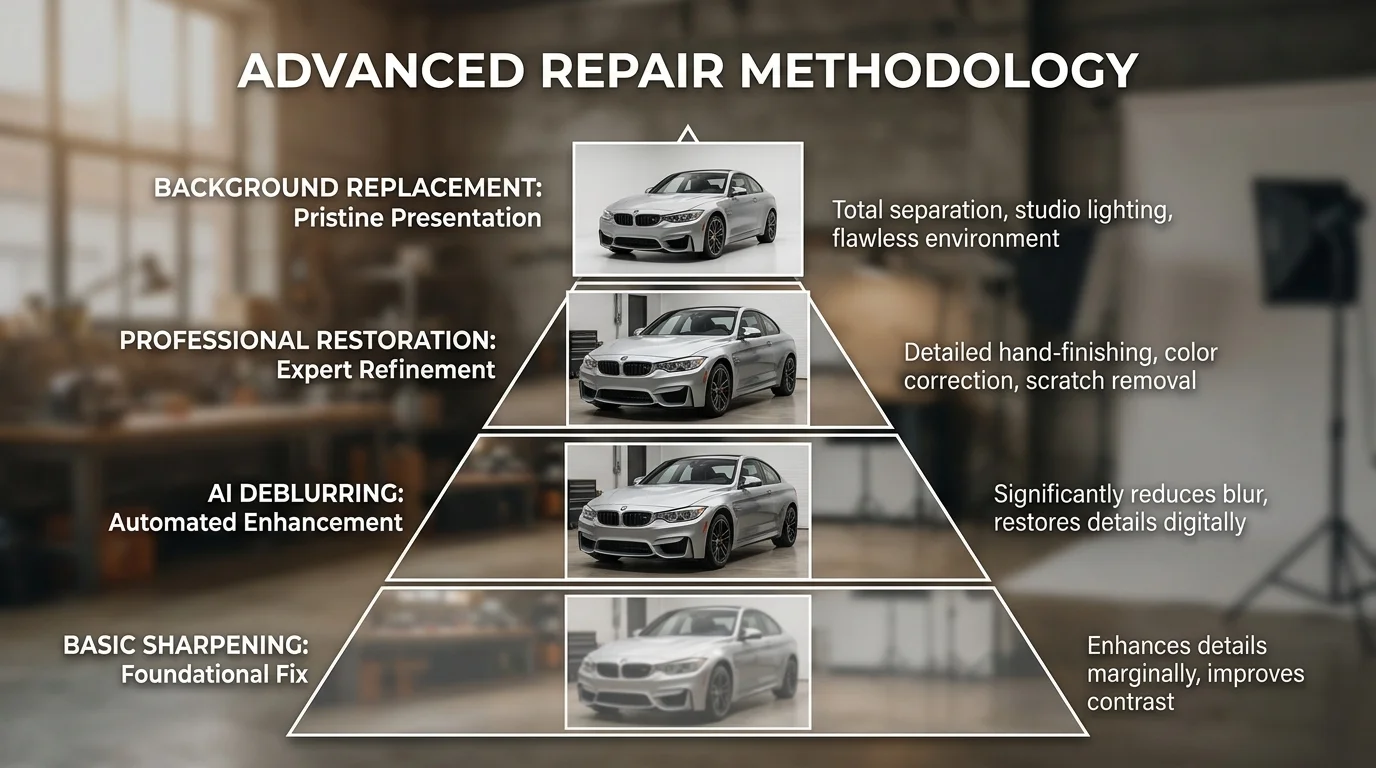
Blurred car photos demand different solutions depending on severity, budget, and timeline. Here are four practical approaches, each suited to different dealership scenarios.
Method 1: Basic Sharpening Filters (Free to $50/year)
Free tools like Photoshop's Unsharp Mask, Lightroom's Clarity slider, or online editors (Pixlr, Canva) offer quick sharpening for minor blur. These work best on photos with slight focus softness—not severe motion blur or autofocus failures. The process takes 2–3 minutes per image. Results are modest; you're enhancing existing detail, not recovering lost information. This method suits dealerships with 5–10 photos needing minor touch-ups before listing.
Method 2: AI-Powered Deblurring Software ($17–$199/year)
Tools like Topaz Photo use neural networks to analyze blur patterns and reconstruct lost detail. According to Topaz Labs pricing, subscriptions start at $17 monthly or $199 for lifetime access. Processing takes 30 seconds to 2 minutes per image. Results are significantly better than basic sharpening—the software can recover texture and edges even in moderate motion blur. This works well for dealerships processing 20–50 photos monthly where quality matters more than speed.
Method 3: Professional Photo Restoration Services ($2–$30 per image)
Human retouchers manually fix blur through selective sharpening, detail reconstruction, and masking. Per Clipping World data, basic automotive edits run $2–$5 per image, while advanced retouching reaches $10–$30. Turnaround is 24–48 hours. Results are excellent for severely blurred photos, but cost scales quickly across large inventories. Best for high-value vehicles or specialty listings where the investment justifies the outcome.
Method 4: AI Background Replacement (Complementary Solution)
Rather than fighting blur, remove it entirely. Car Photo Booth eliminates distracting or blurry backgrounds and replaces them with crisp, professional studio backdrops—transforming lot photos into showroom-quality images in seconds. This sidesteps the deblurring problem by isolating the vehicle and placing it against a clean, controlled background. At $3–$7 per image, it's cost-effective for bulk processing and guarantees visual consistency across your inventory.
| Method | Cost | Speed | Best For | Quality |
|---|---|---|---|---|
| Basic Sharpening | Free–$50/yr | 2–3 min/photo | Minor softness | Fair |
| AI Deblurring | $17–$199/yr | 30 sec–2 min | Moderate blur | Good |
| Professional Restoration | $2–$30/photo | 24–48 hrs | Severe blur | Excellent |
| Background Replacement | $3–$7/photo | 10 sec | Lot photos, inconsistency | Excellent |
Dealerships that prioritize speed and consistency typically combine Method 4 with Method 2 for problem images. Listings with professional photos sell 32% faster than amateur shots, making the investment worthwhile regardless of which approach you choose.
Why Prevention Beats Repair: Best Practices for Sharp Car Photos
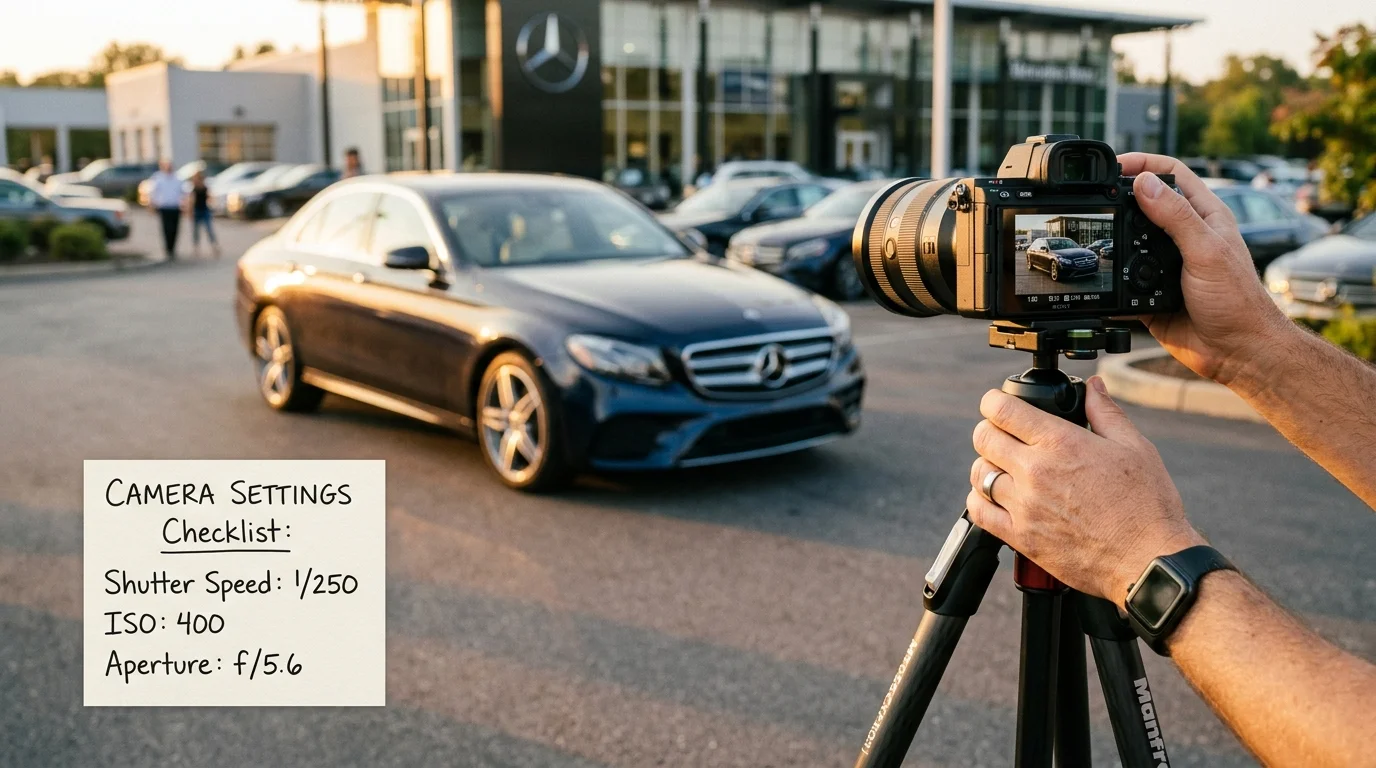
Sharp originals eliminate the need for costly post-processing. A properly captured image requires minimal correction, saves hours in editing, and reduces per-photo expenses—especially critical when processing inventory at scale. Prevention is fundamentally more efficient than repair.
Stabilization is your foundation. A tripod or gimbal eliminates camera shake, the primary cause of motion blur. For dealership lot shoots, a lightweight tripod takes seconds to position and ensures consistent framing across multiple vehicles. Turo hosts benefit from smartphone gimbals, which cost under $100 and deliver professional steadiness without equipment overhead.
Shutter speed controls motion blur directly. Use 1/250th of a second or faster for stationary vehicles; faster speeds (1/500th or higher) accommodate slight wind or vibration. Slower speeds introduce blur—a common mistake when shooting in low light. If your camera defaults to 1/60th of a second indoors, increase ISO or open your aperture instead of slowing the shutter.
Lighting prevents the ISO trap. Proper illumination lets you maintain fast shutter speeds without cranking ISO to noise-inducing levels. Natural side or three-quarter lighting reveals detail and texture; harsh overhead sun creates unflattering shadows. Overcast days provide even, diffused light—ideal for lot photography.
Autofocus precision matters. Enable continuous autofocus (AF-C or AI Servo) for moving subjects; use single-point focus on the vehicle's front grille or headlight to lock sharpness where it counts. Back-button focus separates focusing from shutter release, giving you finer control.
Before your next shoot, use this checklist:
- Tripod or stabilizer secured and level
- Shutter speed set to 1/250th or faster
- ISO as low as light allows (under 1600 for clean resolution)
- Autofocus mode selected and tested
- Lighting positioned to eliminate harsh shadows
- Test shot reviewed at 100% zoom
Sharp captures reduce editing time by 70% compared to salvaging blurry originals. When combined with AI background replacement, properly exposed and focused images transform into showroom-quality listings in seconds, not hours.
Scaling Photo Repair: Tools and Workflows for Dealerships and Turo Hosts
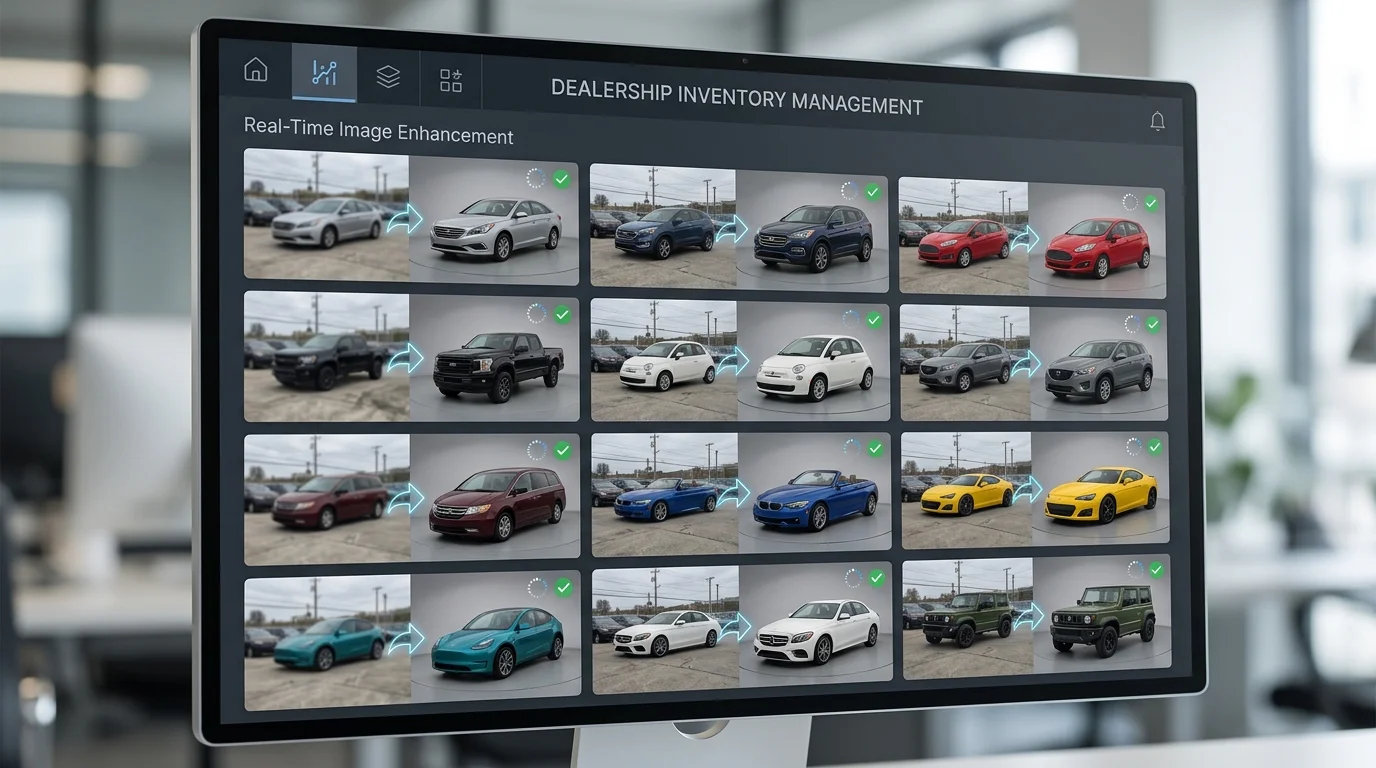
Processing hundreds of vehicle photos monthly demands a systematic approach. Manual repair of every blurry image becomes unsustainable—each photo edited individually can consume 5–15 minutes, multiplying labor costs across large inventories. Dealerships and Turo hosts must choose between three scaling strategies: batch-processing workflows using AI, outsourcing to photo editors, or hybrid models combining automation with selective manual refinement.
Batch Processing with AI Tools
AI-powered solutions process dozens of images simultaneously, reducing per-image costs to $1–5 and handling corrections in seconds rather than hours. These workflows integrate directly with inventory management systems, automatically enhancing photos as they upload. The efficiency gain is substantial: a dealership managing 200 monthly listings saves approximately 30–40 labor hours by automating background replacement and clarity enhancement. When you combine AI background removal with proper exposure correction, photos transform from lot snapshots into showroom-quality assets ready for Autotrader, Craigslist, and Turo listings without additional editing.
Integration with Listing Platforms
Modern photo workflows must account for platform-specific requirements. Autotrader prioritizes high-resolution, well-lit images with consistent backgrounds. Turo hosts benefit from lifestyle context—vehicles photographed against appealing environments convert better. Craigslist demands fast load times, making compressed, optimized files essential. A unified workflow that processes images through AI enhancement, then applies platform-specific formatting, eliminates redundant uploads and ensures consistency across channels.
Cost-Per-Image Analysis
Professional photographers charge $30–50 per vehicle. Physical photo booths require $25,000–60,000 in setup costs. AI batch processing costs $3–7 per car monthly through subscription models, with no equipment investment. For a dealership processing 500 monthly photos, AI-based workflows save $10,000–20,000 annually compared to traditional photography, while delivering faster turnaround and standardized quality across all listings.
Transform Blurred Photos Into Sales-Ready Listings Today
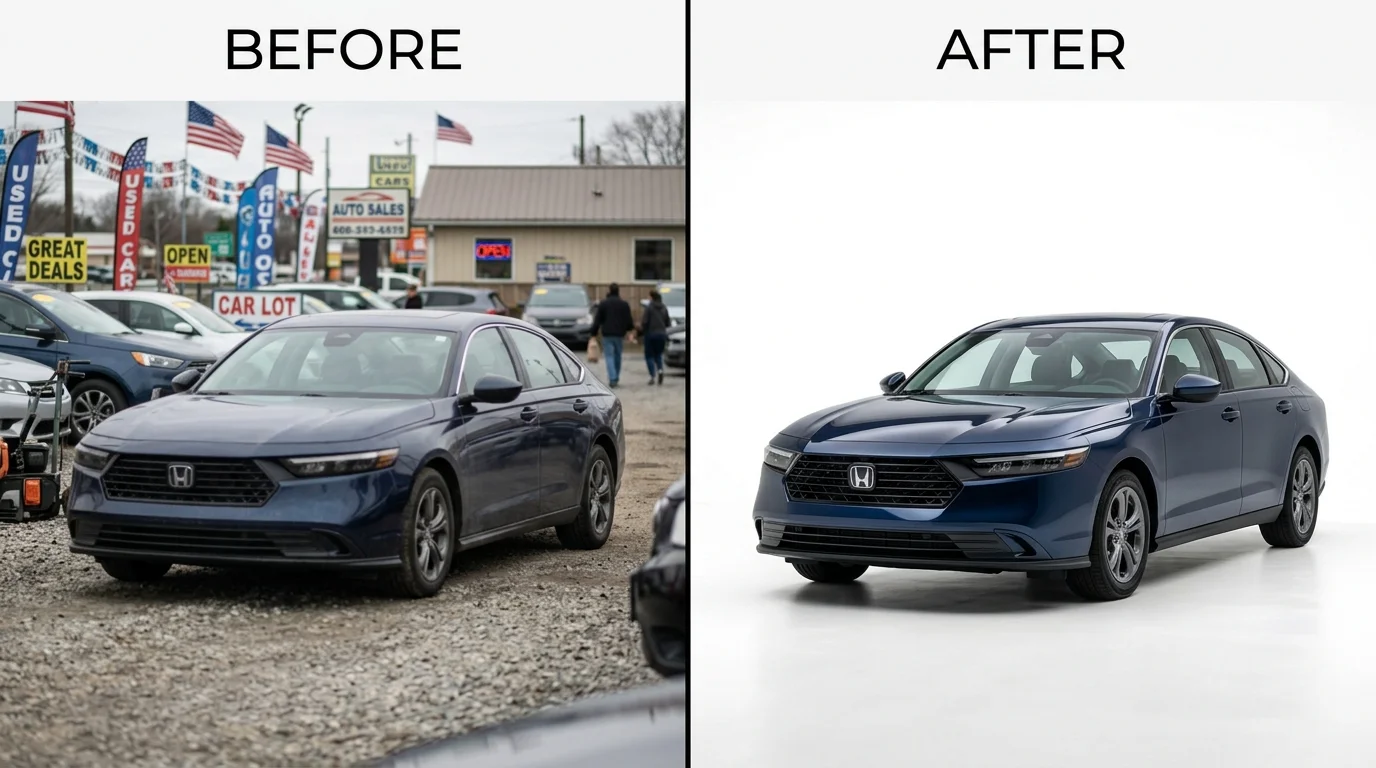
Blurred automotive photos are repairable, but the method matters. Basic sharpening filters help with minor motion blur, yet they often produce artificial-looking results that undermine credibility on Autotrader or Turo. The most reliable fix at scale is AI-powered background replacement—which simultaneously removes blur context and delivers studio-quality consistency across your entire inventory. When you replace a soft, distracting lot background with a clean showroom or professional backdrop, viewers focus on the vehicle itself, and minor blur becomes irrelevant.
Prevention through proper shooting technique remains ideal: stable camera position, adequate lighting, and deliberate focus eliminate the need for post-processing altogether. However, when blur happens—and in high-volume dealership operations, it inevitably does—modern AI tools make repair fast and affordable. Car Photo Booth processes blurred lot photos in seconds, applying background removal and professional backdrop replacement that costs $3–7 per vehicle, compared to $30–50 for reshoot fees or studio time.
Professional-looking photos drive measurable ROI. Listings with studio-quality imagery receive 40% more inquiries and command higher perceived value. The investment in fixing blur through AI enhancement pays for itself within the first dozen vehicles sold. Start with a free trial today—no credit card required—and see how transformed photos convert browsers into buyers.