
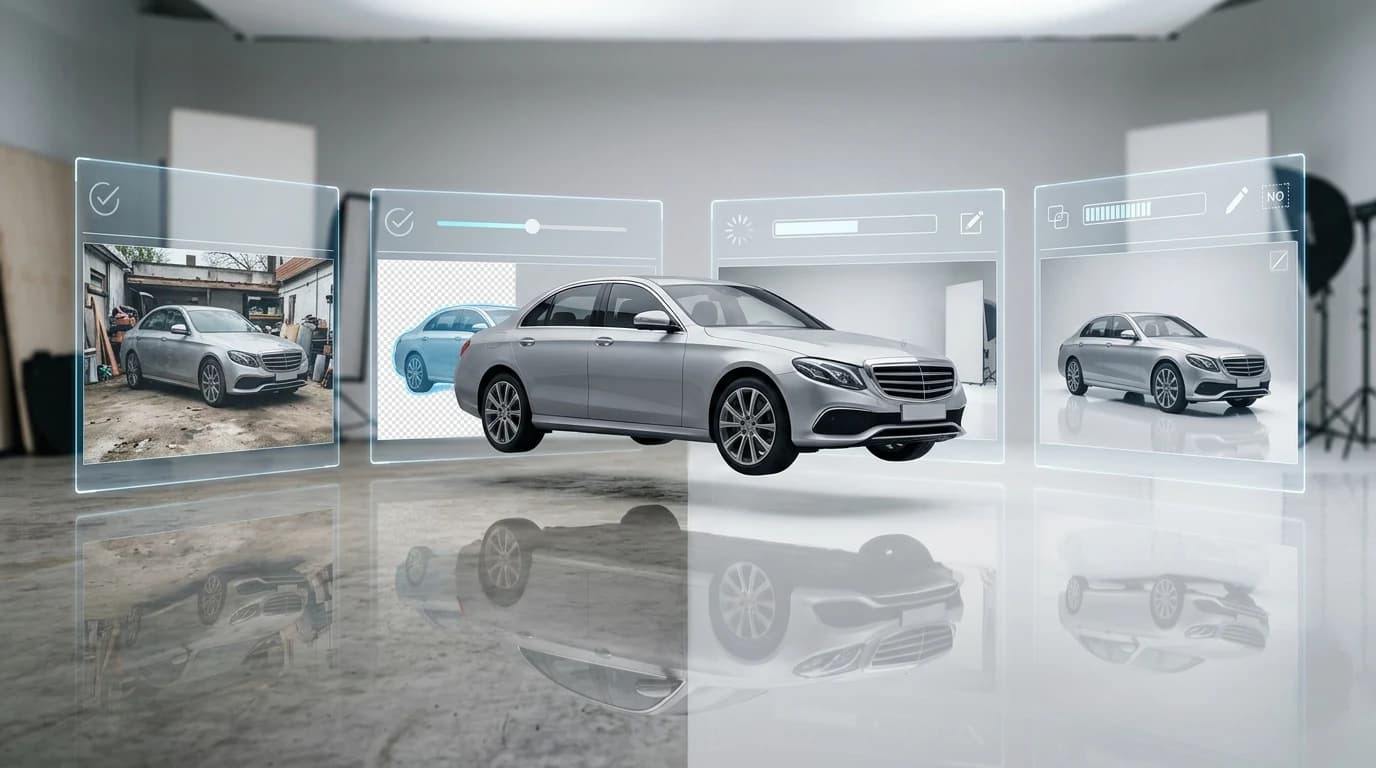
Quick Answer: Professional car backgrounds transform ordinary lot photos into studio-quality images that catch buyer attention and drive higher click-through rates. According to Redline Automotive Merchandising, dealerships that shift from in-house photos to professional photography partnerships typically see a 25–40% increase in listing click-through rates. This guide explores why background replacement has become essential for dealerships, Turo hosts, and auto sellers competing in crowded digital marketplaces.
A vehicle's first impression happens in a thumbnail. Whether your car photo appears on AutoTrader, Facebook Marketplace, or a dealership website, the background either elevates or undermines the entire listing. Distracting lot clutter, harsh shadows, inconsistent lighting, and unprofessional settings send a clear message to buyers: this dealer cuts corners. Enhanced vehicle backdrops, by contrast, signal confidence, quality, and attention to detail—qualities that translate directly into inquiry volume and sales velocity.
The challenge has always been cost and consistency. Hiring a studio photographer runs $30–50 per vehicle. Building a physical photo booth demands $25,000–$60,000 in upfront capital. And even with professional equipment, maintaining visual uniformity across hundreds of listings becomes logistically complex. This is where digital staging matters most: it levels the playing field, allowing dealerships of any size to compete visually with larger competitors without the traditional expense.
Throughout this article, we'll examine how background replacement works, which virtual environments perform best for different vehicle types and sales channels, and how tools like Car Photo Booth enable dealers to process entire inventory in hours rather than weeks. You'll discover why studio-quality environments aren't cosmetic upgrades—they're business accelerators that improve listing quality, reduce acquisition costs, and strengthen buyer confidence before the first conversation even begins.
The Cost Problem: Why Traditional Car Photography Fails Dealerships
The economics of automotive photography create a persistent friction point for dealerships operating at scale. When you multiply the true cost of professional photography across an inventory of 50, 100, or 500 vehicles, the financial burden becomes impossible to ignore—and the operational delays compound the problem.
Photographer Pricing vs. In-House Solutions
Professional automotive photographers typically charge between $10–30 per vehicle for dealership work, but this figure masks the hidden costs that accumulate quickly. According to DealerRefresh Automotive Forum, background removal and editing add an additional $5–15 per vehicle in post-production expenses. A dealership with 200 vehicles in inventory faces a realistic per-car cost of $20–45 once retouching is included.
Beyond the per-unit fee, scheduling creates bottlenecks. Photographers book weeks in advance, and weather delays compound the timeline. A dealer needing to refresh inventory for seasonal promotions or respond to market shifts cannot afford to wait. Retouching turnaround times stretch across days or weeks, during which vehicles sit in limbo—not yet listed, not yet generating inquiries. For high-volume operations, this delay translates directly into lost sales velocity.
In-house hiring offers no escape. A full-time automotive photographer demands a salary ($35,000–$55,000 annually), equipment investment, and studio space. The photographer becomes a fixed cost regardless of whether you're processing 10 cars or 100 that month, making the model economically inefficient for dealers with variable inventory flow.
Physical Photo Booth Limitations
The capital-intensive alternative—purchasing a dedicated photo booth—carries its own severe constraints. Professional photo booth equipment costs $38,000 for a standalone unit or $42,875 for a booth with automated Photo Car bundle, according to Dealermade. Rental options start at $1,350–$1,717 per month, which approaches the cost of hiring a photographer outright.
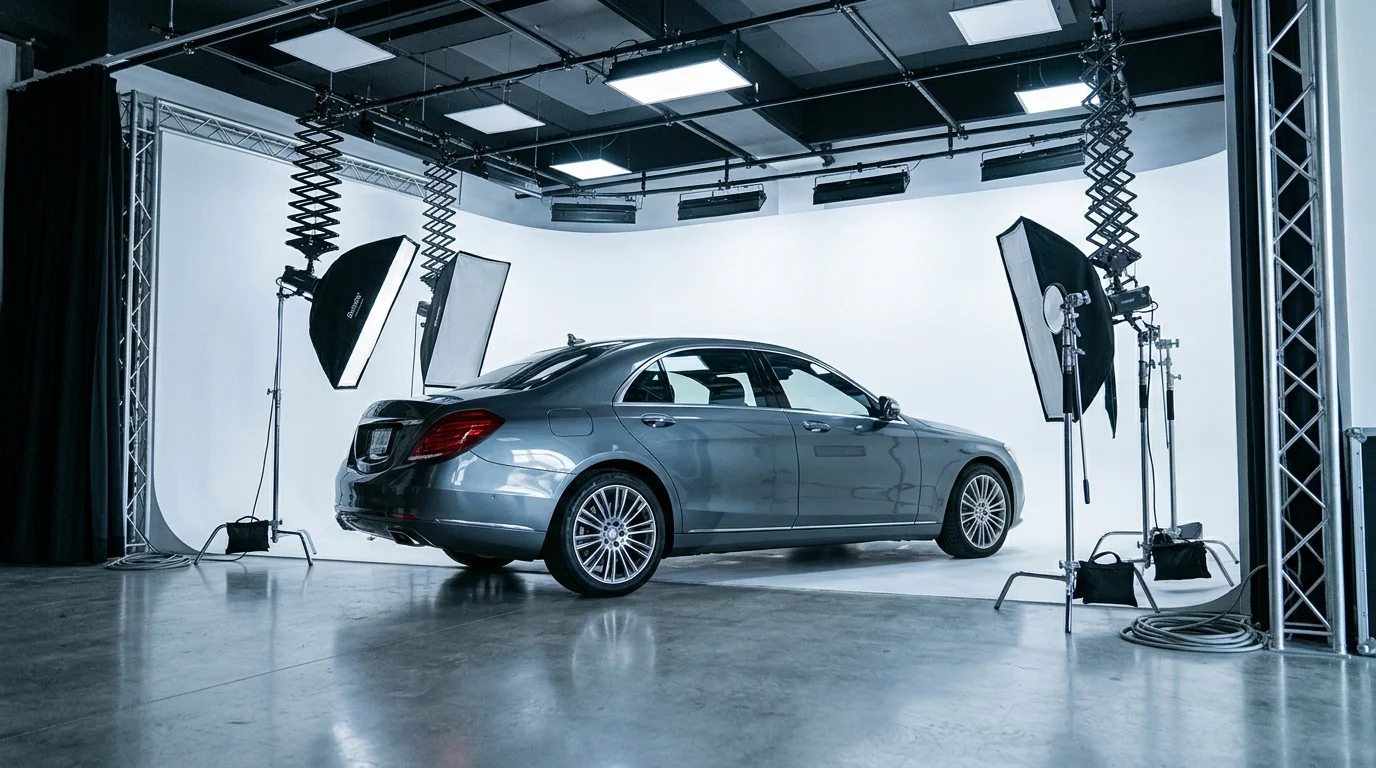
Even after this investment, physical booths fail to guarantee consistency. Lighting angles, vehicle positioning, and seasonal sun exposure create subtle but visible variations across photos. A white sedan photographed in winter light looks different from the same model shot in summer—yet both must appear uniform in your online catalog. Manual adjustments between shots slow throughput, and the booth itself occupies valuable floor space that could serve other operational purposes.
The real limitation emerges when you consider inventory velocity. A physical booth processes perhaps 15–25 vehicles per day under ideal conditions. A dealership receiving 50 new units weekly faces a backlog that stretches across multiple days, delaying listing publication and compressing the window for capturing early-stage buyer interest.
How AI-Powered Background Replacement Works for Car Photos
Modern AI-powered background replacement operates through a streamlined three-step workflow: detection, removal, and replacement. When you upload a car photo, the system's neural networks—powered by advanced computer vision algorithms—instantly analyze the image to identify vehicle boundaries, distinguishing the car's edges, reflections, and shadows from the surrounding environment. This process, rooted in deep learning models trained on thousands of automotive images, enables pixel-precise segmentation without manual masking or selection tools. For a deeper dive into how AI interprets visual data, check out this overview of computer vision in image processing. The result is a clean, transparent background that seamlessly preserves fine details like grill patterns, glass reflections, and alloy wheel depth—critical for maintaining realism in professional car background replacements.
Real-World Results: How Dealerships and Turo Hosts Benefit from Better Car Backgrounds
The impact of professional car backgrounds extends far beyond aesthetics. When dealerships and Turo hosts invest in transforming their vehicle photography, the results materialize quickly across measurable channels: listing visibility, buyer engagement, and ultimately, sales velocity.
Dealership Case Study: Scaling Inventory Photos
A mid-size dealership managing 150+ vehicles faced a recurring operational bottleneck. Their photography workflow required scheduling lot shoots every two weeks, coordinating with an external photographer, and waiting 7-10 days for edited images. During peak inventory turnover—when fresh photos matter most—this lag meant new arrivals sat on the lot for days before appearing online, invisible to buyers searching across AutoTrader, Cars.com, and the dealership's own website.
The challenge was compounded by inconsistency. Photos taken under different weather conditions, times of day, and lighting setups created a fragmented brand presentation. A luxury sedan photographed in overcast conditions looked less premium than the same model shot in sunlight. Buyers scrolling through the inventory noticed the visual discord, which subtly undermined trust in the dealership's professionalism.
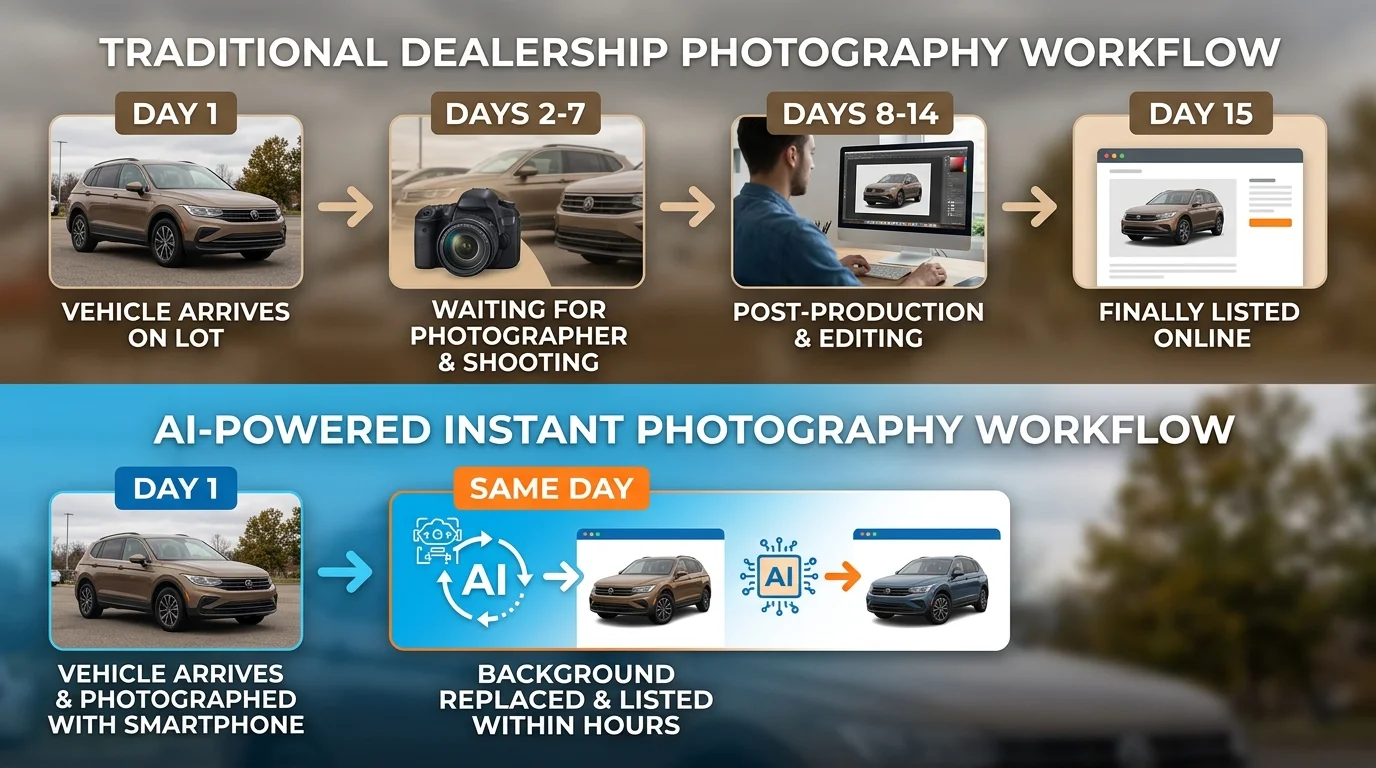
The dealership adopted an AI-powered background replacement workflow. Instead of waiting for studio appointments, their team photographed vehicles on the lot using smartphones or basic DSLR cameras—no special equipment required. Each photo was processed through the platform in under 10 seconds, with backgrounds automatically removed and replaced with one of 100+ professional studio options. Within three days of implementing the system, their entire active inventory had been transformed to uniform, studio-quality presentation.
The results were immediate. Online listing click-through rates increased by 40% within the first month. The dealership attributed this partly to faster inventory updates—new arrivals now appeared online the same day they arrived on the lot—and partly to the consistent visual quality. Buyers no longer had to mentally "forgive" poor photography; every vehicle presented identically professional. Photography costs dropped from $30–$50 per vehicle to approximately $3 per vehicle, freeing budget for other marketing channels. The dealership reduced its photography turnaround from two weeks to same-day, fundamentally changing how quickly they could respond to market demand.
Turo Host Success: Competitive Listing Advantage
Individual Turo hosts operate in saturated markets where dozens of similar vehicles compete for the same renters. A host with a 2015 Toyota Camry faces direct competition from 50+ other Camrys in the same city. The differentiator is often not the car itself—it's the presentation.
Hosts who photograph their vehicles on the street or in parking lots compete visually against hosts with professional studio setups or high-end photography skills. The amateur photos—even if the vehicle is immaculate—signal lower professionalism and create hesitation in renters evaluating trust. Hosts with professionally presented inventory consistently achieve higher booking rates and can command premium rental rates.
By applying professional backgrounds to lot photos, individual hosts level the playing field. A Camry photographed against a luxury showroom backdrop or clean white studio environment appears more desirable than the same vehicle shot in a parking lot, even though it's identical. This psychological effect translates to booking frequency. Hosts report 25–35% increases in rental inquiries after implementing professional background transformation. Some hosts have raised their daily rental rates by 10–15% without losing bookings, because the improved presentation justifies the premium pricing.
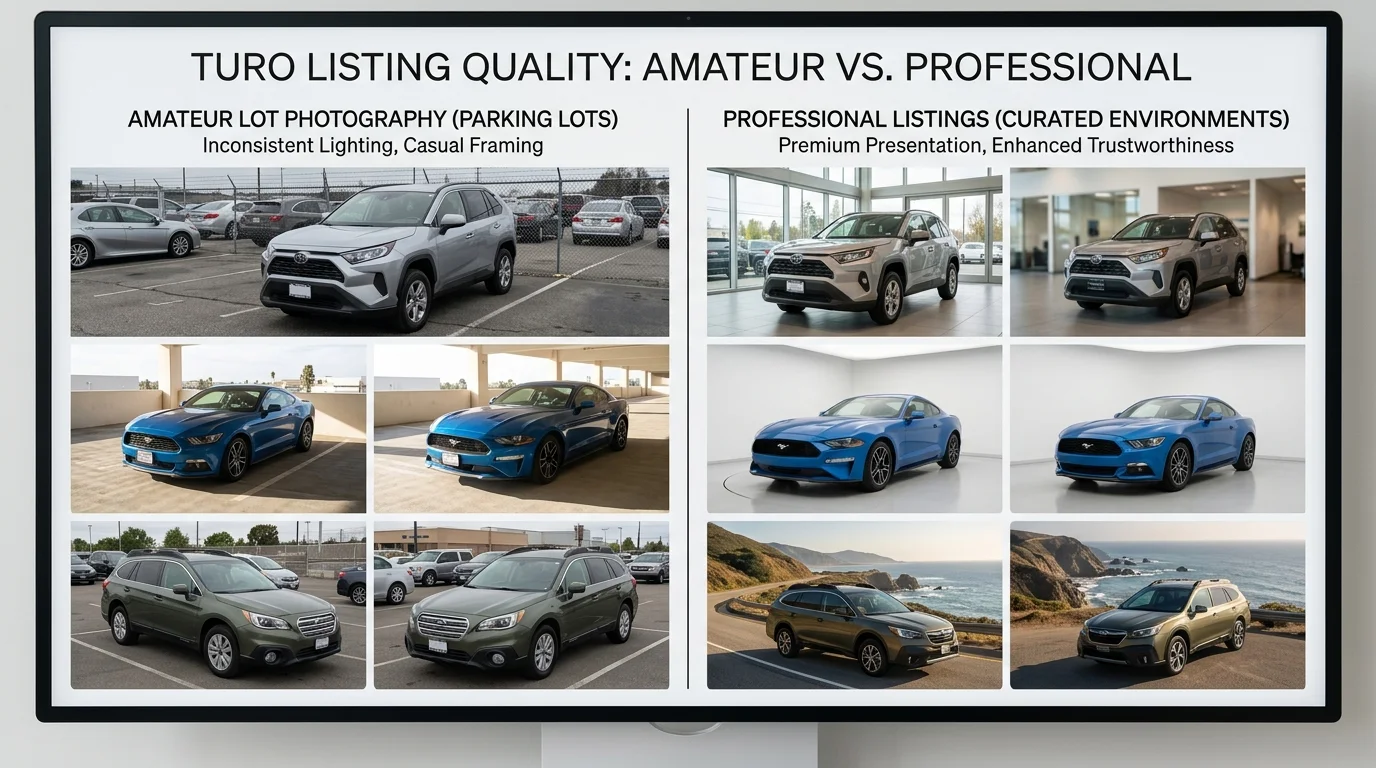
The cost advantage is equally compelling. Professional automotive photography for Turo listings typically runs $150–$300 per vehicle. Background replacement tools cost $3–$7 per vehicle, allowing hosts to refresh their entire fleet quarterly or seasonally without significant expense. This flexibility means seasonal vehicles can be re-presented for different markets, and aging listings can be refreshed to maintain visibility in Turo's search algorithms.
Both dealerships and Turo hosts discover the same underlying truth: professional car photo backgrounds aren't a luxury—they're a competitive necessity. When vehicle listing optimization hinges on visual presentation, the ability to transform ordinary lot photos into studio-quality assets in minutes becomes a scalable advantage that compounds across inventory size.
Choosing the Right Car Background Strategy for Your Business
The decision between DIY background replacement, semi-automated platforms, and full-service photography isn't about finding the universally "best" option—it's about matching your operational reality to the right tool. Volume, budget, brand consistency, and turnaround speed are the four variables that determine which approach delivers ROI for your specific business model.
Assessing Your Photography Needs
Start by answering five straightforward questions. First: how many vehicles do you photograph monthly? A Turo host managing 5–10 listings operates in a completely different universe than a mid-sized dealership processing 50+ vehicles per month. Second: what does your current workflow look like? Are photos already being taken consistently, or are you starting from scratch? Third: what's your budget per vehicle, including labor? Fourth: how quickly do you need results—same-day turnaround or can you batch process weekly? Fifth: how critical is visual consistency across your entire fleet?
These answers create a decision matrix. A dealership with 100+ vehicles, tight turnaround demands, and limited photography staff faces different constraints than an independent photographer shooting 2–3 cars per week for multiple clients. Similarly, Turo hosts prioritize speed and affordability because their listings compete in a crowded marketplace where refresh cycles matter.
Comparing Solution Tiers and ROI
| Solution Tier | Cost Per Vehicle | Processing Speed | Consistency | Best For |
|---|---|---|---|---|
| DIY AI Tools | $3–$7 | 10–30 seconds | High (algorithm-driven) | High-volume dealerships, Turo hosts, photographers managing multiple clients |
| Semi-Automated Platforms | $5–$15 | 1–5 minutes | Very High (human review available) | Dealerships needing quality control, premium brand positioning |
| Professional Photography | $30–$50+ | 1–3 days | Highest (custom shoots) | Luxury dealerships, flagship vehicles, brand-defining campaigns |
DIY AI tools like Car Photo Booth excel when volume matters and consistency is non-negotiable. Processing 50 vehicles in under 10 minutes at $3–$5 per car transforms lot photos into studio-quality assets without hiring additional staff. The ROI compounds: a dealership spending $150 monthly on background replacement can refresh its entire 50-car inventory quarterly, keeping listings algorithmically fresh and visually competitive.
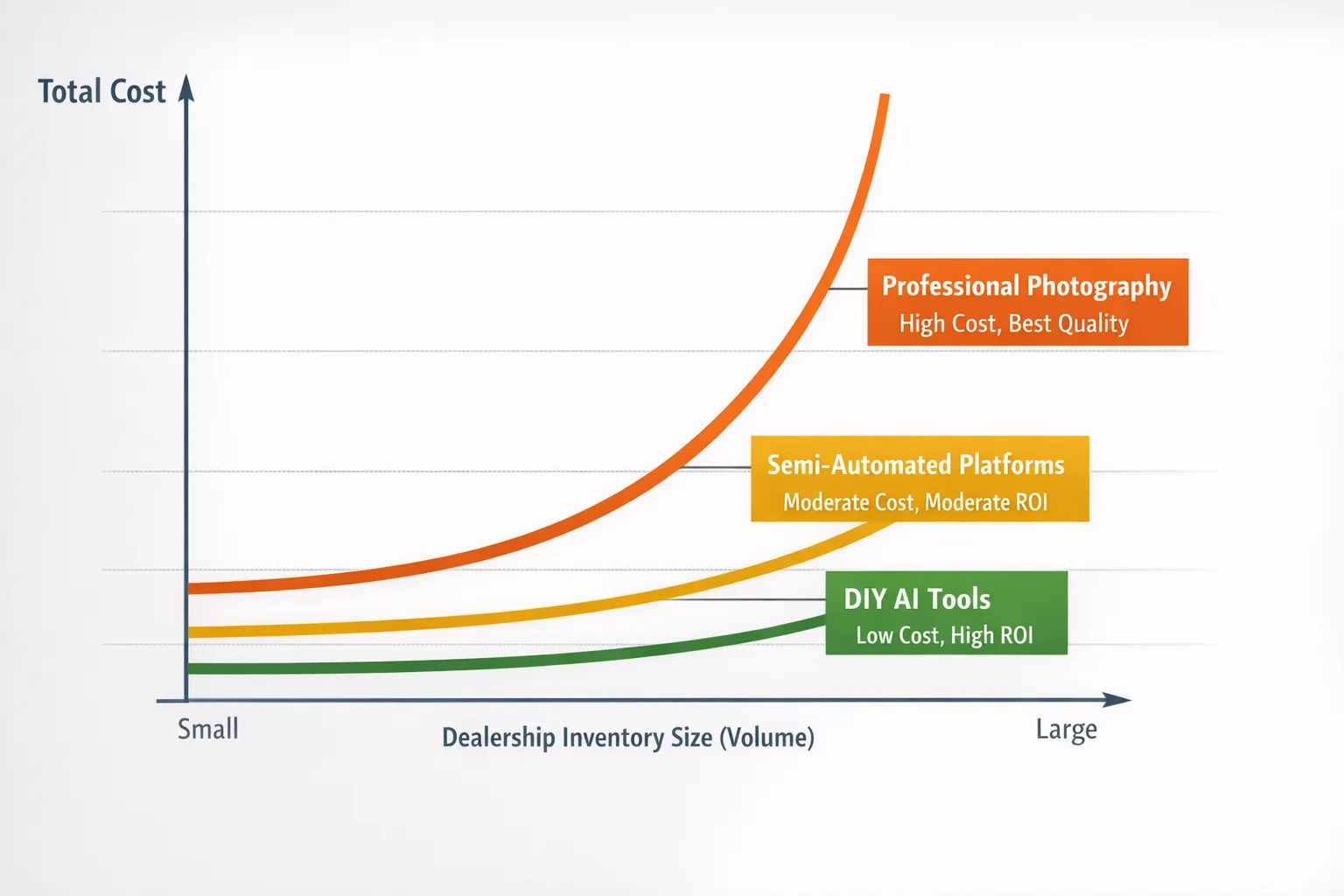
Professional photography remains essential for hero shots—the vehicle that anchors your homepage or premium marketing campaign. But it's economically unsustainable as your primary workflow for inventory photography. The hybrid approach—professional photography for 5–10 showcase vehicles plus AI background replacement for the remaining fleet—balances brand prestige with operational efficiency.
Turo hosts and independent photographers benefit most from AI-powered background replacement solutions because they eliminate the friction of scheduling photographers, managing file delivery, and waiting days for edits. The ability to upload a lot photo and receive 100+ professionally styled variants in minutes enables seasonal refreshes, market-specific positioning, and rapid response to inventory changes—all without proportional cost increases.
Implementation: Getting Started with Professional Car Backgrounds
The transition from traditional studio photography to AI-powered background replacement doesn't require technical expertise or expensive equipment—just a structured approach and the right tool. The process is deliberately streamlined to minimize friction: upload a photo, select a background, export the result. What takes a professional photographer days to schedule and deliver happens in seconds.
Preparing Your Vehicle Photos for Best Results
The quality of your input directly determines the quality of your output. AI background removal works best when the vehicle itself is well-lit and clearly separated from its surroundings, so preparation matters before you even open the editing software.
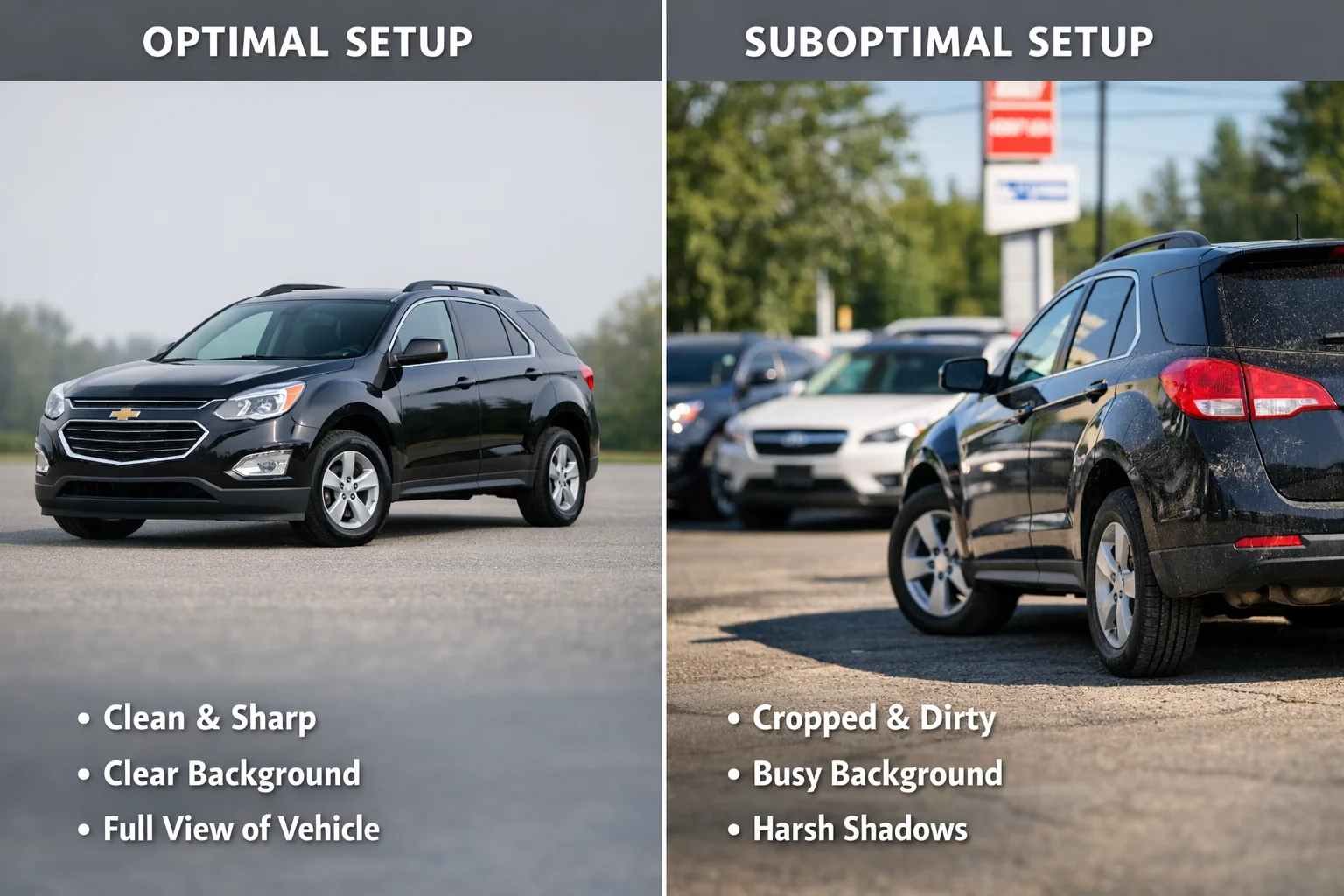
Shoot vehicles in natural daylight whenever possible—overcast conditions are ideal because they eliminate harsh shadows that confuse edge-detection algorithms. Position the car perpendicular to the camera at a slight three-quarter angle, which showcases the vehicle's form without distortion. Ensure the entire vehicle is visible within the frame; cropped wheels or missing bumpers force the AI to guess at edges, degrading accuracy. Clean the vehicle beforehand—dust and dirt on the paint create visual noise that can interfere with precise background removal.
Avoid cluttered lot backgrounds with competing visual elements. A busy backdrop with other vehicles, signage, or structures makes the AI's job harder because it must distinguish your target car from distracting elements. Distance matters too: position the vehicle at least 10–15 feet from background objects to create natural depth separation. When you remove background from car photos using AI tools, this spatial clarity translates directly into cleaner edges and fewer manual touch-ups.
Lighting consistency across your inventory accelerates batch processing. If you're photographing multiple vehicles in one session, maintain the same time of day, camera angle, and distance. This consistency allows you to apply the same background to an entire batch without individual adjustments, multiplying your efficiency gains.
Integrating Processed Images into Your Listings
Once you've transformed your vehicle photos with professional backgrounds, the next step is strategic deployment across your sales channels. Export processed images in the format and resolution required by each platform—most dealership websites and listing aggregators accept 2K to 4K JPEGs, while Turo and AutoTrader have specific dimension requirements (typically 1200×800px or larger).
Organize your processed files systematically: create folders by vehicle type, inventory batch, or background style. This structure accelerates future refreshes and makes it easy to swap backgrounds seasonally or in response to market trends. Tag files with metadata (VIN, stock number, background type) so your team can quickly locate variants if a listing needs updating.
Upload processed images to your dealership management system (DMS) first—this becomes your single source of truth. From there, distribute to your website, AutoTrader, Cars.com, and other syndication partners. Most DMS platforms batch-upload to multiple channels simultaneously, so you're not manually uploading to each site. For Turo hosts managing their own listings, direct upload to the platform takes seconds per vehicle.
The real advantage emerges when you refresh inventory. A vehicle that's been listed for 30 days can be re-photographed with a different background and re-uploaded within minutes, signaling freshness to search algorithms without requiring a new photoshoot. This cadence—monthly or quarterly background refreshes—keeps your listings algorithmically competitive and visually distinct from competitors using the same lot photos repeatedly.
Elevating Your Automotive Business with Professional Car Backgrounds
Professional car backgrounds are no longer a premium feature—they're a competitive necessity. The economics are undeniable: traditional studio photography costs $25,000 to $60,000 in equipment and setup alone, plus $30–$50 per vehicle in recurring labor. This overhead forces dealerships into impossible choices: either absorb unsustainable costs or accept inconsistent, low-quality lot photos that fail to convert browsers into buyers.
The shift toward AI-powered solutions has fundamentally changed the equation. Tools like Car Photo Booth compress what once required a dedicated studio into a 10-second automated process, reducing per-vehicle costs to $3–$5. This isn't just cost savings—it's operational leverage. A dealership managing 200 vehicles can now refresh its entire inventory with professional backgrounds in hours rather than weeks, and re-photograph underperforming listings within minutes when market conditions shift.
The real ROI emerges when you consider the downstream impact. Higher-quality vehicle listing imagery correlates directly with longer dwell time on listing pages, lower bounce rates on your website, and measurable increases in qualified inquiries. When you pair professional backgrounds with consistent metadata tagging and systematic distribution across your DMS and syndication partners, your inventory becomes algorithmically competitive—fresh, visually distinct, and impossible to ignore.
Start small: process 10–15 vehicles from your current lot using a free trial account. Compare the before-and-after engagement metrics on your website and third-party platforms. The difference will justify the investment immediately. Professional car backgrounds aren't a luxury anymore—they're the baseline expectation that separates dealerships that grow from those that stagnate.