
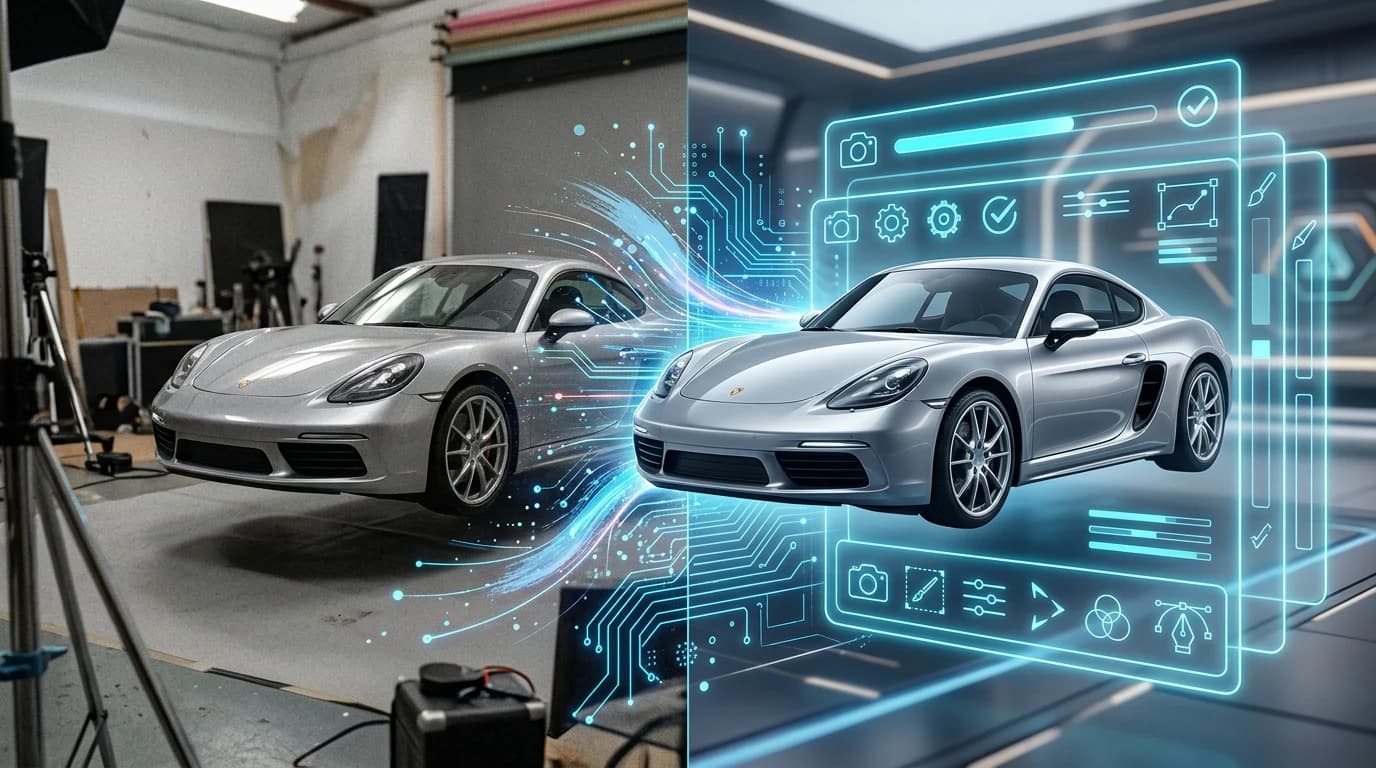
Dealerships face a persistent challenge: inconsistent, unprofessional vehicle photography that undermines their online presence. When inventory photos vary wildly in lighting, background clutter, and overall quality, potential buyers lose confidence before they even step onto the lot. Traditional solutions—hiring professional photographers or renting expensive studio space—cost $25,000 to $60,000 in upfront equipment alone, plus $30–50 per vehicle for shooting services. For dealers managing hundreds of cars, this quickly becomes unsustainable. The result: many rely on hastily snapped lot photos that fail to showcase vehicles effectively, directly impacting click-through rates and conversion metrics.
AI-powered background replacement technology has fundamentally changed this equation. By automatically removing distracting backgrounds and replacing them with professional studio environments, dealerships can transform ordinary lot shots into polished, showroom-ready images in seconds—at a fraction of traditional costs.
Quick Answer: AI car photography solutions use machine learning to remove vehicle backgrounds and replace them with professional studio backdrops, instantly elevating photo quality for online listings. This technology solves the dealership's core problem: creating consistent, professional images without expensive studio rentals or per-vehicle photographer fees. The result is faster inventory turnover, improved listing engagement, and significantly lower production costs—making professional automotive photography accessible to dealers of any size.
This article explores how AI background transformation works, the range of professional backdrops available, measurable cost savings, and practical implementation strategies to help your dealership compete visually online.
Table of Contents
- How AI Background Removal and Replacement Works for Vehicle Photography
- Cost Comparison: Traditional Studio Photography vs. AI-Powered Solutions
- Real-World Results: How Dealerships Improve Listing Performance With AI Backgrounds
- Choosing the Right Background Style for Different Vehicle Types and Markets
- Implementation Guide: Integrating AI Car Photography Into Your Dealership Workflow
- Making the Strategic Shift to AI-Powered Vehicle Photography in 2026
How AI Background Removal and Replacement Works for Vehicle Photography
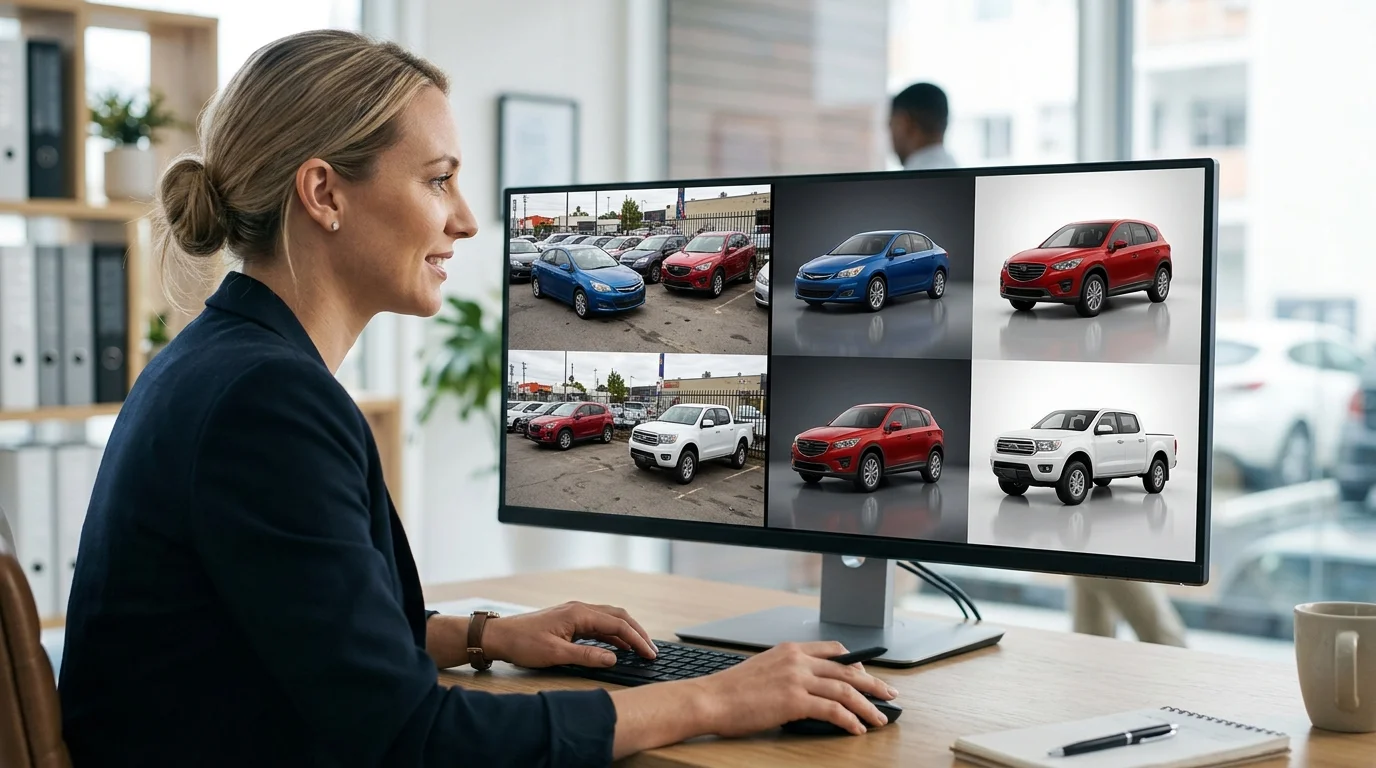
AI background removal operates through a multi-step neural network process that identifies vehicle boundaries with pixel-level precision, then seamlessly replaces the original environment with professional studio alternatives. The technology uses deep learning models trained on thousands of automotive images to distinguish the car from its surroundings—a task that requires understanding vehicle edges, reflections, shadows, and transparent elements like windows. Once the vehicle is isolated, the AI applies one of 100+ professional backdrop templates, from luxury showroom settings to minimalist white studios and outdoor scenes, instantly transforming lot photos into gallery-ready assets.
The speed advantage over traditional car studio photography is substantial. A dealership shooting 50 vehicles in a physical studio setting typically requires 4–8 hours of studio time, photographer coordination, and post-processing. With AI-powered background replacement, the same 50 cars can be processed in minutes—simply upload a batch of lot photos, select your preferred backdrop, and export 4K-quality images. This consistency matters tremendously for online presence; when every vehicle in your inventory displays against the same professional background, it creates a cohesive brand appearance that builds buyer confidence and reduces visual friction during the browsing experience.
The replacement process itself is non-destructive. The original vehicle image remains untouched; only the background layer is removed and replaced. This means you retain all detail in the car itself—paint texture, chrome reflections, wheel design—while gaining complete control over environmental context. Dealerships can apply different backdrops to the same vehicle for A/B testing across listings, or maintain brand consistency by standardizing on a single backdrop across hundreds of inventory photos. The result is professional automotive photography that costs pennies per image rather than dollars, making studio-quality presentation accessible to dealers of any size. When you combine background replacement with AI image upscaling, even smartphone photos from your lot can rival traditionally shot inventory.
Cost Comparison: Traditional Studio Photography vs. AI-Powered Solutions
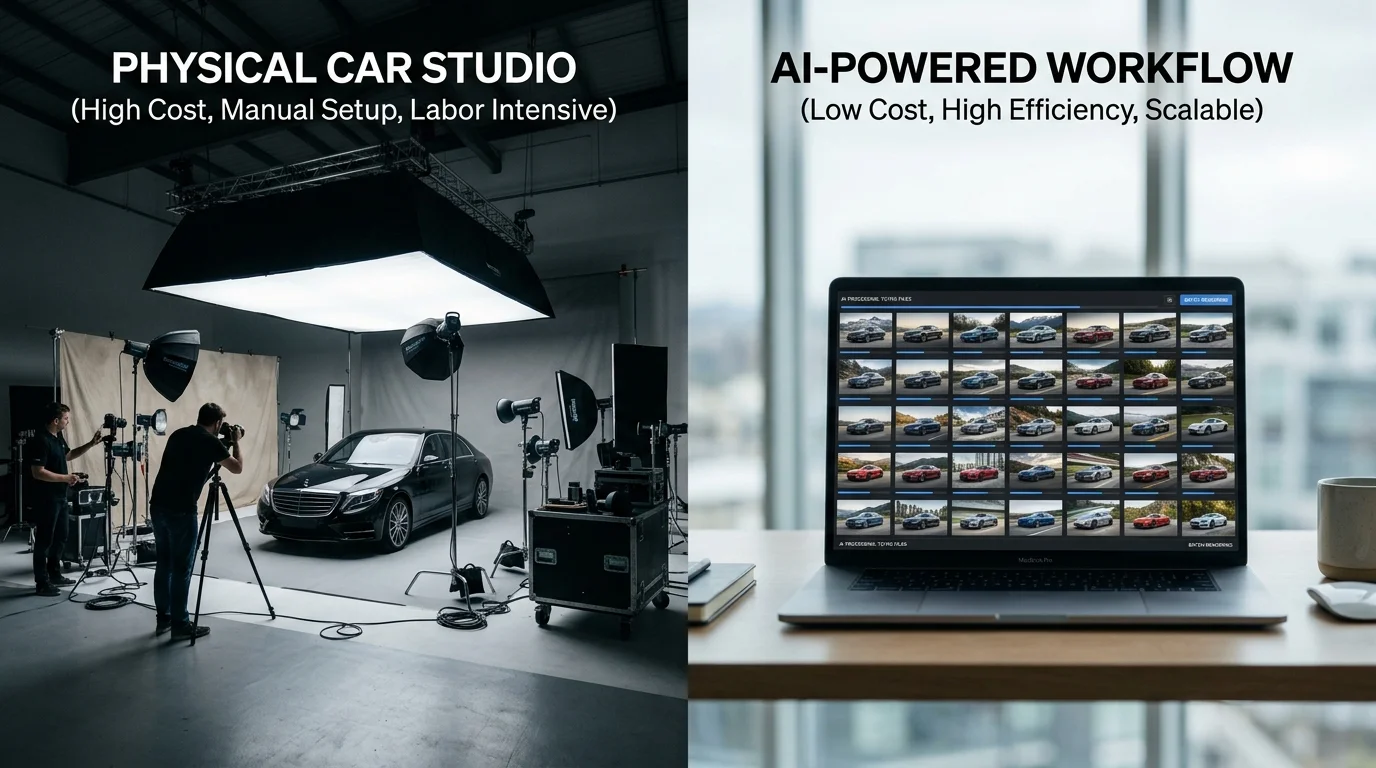
The financial reality of vehicle photography reveals a stark divide between traditional approaches and modern AI-powered alternatives. Professional automotive photographers typically charge between $30–50 per vehicle, with additional costs for background removal and editing services that can add $5–15 per image. For a dealership processing 100 vehicles monthly, this translates to $3,500–$6,500 in direct photography expenses alone—before accounting for scheduling delays, travel time, and retake fees that inevitably inflate the final bill.
Physical photo booth systems present an even steeper barrier to entry. According to industry pricing data, dealership photo booth installations cost between $38,000–$42,875 upfront, or require monthly financing starting at $893 per month. Rental options range from $1,350–$1,717 monthly, depending on configuration. These systems demand dedicated space, ongoing maintenance, and trained staff to operate—costs that remain fixed regardless of inventory volume.
| Approach | Per-Image Cost | Setup Cost | Monthly (100 cars) | Scalability |
|---|---|---|---|---|
| Professional Photographer | $35–65 | $0 | $3,500–$6,500 | Poor (scheduling constraints) |
| Physical Photo Booth | $25–60 | $38,000–$42,875 | $2,500–$6,000 | Limited (space-dependent) |
| AI Background Replacement | $3–7 | $0 | $300–$700 | Excellent (unlimited) |
AI-powered solutions eliminate these friction points entirely. At $3 per vehicle or less, the cost advantage becomes undeniable at scale. A dealership processing 500 monthly vehicles saves $16,000–$32,500 compared to traditional photography—capital that redirects toward inventory acquisition or marketing. Processing time shrinks from days to seconds, and consistency improves dramatically since every vehicle receives identical professional treatment.
The hidden costs of studio photography compound the financial burden: scheduling coordination across multiple photographers, travel expenses, reshoot requests when lighting or angles miss the mark, and editing bottlenecks that delay listings from going live. When you combine AI background replacement with image upscaling for enhanced resolution, even smartphone lot photos transform into gallery-ready assets without the traditional studio overhead.
For dealerships operating on thin margins, this cost differential represents genuine competitive advantage—professional presentation at a fraction of traditional pricing.
Real-World Results: How Dealerships Improve Listing Performance With AI Backgrounds
The measurable impact of professional vehicle imagery extends far beyond aesthetics. According to research from Studio Metrodesk, high-quality vehicle photos increase listing views by 47% and generate 62% more leads, with buyers willing to pay up to $1,000 more for cars with visually appealing online images. These aren't marginal gains—they're transformative shifts in how buyers engage with inventory before ever stepping onto the lot.
Consistency across your catalog amplifies this effect. When every vehicle in your inventory features the same professional treatment—whether displayed against a luxury showroom setting, clean white backdrop, or dynamic outdoor environment—buyers perceive your dealership as organized, trustworthy, and quality-focused. A luxury sedan photographed in a studio setting commands different psychological weight than the same vehicle shot against a cluttered lot. The background isn't decoration; it's a trust signal. Vehicles with professionally retouched photos sell 20% faster on average, and dealerships using AI photo editing report time-to-market improvements of 4 days, meaning listings go live when buyer intent peaks rather than weeks later.
Background selection matters strategically. A rugged truck positioned against mountain scenery or an urban landscape tells a different story than that same truck in a showroom. A compact sedan in a city environment appeals to urban buyers; positioned in a suburban driveway, it resonates with families. This isn't about arbitrary aesthetics—it's about matching vehicle presentation to buyer psychology and improving your dealership's search visibility through consistent, professional visual assets.
The operational efficiency compounds the financial advantage. Processing 500 vehicles monthly through traditional studio photography requires weeks of coordination, travel, and reshoot cycles. AI background replacement—whether through Car Photo Booth or similar platforms—transforms lot photos into gallery-ready assets in seconds, eliminating scheduling friction entirely. Your team uploads images; professional backgrounds apply automatically. No studio rental, no photographer scheduling, no editing delays. Listings publish faster, inventory turns quicker, and your marketing team focuses on promotion rather than production logistics.
Choosing the Right Background Style for Different Vehicle Types and Markets
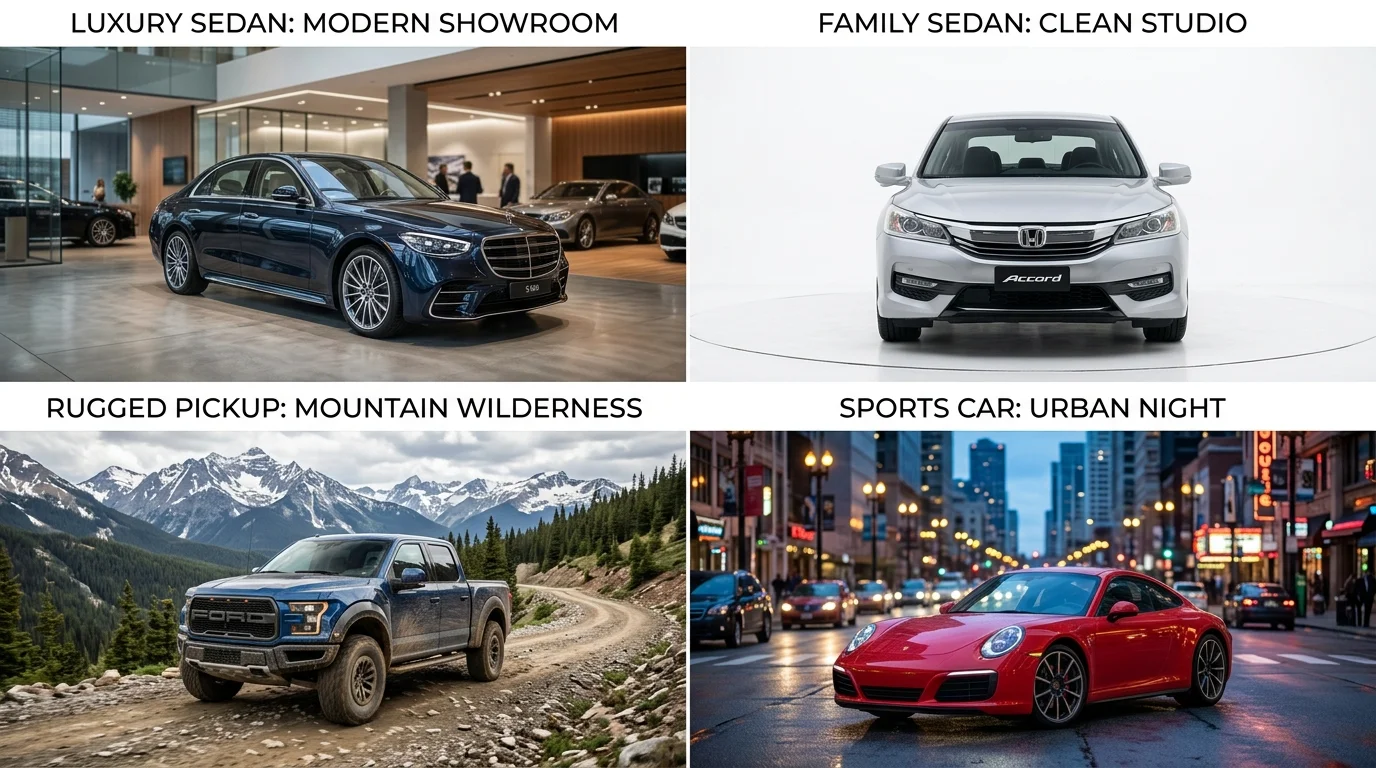
Background selection isn't decorative—it's strategic positioning. The context you place a vehicle into directly influences buyer perception, search ranking signals, and conversion likelihood. A luxury sedan photographed against a sleek showroom backdrop communicates exclusivity and premium pricing; the same vehicle in a neutral white studio setting appeals to buyers prioritizing condition over prestige. Your background choice must align with three core variables: vehicle price point, target buyer demographic, and brand positioning.
Luxury and high-end vehicles demand showroom or upscale environments. A $60,000+ sedan or sports car positioned against modern dealership interiors, polished concrete floors, or sophisticated urban backdrops reinforces perceived value. These buyers expect professional automotive photography that mirrors the investment they're considering. Conversely, family sedans and economy vehicles perform better in neutral, accessible contexts—clean white backgrounds, suburban driveways, or everyday environments that reduce psychological distance between the vehicle and the typical buyer.
Trucks and SUVs benefit from lifestyle contexts that emphasize capability. Rugged outdoor backdrops, mountain scenery, or construction-site environments tell a functional story that resonates with buyers seeking durability and performance. A pickup truck against a showroom wall feels out of place; positioned in a landscape or work environment, it becomes aspirational. Sports cars similarly thrive in dynamic, high-energy settings—urban streets, race tracks, or dramatic architectural backdrops that match their performance positioning.
Regional market dynamics add another layer. Urban dealerships in metropolitan areas should prioritize modern showroom and city-street backgrounds that reflect their customer base's environment. Rural dealers benefit from outdoor, natural, and lifestyle backdrops that align with local buyer expectations. A truck dealership in Montana serves different aspirations than one in Manhattan.
The decision framework is straightforward: match background aesthetics to buyer psychology. When you apply professional backgrounds through AI background replacement, test multiple contexts for the same vehicle type across your inventory. Track which backgrounds generate higher engagement and faster sales cycles. This data-driven approach transforms background selection from guesswork into measurable optimization and competitive advantage.
Implementation Guide: Integrating AI Car Photography Into Your Dealership Workflow
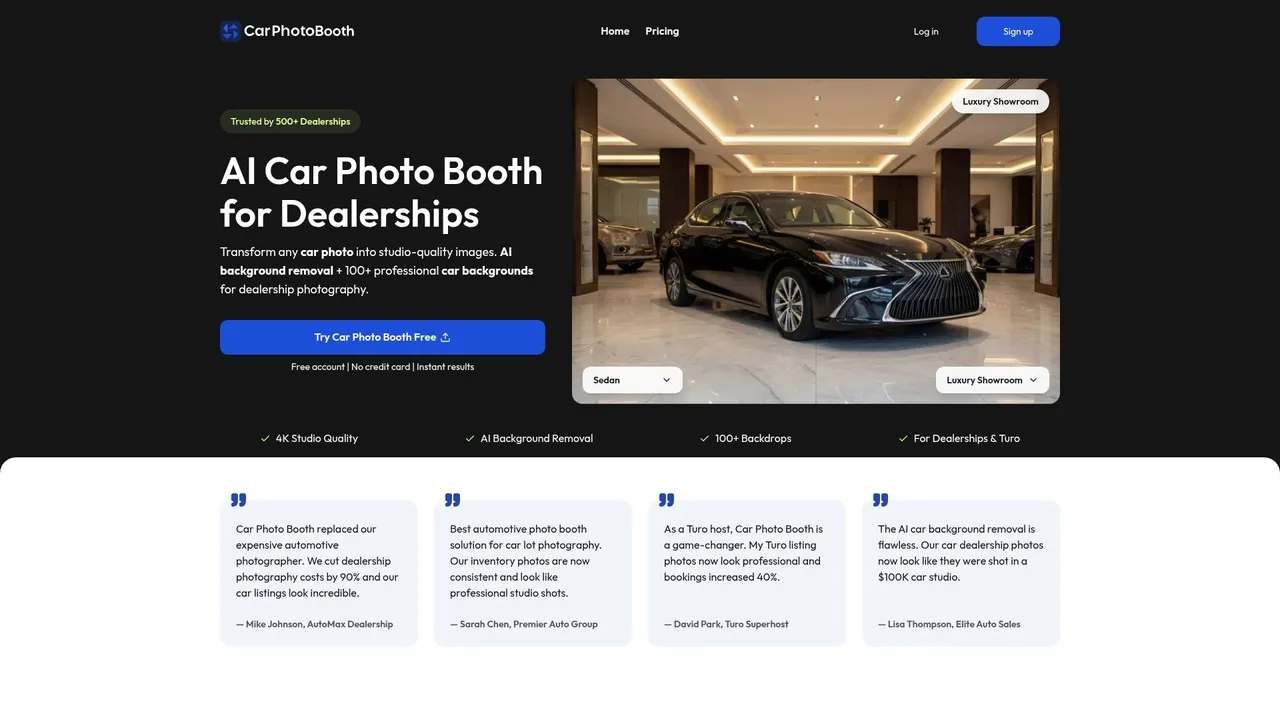
Getting started with AI-powered vehicle photography requires no studio setup, no hardware investment, and no lengthy onboarding process. The workflow is straightforward: upload your lot photos, apply professional backgrounds, and download studio-quality images ready for your inventory system.
Upload and Processing. Start with clear, well-lit vehicle photos taken from multiple angles—front three-quarter, side profile, and rear views work best. Supported formats include JPG, PNG, and WebP files. Most dealerships batch-process 10–50 images weekly, uploading them directly through the web interface or via API integration for automated workflows. Processing completes in seconds per image, with 4K resolution exports available immediately.
Background Selection and Customization. Choose from over 100 professional backdrops: showroom environments, clean white studios, urban streets, or natural landscapes. Match backgrounds to vehicle type and target buyer psychology—luxury sedans in upscale showrooms, trucks in outdoor settings, sports cars on dynamic urban backdrops. Test multiple backgrounds for the same vehicle to identify which drives higher engagement and faster sales cycles.
Integration and Quality Control. Downloaded images integrate seamlessly into your inventory management system, listing platforms, and marketing materials. Before publishing, verify that vehicle edges appear sharp and backgrounds look natural. Proper lighting in source photos—avoiding harsh shadows or backlit conditions—ensures cleaner AI processing and more professional final results.
Team Training and Workflow Optimization. Designate one team member to manage uploads and background selection, or distribute tasks across your sales team. The intuitive interface requires minimal training. For high-volume dealerships, API integration automates batch processing, eliminating manual uploads entirely and maintaining consistent visual standards across your entire catalog.
Making the Strategic Shift to AI-Powered Vehicle Photography in 2026

The transition from traditional studio photography to AI-powered vehicle imagery isn't a trend—it's a competitive necessity. Dealerships that adopt this technology now gain measurable advantages: reduced per-image costs from $30–50 down to just a few dollars, processing times measured in seconds rather than days, and visual consistency across entire inventory catalogs. Traditional approaches suffer from scheduling bottlenecks, inconsistent lighting, and high overhead; AI eliminates these friction points entirely.
The financial impact compounds quickly. A dealership processing 50 vehicles monthly saves thousands in photographer fees and studio rental costs while maintaining studio-quality results. Beyond cost, speed drives buyer engagement—professional automotive photography directly influences listing click-through rates and conversion velocity. When buyers encounter polished, consistently styled vehicle images across your online presence, trust increases and decision-making accelerates.
Dealerships embracing AI background replacement also gain operational flexibility. Your team photographs vehicles under real-world conditions—parking lots, showroom floors, varied lighting—then instantly transform those raw images into professional assets with 100+ background options. No more scheduling constraints. No more waiting weeks for edited files. This workflow scales effortlessly as inventory grows.
Ready to experience the difference? Car Photo Booth offers a free trial—no credit card required—so you can test results on your own inventory immediately. See how your lot photos transform into studio-quality images in seconds. The competitive advantage belongs to dealerships that move first.