
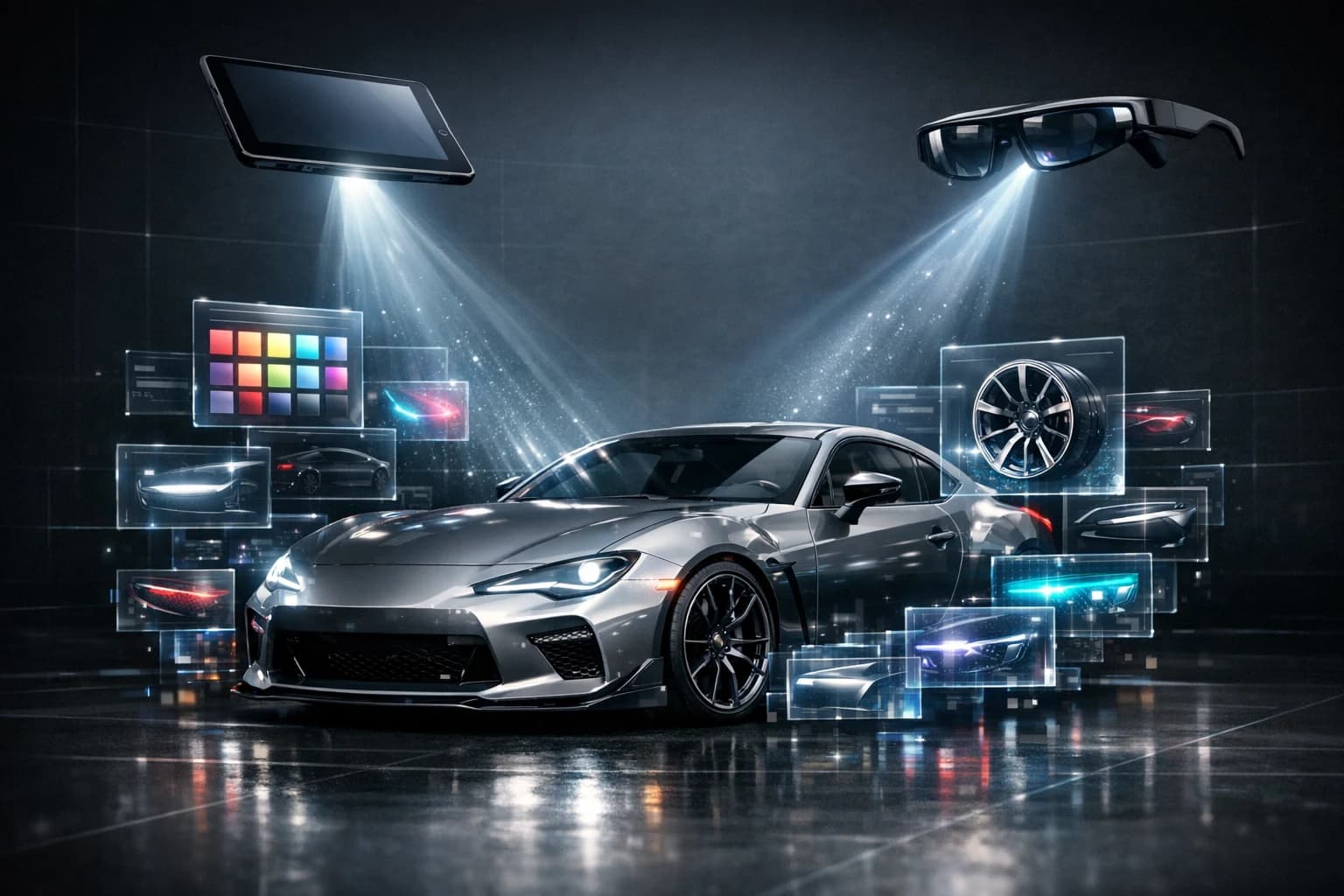
3D car customization tools are revolutionizing how dealerships, Turo hosts, and automotive photographers showcase inventory. Instead of investing thousands in studio photography sessions or settling for inconsistent lot photos, dealers now transform ordinary vehicle images into professional, studio-quality assets in seconds using advanced AI technology.
The core problem remains constant: traditional photography costs $30–50 per car, physical studio booths demand $25–60K upfront investment, and managing visual consistency across hundreds of listings becomes a logistical nightmare. When buyers encounter mismatched photo quality across your inventory, trust erodes. Dealerships lose competitive advantage on platforms like AutoTrader, Craigslist, and Turo where first impressions drive clicks and inquiries.
3D customization solves this by automating background removal and replacement, allowing you to present every vehicle against professional showroom settings, urban backdrops, or lifestyle environments—regardless of where the original photo was taken. This democratizes professional automotive photography, making studio-quality results accessible to businesses operating on tight margins.
Quick Answer:
3D car customization uses AI-powered background removal and replacement to transform lot photos into professional studio-quality images instantly. Dealerships need it because it eliminates expensive photography sessions ($30–50 per vehicle), ensures visual consistency across inventory, and dramatically improves listing appeal on online platforms—directly impacting conversion rates and buyer engagement without requiring technical expertise or specialized equipment.
This guide explores the best tools available in 2026, compares their strengths and limitations, and helps you identify which solution aligns with your workflow, budget, and volume requirements. Whether you're managing a high-volume dealership or building a premium Turo presence, AI-powered photo solutions offer measurable ROI through faster turnaround and professional presentation.
Table of Contents
- The Core Benefits of 3D Car Customization for Your Business
- Cost Reduction: From Studio Setup to AI-Powered Processing
- Speed and Scalability: Processing Inventory at Scale
- Top 3D Car Customization Solutions: Feature Comparison
- Car Photo Booth: AI-Powered Background Replacement for Budget-Conscious Dealerships
- How 3D Customization Platforms Compare on Speed and Affordability
- The Process: How 3D Car Customization Works in Practice
- Preparing Your Vehicle Photos for Maximum Impact
- Customizing Colors, Wraps, and Design Elements
- Real-World Applications: How Dealerships and Turo Hosts Use 3D Customization
- Dealership Use Case: Scaling Inventory Photography
- Turo Host Strategy: Showcasing Vehicles in Multiple Environments
- Choosing the Right 3D Car Customization Tool for Your Needs
- The Future of Automotive Photography: Why 3D Customization is Essential in 2026
The Core Benefits of 3D Car Customization for Your Business
Cost Reduction: From Studio Setup to AI-Powered Processing
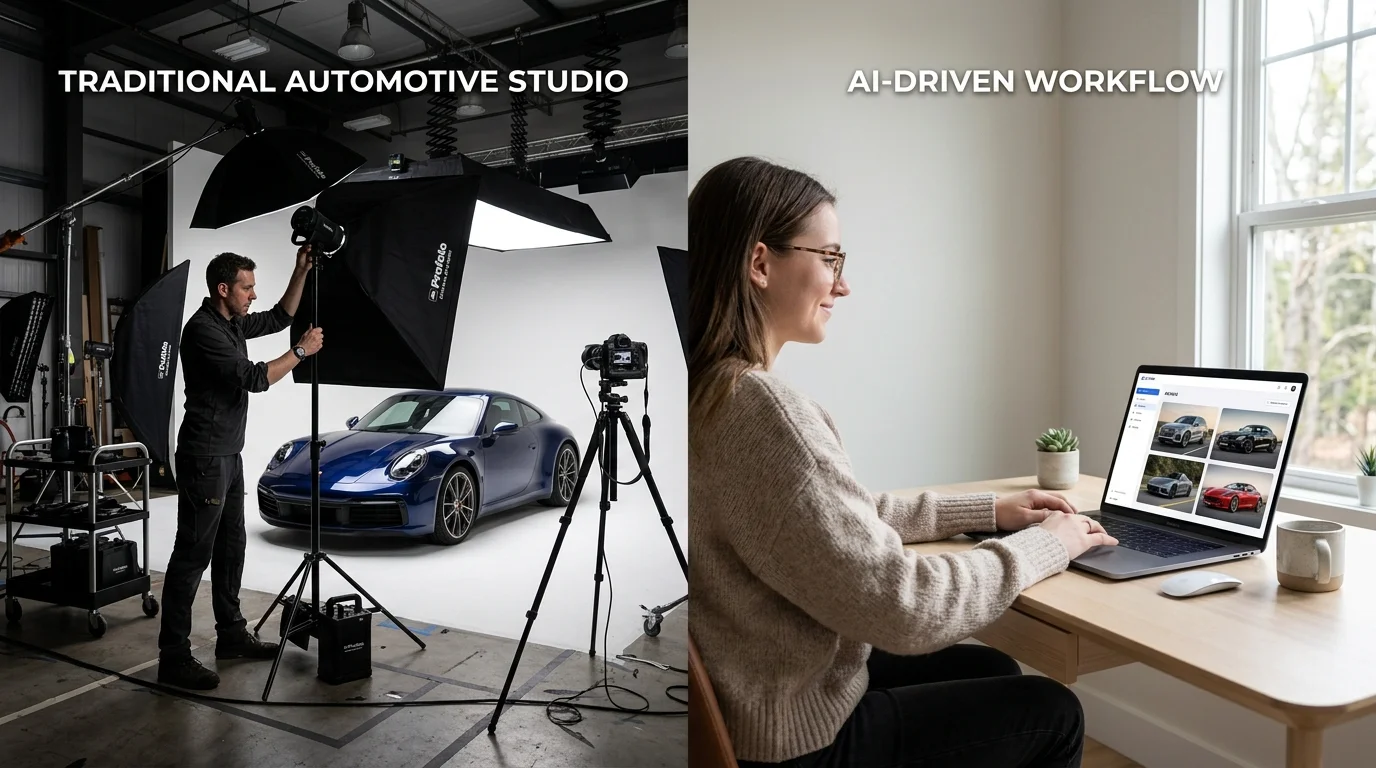
Traditional automotive photography demands significant upfront and per-vehicle investment. Professional studio rental runs $45–250 per hour, while photographer fees typically range from $200–500 hourly. When you factor in equipment, lighting, backdrops, and post-processing labor, dealerships often pay $15–20 per vehicle through specialized photography services—and that's before accounting for the time spent coordinating shoots and managing scheduling conflicts.
AI-powered 3D customization flips this economics entirely. Instead of booking studio time and waiting days for edited images, you process vehicle photos in seconds at a fraction of the cost. A dealership processing 50+ vehicles monthly sees dramatic ROI: the per-vehicle cost drops to $3–5 when using automated background removal and replacement, eliminating the need for expensive studio infrastructure altogether. You're no longer renting physical space or paying hourly rates; you're leveraging software that scales infinitely without marginal cost increases. This matters especially for high-volume operations where traditional photography becomes a logistical and financial bottleneck.
Speed and Scalability: Processing Inventory at Scale
Time-to-market directly impacts sales velocity. Dealerships using traditional methods spend 10–20 minutes manually photographing a single vehicle, then hours editing and uploading images. By contrast, AI-powered systems process vehicles in under 3 minutes—including background removal, professional backdrop selection, and 4K export. This speed advantage compounds across inventory: a dealership with 200 vehicles can photograph and publish the entire lot within a single business day rather than spreading the work across a week.
Scalability becomes effortless when you're not constrained by studio availability or photographer schedules. Whether you're adding 10 vehicles or 500 to your inventory, the processing capacity remains constant. You can batch-process images overnight, update listings in real time, and respond to market changes faster than competitors still relying on manual photography workflows. This agility is particularly valuable for Turo hosts managing rotating vehicle fleets or dealerships running seasonal promotions where fresh, consistent imagery directly influences conversion rates. According to research on dealership photography practices, modern automation has helped businesses increase speed to market by up to 82%, enabling rapid photo-to-listing turnaround that was previously impossible at scale.
The consistency benefit cannot be overstated either. When every vehicle is photographed against the same professional backdrop—whether a luxury showroom, urban environment, or pristine white studio—your inventory presents a unified, premium appearance. This visual coherence builds buyer confidence and reduces the jarring effect of mismatched lot photos, which undermines credibility and engagement across your online presence.
Top 3D Car Customization Solutions: Feature Comparison
When evaluating 3D car customization platforms, dealerships and automotive professionals face a critical decision: invest in traditional studio photography infrastructure, or adopt AI-powered background replacement solutions that deliver professional results at a fraction of the cost. The market has matured significantly, and the differences between leading platforms now center on processing speed, background library depth, pricing structure, and integration capabilities rather than raw output quality.
Car Photo Booth: AI-Powered Background Replacement for Budget-Conscious Dealerships
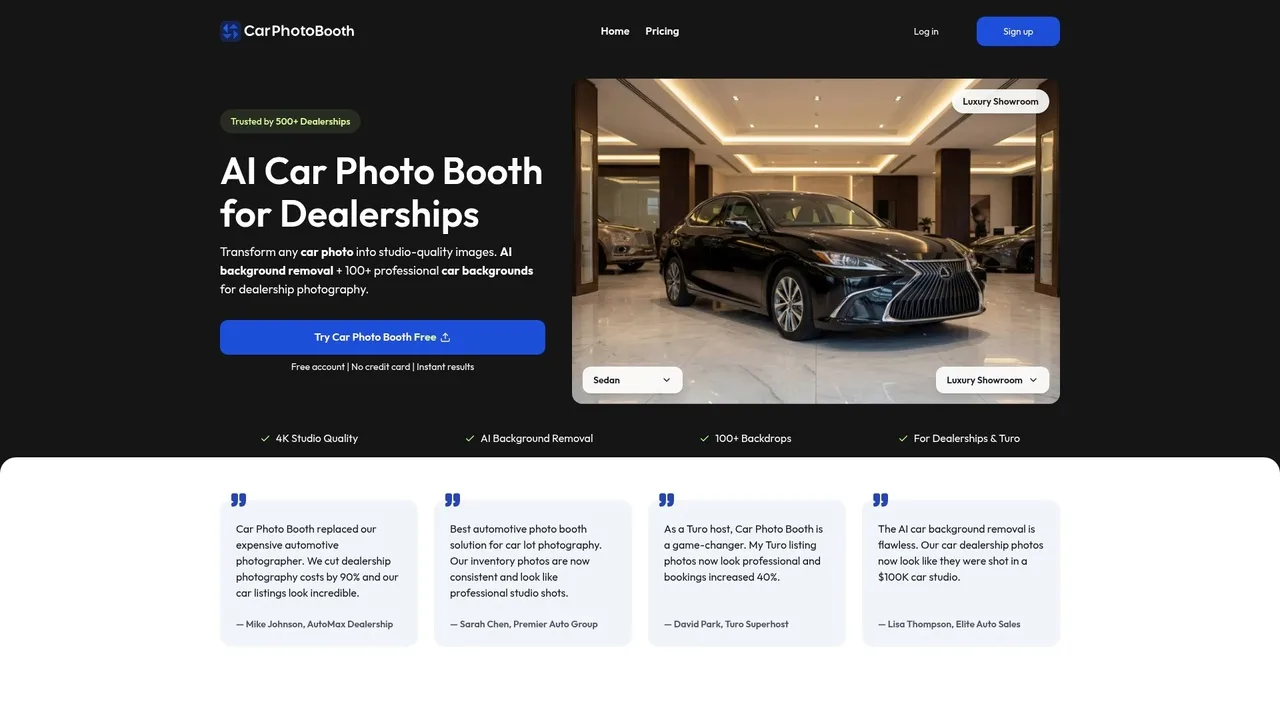
Car Photo Booth addresses the core pain point that has plagued dealerships for years: the prohibitive cost and logistical complexity of professional automotive photography. Our platform uses advanced AI to automatically remove vehicle backgrounds and replace them with one of 100+ professionally designed studio environments—from luxury showroom settings to urban landscapes and pristine white studios. The economics are straightforward: traditional photographer rates run $30–$50 per vehicle, while physical booth installations demand $25,000–$60,000 in upfront capital. Car Photo Booth reduces this to approximately $3 per image, with no equipment investment required.
The platform processes images in roughly 10 seconds, enabling batch operations that would take days with traditional methods. A dealership photographing 50 vehicles can generate studio-quality listings overnight, then update inventory in real time as vehicles sell. This speed advantage directly translates to faster time-to-market—critical for competitive online marketplaces where fresh listings capture more clicks and inquiries. The 500+ dealerships and Turo hosts already using Car Photo Booth benefit from this agility without sacrificing visual consistency; every vehicle in your inventory presents the same premium appearance, building buyer confidence through visual coherence.
How 3D Customization Platforms Compare on Speed and Affordability
| Platform | Background Removal | Professional Backgrounds | Pricing Model | Processing Speed | Batch Capability | Best For |
|---|---|---|---|---|---|---|
| Car Photo Booth | AI-automated | 100+ studio options | $3–$7 per image | ~10 seconds | Yes, unlimited | Dealerships, Turo hosts, high-volume photographers |
| Traditional Studio | Manual | Limited (physical sets) | $30–$50 per vehicle | 1–2 hours per shoot | No | Premium luxury inventory, brand-specific shoots |
| Competitor A (Generic AI) | AI-automated | 30–50 backgrounds | $5–$8 per image | 15–20 seconds | Limited | Small dealerships, occasional users |
| Competitor B (DIY Software) | Manual editing required | Customizable but time-intensive | $15–$25 per month subscription | 30–60 minutes per image | No | Photographers with design expertise |
The comparison reveals a clear hierarchy. Traditional studio photography excels at creating bespoke, highly customized imagery for luxury or specialty vehicles, but the time and cost barriers make it impractical for dealerships managing rotating inventory of 50+ vehicles monthly. Generic AI tools offer affordability but lack the depth of professional background options and often produce inconsistent results across different vehicle types and angles.
Car Photo Booth occupies the optimal position for dealerships and Turo hosts: it combines AI automation with a curated library of 100+ professional backgrounds specifically designed for automotive contexts. This isn't a generic image tool adapted for cars—it's purpose-built for the automotive industry. The distinction matters. When you're replacing a vehicle's background, you need environments that complement automotive aesthetics: showroom lighting that highlights body lines, urban settings that suggest lifestyle, natural landscapes that evoke freedom. Generic platforms often default to bland or mismatched backdrops that undermine the vehicle's appeal.
Processing speed also compounds over time. A photographer using manual editing software might spend 30–60 minutes per image perfecting selections and background blending. Car Photo Booth's 10-second turnaround means a dealership can process 360 images in one hour—the equivalent of a full month's inventory refresh. For Turo hosts managing 5–10 vehicles with rotating availability, this speed enables weekly photo updates that keep listings fresh and competitive without consuming hours of manual labor.
The affordability gap becomes even more pronounced at scale. A dealership processing 500 vehicles annually spends $15,000 with traditional photographers versus $1,500 with Car Photo Booth—a 90% cost reduction that frees capital for inventory acquisition or marketing. Professional car backgrounds have become the standard expectation for online listings, and AI solutions now deliver that standard without the studio overhead that previously made it accessible only to large operations.
The Process: How 3D Car Customization Works in Practice
The workflow for modern 3D car customization tools is designed for speed and simplicity, eliminating the technical barriers that once made professional vehicle photography accessible only to large operations with dedicated studios. Whether you're a dealership manager, Turo host, or automotive photographer, the process follows a consistent logic: capture, customize, refine, and export. Understanding each step helps you maximize the quality of your final images and streamline your inventory management.
Preparing Your Vehicle Photos for Maximum Impact
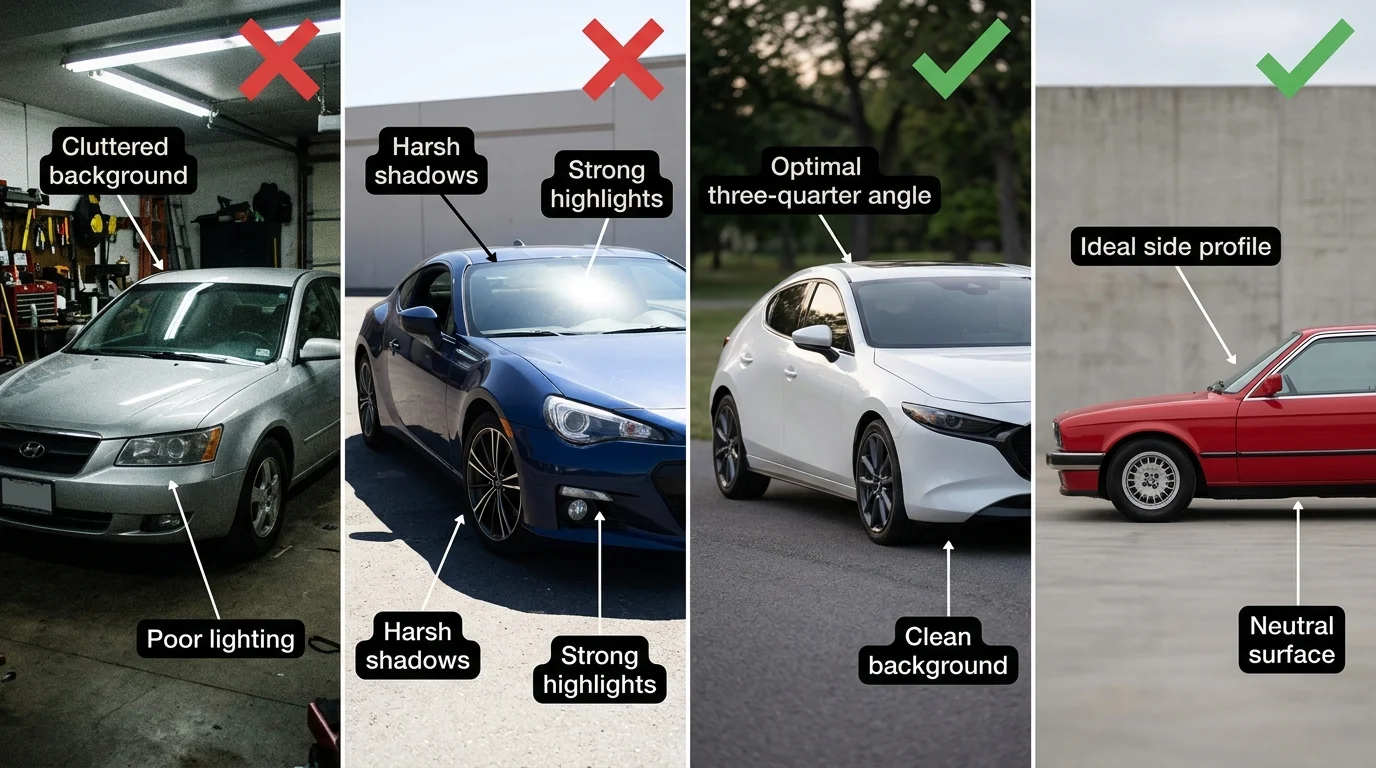
The foundation of any successful customization lies in the source material. Your raw vehicle photo doesn't need to be perfect, but certain conditions dramatically improve the AI's ability to isolate the car and apply professional backgrounds seamlessly. Start with adequate lighting—natural daylight or well-distributed studio lighting reveals the vehicle's contours and paint finish without harsh shadows that confuse edge-detection algorithms. A clean vehicle matters more than you might expect; dust, dirt, and debris create visual noise that can interfere with background removal precision.
Position the vehicle against a simple, contrasting background whenever possible. A plain wall, empty lot, or neutral surface allows the AI to distinguish the car's edges more clearly than cluttered environments filled with trees, signage, or other vehicles. Shoot from angles that showcase the vehicle's best features—three-quarter front views, side profiles, and rear angles work best. Avoid extreme close-ups or shots where the vehicle occupies less than 40% of the frame; the customizer needs enough visual information to work with. Removing glare from car photos becomes easier when you control lighting conditions, and modern AI tools handle reflections well, but minimizing glare in the capture phase still saves refinement time downstream.
Customizing Colors, Wraps, and Design Elements
Once your photo uploads, the real power of 3D car customization emerges. Modern tools allow you to visualize vehicle wraps, color changes, and custom designs without physical modifications—a capability that transforms how buyers evaluate options and how dealers showcase inventory flexibility. If you're selling a silver sedan but want to show how it would look in matte black, the tool applies the color transformation instantly while preserving lighting, shadows, and surface reflections that maintain photorealism.
This visualization capability solves a critical dealership challenge: buyers often struggle to imagine a vehicle in their preferred color or with custom graphics. By generating multiple color variants from a single photo, you reduce purchase hesitation and accelerate decision-making. Wrap designs—racing stripes, custom logos, or full livery—can be previewed before committing resources to physical application. For Turo hosts managing multiple vehicles, this means you can create lifestyle variations of the same car (luxury showroom, urban street, scenic backdrop) that appeal to different renter segments, all from one original photograph. The customization happens in seconds, and the results maintain the photorealism that builds buyer confidence.
Real-World Applications: How Dealerships and Turo Hosts Use 3D Customization
Dealership Use Case: Scaling Inventory Photography
Mid-size dealerships managing 50–200 vehicles face a consistent challenge: maintaining professional, uniform photography across their entire online presence without hiring additional photographers or renting studio space. Traditional approaches demand either shooting every vehicle in a controlled environment (expensive and time-consuming) or accepting a patchwork of inconsistent lot photos that damage brand credibility.
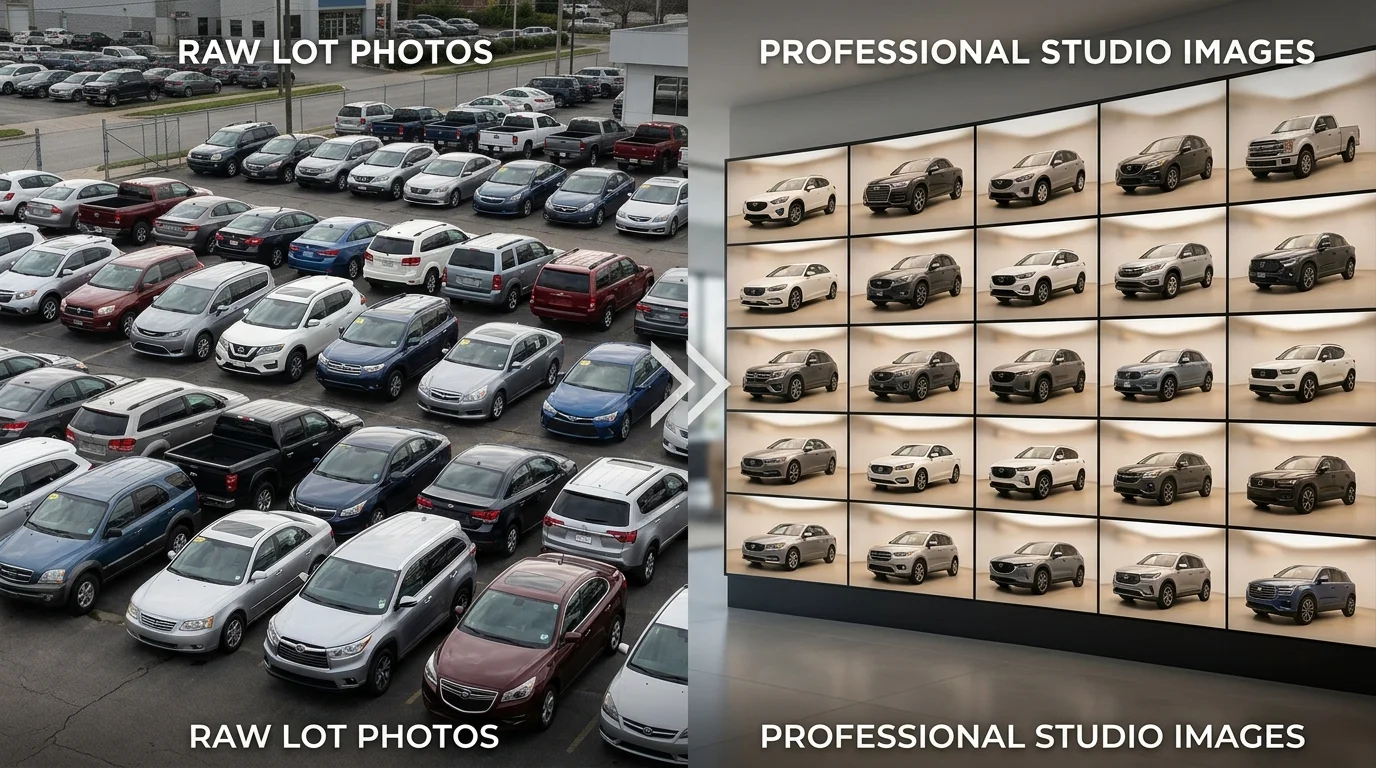
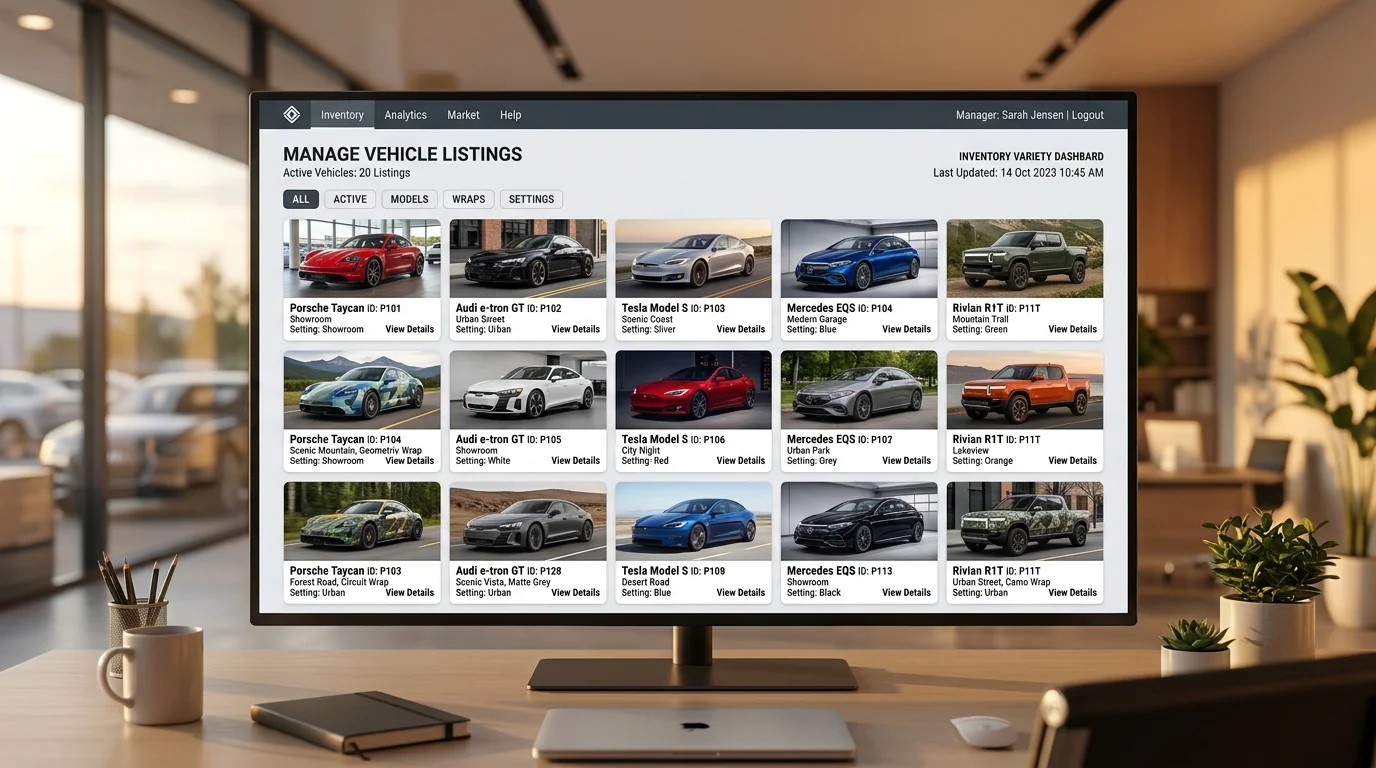
3D customization tools solve this by transforming raw lot photos into cohesive, showroom-quality assets. A dealership photographs each vehicle once—quickly, on the lot—then applies professional backgrounds and color adjustments in batch. This workflow reduces per-vehicle photography costs from $30–50 to under $5 while ensuring every listing looks like it came from the same professional shoot. The consistency matters: when buyers scroll through 20 vehicles on your site, they're subconsciously evaluating whether your dealership maintains standards. Unified backgrounds and lighting signal professionalism and build trust.
Beyond background replacement, color customization allows dealers to showcase inventory flexibility. If you have three identical sedans in silver but know buyers search for black, red, and white variants, you generate multiple color renderings from a single photograph. This addresses a critical friction point: buyers often abandon listings because they can't visualize their preferred color option. By showing the same vehicle in multiple finishes, you reduce decision hesitation and increase inquiry rates.
Turo Host Strategy: Showcasing Vehicles in Multiple Environments
Turo hosts operate in a unique market where perceived value directly influences rental rates and booking frequency. A host managing five vehicles can't afford professional photoshoots for each car in multiple settings—but 3D customization makes this economically viable. One vehicle photographed in neutral conditions becomes five lifestyle variations: a luxury sedan in a high-end showroom, the same car on an urban street, in a scenic mountain backdrop, at a resort setting, and in a modern garage.
According to research from Turo, hosts who invest in professional photography see listings attract up to 50% more traffic than listings with amateur photos, with well-photographed cars significantly increasing booking rates and allowing hosts to charge premium prices. 3D customization democratizes this advantage. A Turo host using background customization can compete visually with hosts spending thousands on location shoots, because the tool generates photorealistic environments that appeal to different renter personas—luxury seekers, adventure travelers, city explorers—all from inventory already on hand.
The economic impact is measurable: hosts report higher booking frequency when listings show vehicles in aspirational settings, and the ability to generate wrap designs or custom graphics (racing stripes, signature livery) allows hosts to differentiate identical vehicle models, effectively creating perceived uniqueness that justifies premium pricing.
Choosing the Right 3D Car Customization Tool for Your Needs
Selecting the right 3D car customization platform requires matching your operational reality—budget, photo volume, technical capacity, and integration needs—against what each tool actually delivers. The wrong choice wastes time and money; the right one becomes invisible infrastructure that scales with your business.
Start by auditing your baseline constraints. How many photos do you process monthly? A Turo host managing 5–10 listings needs different capabilities than a dealership pushing 200+ inventory shots weekly. Budget matters equally: some platforms charge per-image ($3–$10 per car), while others use monthly subscriptions ($7–$500+). Calculate your true cost by multiplying monthly volume against per-image pricing, then compare to flat-rate plans. A dealership processing 100 cars monthly at $5 per image costs $500; a $99/month subscription with unlimited processing becomes obvious savings.
Next, evaluate technical friction. Does the tool require API integration, or does it work through a simple web interface? Can you batch-process 50 photos at once, or must you upload individually? What's the learning curve for your team—can a non-technical staff member use it in 30 seconds, or does it demand Photoshop-level skill? Integration with your existing CRM, inventory management system, or listing platform (Autotrader, Craigslist, Turo) determines whether the workflow feels native or bolted-on.
Ask vendors these critical questions: What's the background library size and quality? (100+ professional options beats 20 generic ones.) How fast is processing? (10 seconds is industry standard; anything slower creates bottlenecks.) What's the output resolution and format? (4K exports matter for print catalogs; 2K suffices for web.) Is there batch processing, API access for automation, or watermark-free exports? Can you customize backgrounds with your dealership logo or brand colors?
Finally, test before committing. Most reputable platforms offer free trials—use them to process 10–20 of your actual inventory photos. This reveals whether the tool handles your specific lighting conditions, vehicle angles, and color accuracy. A platform that excels at luxury sedans might struggle with trucks or SUVs shot in harsh sunlight.
The goal is finding a tool that reduces friction, not adds it. When background removal and professional backdrop replacement becomes a 10-second task instead of a 30-minute Photoshop session, you've chosen correctly.

The Future of Automotive Photography: Why 3D Customization is Essential in 2026
By 2026, 3D car customization is no longer a luxury—it's a baseline expectation for competitive dealerships and auto businesses. The ability to transform everyday lot photos into visually consistent, studio-quality images has become a cost-effective necessity, not a high-budget afterthought. With AI-powered tools, businesses eliminate costly photoshoots, reduce processing time from hours to seconds, and maintain brand-aligned presentation across all inventory. Speed, scalability, and visual precision are now within reach for operations of any size.
The advantages are measurable: rapid turnaround enables same-day listings, uniform backdrops enhance perceived vehicle value, and high-resolution outputs meet both digital and print demands. Platforms like Car Photo Booth deliver these results seamlessly—automating background removal, offering 100+ professional environments, and generating 4K-ready images in under 10 seconds. This level of efficiency allows dealerships and Turo hosts to focus on sales, not post-production.
For those evaluating solutions, the path is clear: test early, test freely. Car Photo Booth offers a no-risk trial with no credit card required, letting users process real inventory photos to assess quality and workflow fit. As AI continues to advance, tools like professional car background replacement will only grow more intuitive, making studio-grade automotive photography universally accessible.